Issue · Labor & Employment

Labor & Employment

Every labor & employment bill, vote, and legislator stance in Pennsylvania, automatically classified by Maddy, our AI policy reader.

Total bills
355
2025-2026 Regular Session
Top supporter
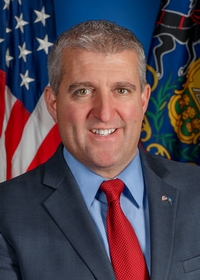
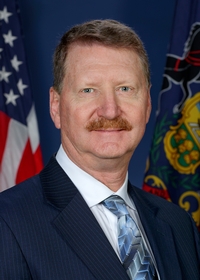
Frank Farry
93% support rate
Top opponent
Dawn Keefer
15% support rate
Ranked legislators
10
5 support · 5 oppose
Key legislators

Who's moving labor & employment in Pennsylvania

Legislators moving labor & employment in Pennsylvania
Legislator Party Stance Support rate Votes
Frank Farry
Frank Farry Senate · District 6
R
Strong +
93% 45
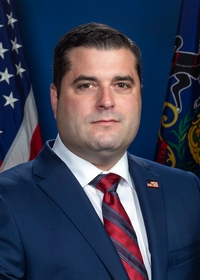
Devlin Robinson
Devlin Robinson Senate · District 37
R
Strong +
90% 52
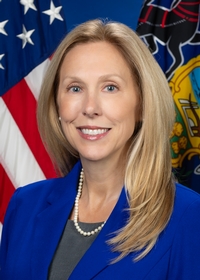
Camera Bartolotta
Camera Bartolotta Senate · District 46
R
Strong +
89% 51
Joe Pittman
Joe Pittman Senate · District 41
R
Strong +
89% 55
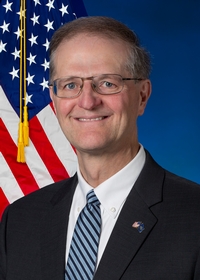
Elder Vogel
Elder Vogel Senate · District 47
R
Strong +
88% 56
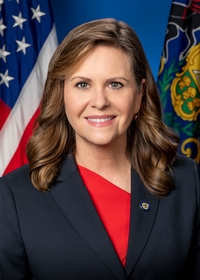
Dawn Keefer
Dawn Keefer Senate · District 31
R
Strong −
15% 46
Scott Hutchinson
Scott Hutchinson Senate · District 21
R
Oppose
29% 46
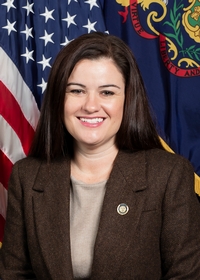
Charity Krupa
Charity Krupa House · District 51
R
Oppose
29% 256
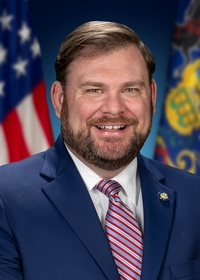
Jarrett Coleman
Jarrett Coleman Senate · District 16
R
Oppose
29% 54
Stephanie Borowicz
Stephanie Borowicz House · District 76
R
Oppose
31% 214
Showing 341–350 of 355 bills

All labor & employment bills

in committee · Pennsylvania · Senate Nov 17, 2025

SB 1093: An Act amending the act of January 17, 1968 (P.L.11, No.5), known as The Minimum Wage Act of 1968, further providing for minimum wages, for exemptions and for duty of employer.

SB 1093 raises Pennsylvania's minimum wage to $9.00 per hour starting January 1, 2026; $10.00 per hour starting January 1, 2027; and $11.00 per hour starting January 1, 2028. It also adds two new exemptions: one for employees working in the personal staff of elected officials or as immediate advisers, and another for minor league baseball players covered by collective bargaining agreements. These changes directly affect most private-sector employers and workers in Pennsylvania, with new wage rates taking effect on the specified dates. The bill updates the 1968 Minimum Wage Act but does not alter existing overtime requirements.
in committee · Pennsylvania · House Apr 13, 2026

HR 58: A Resolution urging the Congress of the United States to pass a constitutional amendment that provides that neither slavery nor involuntary servitude may be imposed as a punishment for a crime.

HR 58 is a resolution urging Congress to propose a constitutional amendment banning slavery and involuntary servitude as punishments for criminal offenses. It directly targets a legal exception in the 13th Amendment that currently permits such practices within the criminal justice system. The resolution itself has no legal effect but seeks to initiate the constitutional amendment process to address this longstanding exception.
Sub-Topics Human Trafficking
passed · Pennsylvania · Senate Jan 29, 2025

SB 153: An Act amending the act of December 5, 1936 (2nd Sp.Sess., 1937 P.L.2897, No.1), known as the Unemployment Compensation Law, in compensation, further providing for ineligibility for compensation.

SB 153 amends Pennsylvania's 1936 Unemployment Compensation Law to clarify when unemployed workers may lose benefits. It adds specific rules making workers ineligible if they unreasonably discourage their own hiring - such as skipping job interviews without good cause or refusing referrals before discussing job details. Employers can now report such behavior to the state, and the Department of Labor must create forms for this process within 90 days. The bill directly affects workers claiming unemployment benefits by tightening eligibility standards around job search efforts.
Sub-Topics Unemployment
in committee · Pennsylvania · House Nov 17, 2025

HB 1540: An Act amending Title 62 (Procurement) of the Pennsylvania Consolidated Statutes, establishing the Buy America, Buy Union Grant Program and the Buy America, Buy Union Grant Fund; and imposing duties on the Department of Community and Economic Development.

HB 1540 creates a "Buy America, Buy Union" grant program and fund under Pennsylvania's Department of Community and Economic Development. It requires state-funded projects to prioritize American-made materials and union labor by offering grants to qualifying contractors. The bill establishes a dedicated fund to finance these grants, directly affecting state agencies and contractors working on public projects. Key provisions mandate that projects receiving grants must meet specific union labor and domestic sourcing standards, altering how state procurement contracts are awarded. This policy change shifts procurement incentives toward union workers and U.S. manufactured goods for eligible state projects.
passed · Pennsylvania · House Dec 29, 2025

HB 1825: An Act amending the act of October 27, 1955 (P.L.744, No.222), known as the Pennsylvania Human Relations Act, further providing for powers and duties of the Commission; and providing for employer policies and procedures.

HB 1825 amends Pennsylvania's Human Relations Act to require employers to establish clear anti-discrimination policies and procedures for handling workplace complaints. It directly affects all businesses and organizations in Pennsylvania that employ people. The bill mandates specific steps for documenting and investigating discrimination claims, such as requiring written procedures for reporting incidents. It also expands the Pennsylvania Human Relations Commission's authority to enforce these requirements.
in committee · Pennsylvania · Senate Jun 30, 2026

SB 743: An Act amending the act of December 5, 1936 (2nd Sp.Sess., 1937 P.L.2897, No.1), known as the Unemployment Compensation Law, in administration of act, further providing for State Unemployment Compensation Advisory Counsel.

SB 743 amends Pennsylvania's 1936 Unemployment Compensation Law to require the Department of Labor and Industry to submit an annual report by March 1st evaluating the unemployment fund's financial health. The report must include specific, detailed unemployment statistics - such as the percentage of long-term unemployed individuals, job losers, discouraged workers, and marginally attached workers relative to the civilian labor force. This requirement applies directly to the state department, which must also post the report online. The bill does not change benefit eligibility or funding but adds standardized data collection for transparency and program oversight. (This is a procedural reporting change, not a substantive policy shift.)
Sub-Topics Unemployment
in committee · Pennsylvania · House Feb 2, 2026

HR 287: A Resolution directing the Joint State Government Commission to conduct a study and issue a report on workplace policies related to perimenopause and menopause offered by public and private employers.

This resolution directs the Joint State Government Commission to study workplace policies related to perimenopause and menopause offered by public and private employers in the state. It does not create new laws but requires the Commission to research existing policies and issue a report on findings. The study will focus on how employers support employees during these health transitions, directly affecting both public and private employers. The resolution is procedural, aiming to inform future policy decisions through a formal report.
passed · Pennsylvania · House May 22, 2025

HB 721: An Act amending the act of October 13, 2010 (P.L.506, No.72), known as the Construction Workplace Misclassification Act, further providing for definitions, for improper classification of employees and for criminal penalties; providing for private right of action; further providing for administrative penalties, for retaliation for action prohibited, for availability of information, for use of penalty funds and for funding; and imposing penalties.

HB 721 amends Pennsylvania's Construction Workplace Misclassification Act to strengthen protections for construction workers who are incorrectly classified as independent contractors instead of employees. The bill allows affected workers to file lawsuits against companies for misclassification and imposes criminal penalties for repeated violations, while also adding safeguards against employer retaliation for reporting violations. It expands administrative penalties for misclassification and requires that penalty funds be used to support enforcement efforts. This directly affects construction companies that misclassify workers and construction workers who lose benefits like overtime pay, health insurance, or workers' compensation due to improper classification.
passed · Pennsylvania · House Jul 14, 2025

HB 1358: An Act amending Title 48 (Lodging and Housing) of the Pennsylvania Consolidated Statutes, in hotels, providing for protection of hotel employees; and imposing penalties.

HB 1358 updates Pennsylvania's lodging laws to directly protect hotel employees. It requires hotels to safeguard workers from retaliation for reporting safety issues or violations, replacing vague existing rules with specific protections. The bill imposes fines on hotels that violate these new safeguards, targeting employers who fail to prevent retaliation. This law affects all Pennsylvania hotels and lodging businesses, focusing on concrete changes to employee safety and enforcement.
Sub-Topics Labor Standards
passed · Pennsylvania · House Jun 18, 2025

HB 1549: An Act amending the act of January 17, 1968 (P.L.11, No.5), known as The Minimum Wage Act of 1968, further providing for definitions, for minimum wages and for exemptions.

HB 1549 updates Pennsylvania's minimum wage law by establishing new hourly rates for workers in different county classifications, effective starting in 2026. It sets a $15 per hour minimum wage for workers in first-class counties (like Philadelphia) beginning January 1, 2026, with annual cost-of-living adjustments tied to the CPI-U index for the PA/NJ/DE/MD region. For other counties (second, third, fourth, or sixth class based on 2020 census populations), it sets a $12 hourly rate starting in 2026, increasing to $15 by 2028, followed by the same CPI-based annual adjustments. This directly affects all hourly workers in Pennsylvania, with rates varying by county size and population.
Showing 341 to 350 of 355 bills