Issue · Labor & Employment

Labor & Employment (Labor Standards)

Every labor & employment bill, vote, and legislator stance in Pennsylvania, automatically classified by Maddy, our AI policy reader.

Total bills
73
2025-2026 Regular Session
Top supporter
Ben Sanchez
82% support rate
Top opponent
Thomas Kutz
18% support rate
Ranked legislators
10
5 support · 5 oppose
Key legislators

Who's moving labor standards in Pennsylvania

Legislators moving labor standards in Pennsylvania
Legislator Party Stance Support rate Votes
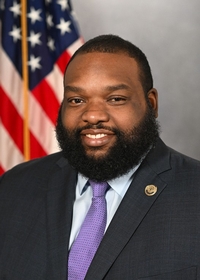
Ben Sanchez
Ben Sanchez House · District 153
D
Strong +
82% 28
Bridget Malloy Kosierowski
Bridget Malloy Kosierowski House · District 114
D
Strong +
81% 27
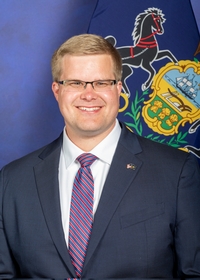
Jordan Harris
Jordan Harris House · District 186
D
Strong +
81% 27
Abigail Salisbury
Abigail Salisbury House · District 34
D
Strong +
81% 26
Aerion Abney
Aerion Abney House · District 19
D
Strong +
81% 26
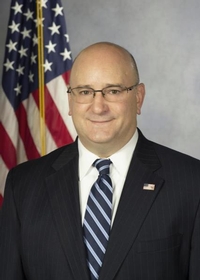
Thomas Kutz
Thomas Kutz House · District 87
R
Strong −
18% 28
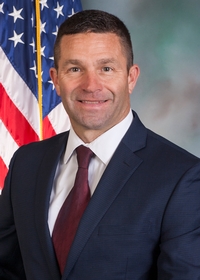
Jim Struzzi
Jim Struzzi House · District 62
R
Strong −
19% 27
Charity Krupa
Charity Krupa House · District 51
R
Strong −
19% 26
Jamie Barton
Jamie Barton House · District 124
R
Strong −
19% 26
Ann Flood
Ann Flood House · District 138
R
Strong −
20% 25
Showing 1–10 of 73 bills

All labor & employment bills

in committee · Pennsylvania · House Jul 15, 2026

HB 2700: An Act amending the act of December 17, 1959 (P.L.1913, No.694), known as the Equal Pay Law, further providing for title of act and for definitions; providing for disclosure of wage and benefit information; further providing for penalties; and imposing penalties for nondisclosure of wage and benefit information.

This bill updates Pennsylvania's Equal Pay Law to require employers with fifteen or more workers to share specific wage and benefit details in job advertisements and job offers. Under the new rules, companies must list costs for health insurance, life insurance, and retirement plans in job postings or provide a direct link to this information online. When making a job offer, employers must also state the salary or hourly wage, clarify overtime rules, and include summaries of employee benefit plans. The legislation applies to positions performed in Pennsylvania, including remote roles, and establishes penalties for employers who knowingly fail to provide this required information.
in committee · Pennsylvania · House Jun 17, 2026

HB 131: An Act amending Title 44 (Law and Justice) of the Pennsylvania Consolidated Statutes, in law enforcement background investigations and employment information, further providing for maintenance of records and for hiring report; and imposing penalties.

This bill requires Pennsylvania law enforcement agencies to publicly notify the community 14 days before hiring an officer with a history of specific disciplinary actions, such as excessive force, theft, or sexual misconduct. Agencies must also submit detailed hiring reports explaining their rationale for employing individuals with these records to a state commission, which will maintain these reports in a public database. To ensure compliance, the legislation imposes penalties that could make non-compliant agencies ineligible for state funding related to equipment, hiring, overtime, and community programs. Additionally, the bill mandates an annual public report reviewing the database's impact on police accountability and community safety.
in committee · Pennsylvania · Senate Jun 26, 2026

SB 1395: An Act amending the act of January 17, 1968 (P.L.11, No.5), known as The Minimum Wage Act of 1968, further providing for preemption.

This bill updates Pennsylvania's Minimum Wage Act to establish state-level preemption, meaning the state government sets the minimum wage rules that apply to all employers across the state. It prevents local cities and counties from passing their own minimum wage laws that differ from the state standard, with two exceptions: local rules adopted before January 1, 2006, remain valid, and new local rules can still be passed after the bill takes effect. The legislation will become active 60 days after it is signed into law.
in committee · Pennsylvania · House Jun 2, 2026

HB 2585: An Act amending the act of January 17, 1968 (P.L.11, No.5), known as The Minimum Wage Act of 1968, further providing for minimum wages.

This bill amends Pennsylvania's Minimum Wage Act to update provisions regarding training wages for employees under the age of twenty. It allows employers to pay a reduced wage rate during the first sixty days of employment for young workers, provided the employee is informed of their right to the full minimum wage after the training period ends. The legislation also includes a prohibition against hiring new trainees at a lower wage if it results in displacing existing employees through reduced hours or benefits. These changes directly affect employers in the state and young workers entering the workforce, ensuring specific protections while allowing for a temporary training wage structure.
in committee · Pennsylvania · House Jun 3, 2026

HR 549: A Resolution urging the Congress of the United States and the United States Secretary of Labor to review the child labor provisions of the Fair Labor Standards Act and the occupational restrictions issued under the act and take action to increase employment and training opportunities for youth workers.

This Pennsylvania House resolution urges the U.S. Congress and the Secretary of Labor to review and potentially update federal child labor laws under the Fair Labor Standards Act. The bill argues that current restrictions on hours and job types for young workers limit their ability to gain essential training and fill critical skills gaps in industries like construction and manufacturing. While the resolution emphasizes that safety must remain a priority, it calls for reforms that would allow more youth employment opportunities to support the state's economy. Because this is a non-binding resolution, it does not change any laws but instead serves as a formal request for federal officials to reconsider existing regulations.
Sub-Topics Child Labor Labor Standards Minimum Wage Tags Children
in committee · Pennsylvania · House Jun 22, 2026

HB 2659: An Act amending the act of March 10, 1949 (P.L.30, No.14), known as the Public School Code of 1949, establishing the Advanced Teaching Roles and Evidence-based Strategic Staffing Program; and imposing powers and duties on the Department of Education.

This bill creates a new program within the Pennsylvania Department of Education to fund school districts that adopt evidence-based staffing models designed to improve student learning. The legislation allows districts to receive grants to expand advanced teaching roles where effective teachers lead teams, share leadership responsibilities, and receive additional compensation tied to measurable student outcomes. Key provisions require that these staffing changes include protected time for collaboration, flexible scheduling, and alignment with other state education priorities like structured literacy. Ultimately, the bill aims to support districts in implementing innovative compensation and organizational structures that replicate successful teaching practices across the Commonwealth.
in committee · Pennsylvania · House May 4, 2026

HB 2481: An Act amending the the act of October 24, 2012 (P.L.1209, No.151), known as the Child Labor Act, further providing for employment of minors in student-learner and apprenticeship programs; providing for a review of laws and regulations related to the employment of minors; and abrogating regulations.

This bill updates Pennsylvania's Child Labor Act to clarify how minors can participate in student-learner and apprenticeship programs, allowing them to work in these roles as long as it complies with existing federal laws. It also permits high school graduates who have finished such programs to continue working in those occupations without additional restrictions beyond federal standards. To ensure consistency, the legislation cancels specific outdated regulations and requires the Department of Labor and Industry to develop new rules within a year or have the old rules expire in three years.
in committee · Pennsylvania · Senate Apr 1, 2026

SB 1257: An Act providing for small necessities leave for eligible employees relating to children and elderly relatives of an eligible employee; and imposing duties on the Department of Labor and Industry.

SB 1257, known as the Small Necessities Leave Act, requires Pennsylvania employers to provide eligible employees with up to 24 hours of paid leave per year to attend to specific family needs. Eligible employees, defined as those working at least 1,250 hours in the past 12 months, can use this time to participate in their children's school activities or accompany children and elderly relatives to medical and dental appointments. The bill mandates that employers cannot retaliate against workers for using this leave and allows for the use of accrued vacation or sick time if preferred. Additionally, the legislation assigns duties to the Department of Labor and Industry to ensure compliance with these new requirements.
in committee · Pennsylvania · Senate Mar 30, 2026

SB 1250: An Act providing for legal protections from abusive work environments and for remedies.

This bill, known as the Safe Workplace Act, establishes legal protections against abusive work environments in Pennsylvania by defining and prohibiting abusive conduct such as sabotage, unreasonable workloads, excessive monitoring, and persistent verbal abuse. It applies to all employees and employers, including independent contractors who meet specific criteria, and covers actions by supervisors, coworkers, or the employer itself. The law prohibits retaliation against employees who report abuse and holds both employers and individual employees liable for violations, requiring employers to take reasonable preventive and responsive measures to maintain safe workplaces.
in committee · Pennsylvania · House Mar 24, 2026

HB 2312: An Act amending the act of January 17, 1968 (P.L.11, No.5), known as The Minimum Wage Act of 1968, further providing for minimum wages.

This bill, HB 2312, would automatically increase Pennsylvania's minimum wage starting December 1, 2026, and every December 1 thereafter. The adjustment would match the percentage increase applied to state officials' salaries under the Public Official Compensation Law, rather than setting a specific dollar amount. Employers across the state would be required to pay workers at least the adjusted minimum wage, with the Department of Labor and Industry overseeing compliance. The law takes effect 60 days after being signed into legislation.
Showing 1 to 10 of 73 bills
1 2 3 8 Next