Issue · Labor & Employment

Labor & Employment

Every labor & employment bill, vote, and legislator stance in Pennsylvania, automatically classified by Maddy, our AI policy reader.

Total bills
355
2025-2026 Regular Session
Top supporter
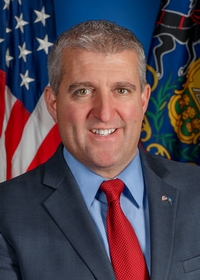
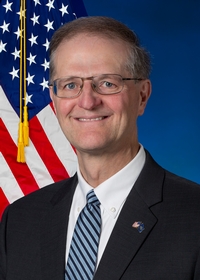
Frank Farry
93% support rate
Top opponent
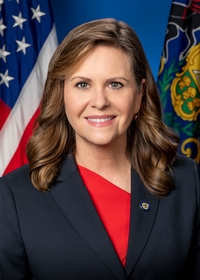
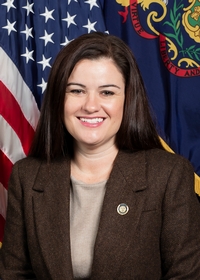
Dawn Keefer
15% support rate
Ranked legislators
10
5 support · 5 oppose
Key legislators

Who's moving labor & employment in Pennsylvania

Legislators moving labor & employment in Pennsylvania
Legislator Party Stance Support rate Votes
Frank Farry
Frank Farry Senate · District 6
R
Strong +
93% 45
Devlin Robinson
Devlin Robinson Senate · District 37
R
Strong +
90% 52
Camera Bartolotta
Camera Bartolotta Senate · District 46
R
Strong +
89% 51
Joe Pittman
Joe Pittman Senate · District 41
R
Strong +
89% 55
Elder Vogel
Elder Vogel Senate · District 47
R
Strong +
88% 56
Dawn Keefer
Dawn Keefer Senate · District 31
R
Strong −
15% 46
Scott Hutchinson
Scott Hutchinson Senate · District 21
R
Oppose
29% 46
Charity Krupa
Charity Krupa House · District 51
R
Oppose
29% 256
Jarrett Coleman
Jarrett Coleman Senate · District 16
R
Oppose
29% 54
Stephanie Borowicz
Stephanie Borowicz House · District 76
R
Oppose
31% 214
Showing 281–290 of 355 bills

All labor & employment bills

in committee · Pennsylvania · House Jun 9, 2025

HB 1568: An Act amending the act of July 14, 1961 (P.L.637, No.329), known as the Wage Payment and Collection Law, further providing for employees who are separated from payroll before paydays.

HB 1568 amends Pennsylvania's Wage Payment and Collection Law to clarify when employers must pay employees who are terminated or leave their job before the next scheduled payday. The bill specifies that final paychecks must be issued by a defined deadline, ensuring workers receive earned wages promptly without delay. This directly affects employees who separate from their job before payday and their employers, who must comply with the updated payment timeline. The bill was referred to the Labor & Industry committee on June 9, 2025.
Sub-Topics Labor Standards
in committee · Pennsylvania · Senate Apr 9, 2025

SB 586: An Act providing for criteria for independent contractors and for powers and duties of the Department of Labor and Industry and the Secretary of Labor and Industry; and imposing penalties.

SB 586, the Workplace Misclassification Act, sets clear criteria for determining when a worker qualifies as an independent contractor (requiring written project-specific contracts, business ownership, and independence from employer control) and prohibits employers from misclassifying employees as independent contractors. This directly affects workers who might lose access to workers' compensation, unemployment benefits, and other employee protections if misclassified, as well as employers who fail to properly classify workers. Key mechanisms include criminal penalties for violations, administrative fines, stop-work orders for noncompliant employers, and a private right for workers to sue for misclassification. The bill aims to replace vague standards with enforceable rules, requiring the Department of Labor to enforce these provisions and report annually on compliance.
in committee · Pennsylvania · Senate Jun 10, 2026

SB 406: An Act providing for regulation of the meat packing and food processing industry by creating facility health and safety committees in the workplace; establishing the industry workers' rights coordinator within the Department of Labor and Industry; and imposing penalties.

SB 406 creates workplace health and safety committees at Pennsylvania meat packing and food processing facilities employing 100+ workers, directly affecting large facilities covered by meat hygiene laws or food safety regulations. It requires employers to provide language-appropriate safety training on health risks, workers' compensation rights, and committee details to new hires, and mandates paid training time. The bill establishes a workers' rights coordinator in the Department of Labor to oversee compliance and imposes penalties for violations. Employers must also cover out-of-pocket emergency medical transportation costs for work-related injuries requiring immediate care. The law aims to improve workplace safety through joint worker-management committees, regular hazard inspections, and clearer worker protections.
in committee · Pennsylvania · Senate Mar 21, 2025

SB 495: An Act amending the act of December 5, 1936 (2nd Sp.Sess., 1937 P.L.2897, No.1), known as the Unemployment Compensation Law, in compensation, further providing for qualifications required to secure compensation and for ineligibility for compensation.

This bill amends Pennsylvania's unemployment compensation law to clarify eligibility rules. It adds a 30-day benefit exclusion for claimants unemployed due to labor disputes (excluding lockouts), and clarifies that workers who leave jobs due to company union requirements, unfair labor conditions, or military spouse relocation needs remain eligible. The law also defines "suitable employment" as work requiring comparable skills and paying at least 80% of prior wages. These changes directly affect workers filing for unemployment benefits and employers processing claims. The bill takes effect immediately upon enactment.
in committee · Pennsylvania · Senate Jun 10, 2025

SB 828: An Act amending Title 62 (Procurement) of the Pennsylvania Consolidated Statutes, establishing the Buy American Grant Program and the Buy American Grant Fund; and imposing duties on the Department of Community and Economic Development.

SB 828 creates a program that reimburses Pennsylvania local governments (like cities, counties, and school districts) for up to 20% of the cost of purchasing "union-made" vehicles. A vehicle is "union-made" if it was assembled in the U.S. at a facility operating under a collective bargaining agreement. The program, administered by the Department of Community and Economic Development, uses a state fund financed by state appropriations and other sources, with grants awarded on a first-come, first-served basis until funds run out. Local governments must apply for reimbursement and provide proof the vehicles meet the "union-made" definition.
in committee · Pennsylvania · Senate Apr 4, 2025

SB 548: An Act providing for fair workweek employment standards and for powers and duties of the Department of Labor and Industry; and imposing penalties.

SB 548, the Fair Workweek Employment Standards Act, requires large retail, hospitality, and food services employers (those with 250+ employees across 20+ locations) to provide written advance notice of work schedules to employees. It mandates that employers give a good-faith estimate of weekly hours at hire, revise estimates for significant schedule changes, and notify employees of schedule changes at least seven days in advance. Employees gain the right to request schedule adjustments, though employers may deny requests for lawful reasons. The bill also authorizes the Department of Labor and Industry to enforce these standards and impose penalties for violations.
in committee · Pennsylvania · Senate May 2, 2025

SB 651: A Joint Resolution proposing an amendment to the Constitution of the Commonwealth of Pennsylvania, providing for workers' rights.

SB 651 is a joint resolution proposing an amendment to the Pennsylvania Constitution to establish "Workers' rights." This amendment would grant employees the fundamental right to organize and collectively bargain through representatives of their choice regarding wages, hours, working conditions, and workplace safety. It specifies that no law can diminish these rights, including those that prohibit agreements requiring union membership as a condition of employment. If passed by the General Assembly twice, this proposed amendment would then be put before Pennsylvania voters for approval.
in committee · Pennsylvania · House Jun 11, 2025

HR 81: A Resolution urging the Congress of the United States to amend 17 U.S.C. §§ 102 and 107 to protect creative workers against displacement by artificial intelligence technology.

This bill (HR 81) is a resolution urging Congress to amend two sections of U.S. copyright law (17 U.S.C. §§ 102 and 107) to protect creative workers. It specifically targets how artificial intelligence systems use copyrighted creative work (like writing, music, or art) without permission, seeking to require authorization for AI training on such material. The resolution directly affects artists, writers, musicians, and other creative professionals whose work could be displaced by AI. It proposes concrete policy changes by adjusting copyright protections to prevent AI from automatically using their creations without consent, rather than creating new rules. The bill was referred to the Communications & Technology committee but was later laid on the table, halting further progress.
in committee · Pennsylvania · Senate Feb 26, 2025

SB 316: An Act amending the act of October 27, 1955 (P.L.744, No.222), known as the Pennsylvania Human Relations Act, further providing for definitions.

SB 316 amends Pennsylvania's Human Relations Act by clarifying key definitions related to employment protections. It explicitly excludes domestic workers employed casually in private homes and family members (parents, spouses, children) working for relatives from being classified as "employees" under the law. The bill also expands the definition of "independent contractor" to include licensed professionals (e.g., doctors, lawyers) and individuals covered by federal fair housing laws. These changes directly affect which workers are subject to the Act's anti-discrimination protections, particularly impacting domestic workers and family-based employment arrangements.
Sub-Topics Gig Economy
in committee · Pennsylvania · Senate Jun 18, 2025

SB 852: An Act amending the act of January 17, 1968 (P.L.11, No.5), known as The Minimum Wage Act of 1968, further providing for definitions, for minimum wages and for preemption.

SB 852 updates Pennsylvania's Minimum Wage Act to establish new hourly wage rates starting in 2026 ($12/hour) and 2027 ($15/hour), with automatic annual cost-of-living adjustments based on the Consumer Price Index beginning in 2025. It clarifies that tipped workers must retain all tips, cannot be required to surrender tips to employers to meet wage requirements, and must be informed in writing about their minimum wage entitlement. The bill also preempts local ordinances, meaning cities cannot set higher minimum wages than this state law. It directly affects all Pennsylvania employers and workers, particularly those in tipped occupations.
Showing 281 to 290 of 355 bills
Previous 1 28 29 30 36 Next