Issue · Healthcare

Healthcare

Every healthcare bill, vote, and legislator stance in Pennsylvania, automatically classified by Maddy, our AI policy reader.

Total bills
703
2025-2026 Regular Session
Top supporter
Joe Pittman
96% support rate
Top opponent
Eric Weaknecht
14% support rate
Ranked legislators
10
5 support · 5 oppose
Key legislators

Who's moving healthcare in Pennsylvania

Legislators moving healthcare in Pennsylvania
Legislator Party Stance Support rate Decisive votes
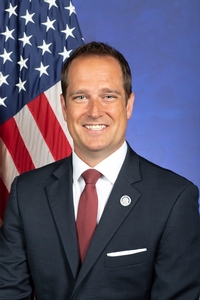
Joe Pittman
Joe Pittman Senate · District 41
R
Strong +
96% 24
Bridget Malloy Kosierowski
Bridget Malloy Kosierowski House · District 114
D
Strong +
94% 113
Devlin Robinson
Devlin Robinson Senate · District 37
R
Strong +
93% 29
Steve Malagari
Steve Malagari House · District 53
D
Strong +
93% 95
Kyle Mullins
Kyle Mullins House · District 112
D
Strong +
92% 91
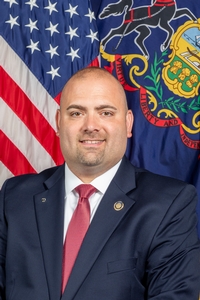
Eric Weaknecht
Eric Weaknecht House · District 5
R
Strong −
14% 66
Jamie Walsh
Jamie Walsh House · District 117
R
Strong −
14% 80
Scott Barger
Scott Barger House · District 80
R
Strong −
14% 72
Ryan Warner
Ryan Warner House · District 52
R
Strong −
14% 77
Joe Hamm
Joe Hamm House · District 84
R
Strong −
14% 76
Showing 521–530 of 703 bills

All healthcare bills

passed · Pennsylvania · House Jun 25, 2026

HB 75: An Act amending the act of October 5, 1978 (P.L.1109, No.261), known as the Osteopathic Medical Practice Act, further providing for definitions.

HB 75 amends Pennsylvania's Osteopathic Medical Practice Act to update the definition of "primary supervising physician" to include medical doctors (MDs) licensed by the State Board of Medicine, alongside osteopathic physicians (DOs). This change allows physician assistants to have either an MD or a DO as their primary supervising physician under a written agreement, expanding oversight options beyond current restrictions. The amendment takes effect 60 days after enactment and does not alter other provisions of the law.
Sub-Topics Medical Licensing
in committee · Pennsylvania · Senate May 29, 2025

SB 692: An Act amending the act of April 9, 1929 (P.L.343, No.176), known as The Fiscal Code, in human services, further providing for medical assistance payments for institutional care.

SB 692 amends Pennsylvania's medical assistance program to set limits on how payment rates can change for nursing facilities. It requires that nonpublic nursing facility payments stay at or above 90% of prior rates starting July 1, 2025, while county facility payments must maintain 100% plus any percentage change applied to nonpublic rates. These payment rate limits will remain in effect until June 30, 2026, or until a new rate-setting system replaces the current one. The bill directly affects county and nonpublic nursing facilities enrolled in Pennsylvania's medical assistance program.
Sub-Topics Long-Term Care
in committee · Pennsylvania · House Jun 16, 2026

HB 1296: An Act amending Title 75 (Vehicles) of the Pennsylvania Consolidated Statutes, in registration of vehicles, providing for contributions to the Fire Company Grant Program and for contributions to the Emergency Medical Services Grant Program.

HB 1296 adds an optional $5 contribution during vehicle registration renewals and driver's license/ID renewals to fund two specific programs. Vehicle registrants and driver's license holders can choose to contribute $5 (or $10 for two-year registrations) to either the Fire Company Grant Program or Emergency Medical Services Grant Program. The contributions are added to existing renewal fees and deposited into restricted accounts within the General Fund, which the Pennsylvania Emergency Management Agency then uses to make grants under existing law. This bill directly affects Pennsylvanians renewing vehicle registrations or driver's licenses, with no mandatory contribution required.
in committee · Pennsylvania · House Sep 9, 2025

HB 1844: An Act amending Title 18 (Crimes and Offenses) of the Pennsylvania Consolidated Statutes, in abortion, further providing for definitions and for medical consultation and judgment.

HB 1844 amends Pennsylvania's criminal code (Title 18) to clarify definitions related to abortion and establish requirements for medical consultation and judgment in abortion cases. The bill directly affects healthcare providers who perform abortions by setting legal standards for patient consultations and medical decision-making. Key provisions include adding specific definitions to reduce ambiguity in abortion-related criminal cases and mandating that medical decisions be based on professional judgment and patient consultation. The bill was referred to the Health committee on September 9, 2025, for further review.
Sub-Topics Women's Health
in committee · Pennsylvania · House Jan 28, 2025

HB 392: An Act amending the act of May 17, 1921 (P.L.682, No.284), known as The Insurance Company Law of 1921, in casualty insurance, further providing for billing.

HB 392 amends Pennsylvania's Insurance Company Law to require insurers to provide detailed written notifications when reimbursing policyholders for non-network emergency medical services (EMS). The bill mandates that these notifications include the service date, EMS agency name, itemized claim details, billing address, and a clear statement that funds must be used solely to pay the emergency medical bill (with fraud warnings for misuse). Insurers must also notify EMS agencies monthly about payments made to policyholders for non-network emergency care. This directly affects insurers (who must follow the billing rules) and policyholders (who receive the notifications). The law takes effect 60 days after enactment.
passed · Pennsylvania · House Mar 25, 2025

HB 755: An Act providing for health care insurance preventive services coverage protections; conferring authority on the Insurance Department and the Insurance Commissioner; and providing for regulations, for enforcement and for penalties.

HB 755 requires health insurers in Pennsylvania (excluding grandfathered plans) to cover all preventive health services listed by the Insurance Department without cost-sharing, such as copays or deductibles. This directly affects insurers who must comply with the coverage rules and enrollees who gain access to preventive care like vaccinations and screenings at no extra cost. The bill empowers the Insurance Department to create and update the preventive services list through a public comment process (15+ business days) and enforce compliance with penalties for violations. It aligns with federal preventive care standards but allows Pennsylvania to adjust the list based on public input and evidence-based guidelines.
Sub-Topics Insurance Primary Care
in committee · Pennsylvania · House Jan 17, 2025

HB 213: An Act amending Title 35 (Health and Safety) of the Pennsylvania Consolidated Statutes, in emergency responder mental wellness and stress management, further providing for confidential communications involving emergency responders and providing for mental health evaluations for 911 dispatchers.

This bill strengthens mental health support for emergency responders in Pennsylvania. It creates new confidentiality protections, prohibiting peer support staff, healthcare providers, or helplines from sharing an emergency responder's mental health information without consent (except in clear danger situations). Specifically for 911 dispatchers, it requires employers to provide free mental health evaluations for PTSD symptoms upon the dispatcher's request or a supervisor's recommendation. If symptoms are identified, the employer must cover treatment until a provider determines the dispatcher can return to full duties, with administrative duty assigned during this period.
Sub-Topics Mental Health
in committee · Pennsylvania · Senate Jun 3, 2025

SB 826: An Act amending the act of October 24, 2018 (P.L.719, No.112), known as the Patient Test Result Information Act, further providing for definitions; providing for Lyme disease testing disclosure; and imposing duties on health care practitioners.

SB 826 amends Pennsylvania's Patient Test Result Information Act to require clinical laboratories to notify healthcare practitioners when reporting Lyme disease test results. The notice must inform practitioners that Lyme tests can be inaccurate and advise patients to consult their provider about symptoms and retesting if needed. Healthcare practitioners must then provide this exact notice to patients when delivering their test results. The bill directly affects Lyme disease patients, healthcare providers, and clinical laboratories in Pennsylvania. It adds a specific disclosure requirement without changing existing professional duties to inform patients about test results.
in committee · Pennsylvania · House Apr 9, 2025

HB 1184: An Act imposing a moratorium on enactment of new or expanded health insurance policy mandated benefits; and requiring the Legislative Budget and Finance Committee to study the issue of health insurance mandates and report to the General Assembly.

HB 1184 imposes a temporary pause on new or expanded health insurance coverage requirements (mandated benefits) in Pennsylvania. It directly affects insurers and employers who would otherwise be required to cover new treatments, equipment, or provider-specific services under health insurance policies. The bill requires the Legislative Budget and Finance Committee to study existing state-mandated health benefits by December 2026, analyzing their costs, fiscal impact, and effectiveness. The study must also determine if current mandates trigger federal payment obligations. The moratorium takes effect immediately and remains in place until the committee submits its report.
Sub-Topics Insurance
in committee · Pennsylvania · Senate Jun 9, 2026

SB 720: An Act amending the act of March 10, 1949 (P.L.30, No.14), known as the Public School Code of 1949, in school health services, providing for initial vision examination.

SB 720 amends Pennsylvania's Public School Code to modify vision health requirements for school-aged children in public and nonpublic schools. It mandates that children receive a comprehensive eye health and vision examination by an ophthalmologist or optometrist before their first school admission, and again in fourth and eighth grades. The bill also requires an annual vision screening or eye examination. If a child fails a school-provided vision screening, a comprehensive eye health and vision examination becomes mandatory, to be completed within 120 days or before the next school year.
Sub-Topics Student Health
Showing 521 to 530 of 703 bills
Previous 1 52 53 54 71 Next