Issue · Healthcare

Healthcare

Every healthcare bill, vote, and legislator stance in Pennsylvania, automatically classified by Maddy, our AI policy reader.

Total bills
703
2025-2026 Regular Session
Top supporter
Joe Pittman
96% support rate
Top opponent
Eric Weaknecht
14% support rate
Ranked legislators
10
5 support · 5 oppose
Key legislators

Who's moving healthcare in Pennsylvania

Legislators moving healthcare in Pennsylvania
Legislator Party Stance Support rate Decisive votes
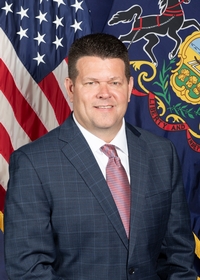
Joe Pittman
Joe Pittman Senate · District 41
R
Strong +
96% 24
Bridget Malloy Kosierowski
Bridget Malloy Kosierowski House · District 114
D
Strong +
94% 113
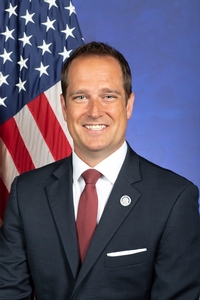
Devlin Robinson
Devlin Robinson Senate · District 37
R
Strong +
93% 29
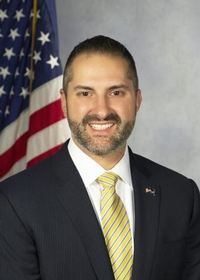
Steve Malagari
Steve Malagari House · District 53
D
Strong +
93% 95
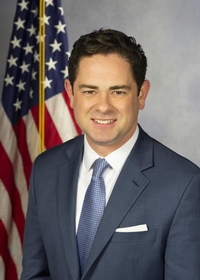
Kyle Mullins
Kyle Mullins House · District 112
D
Strong +
92% 91
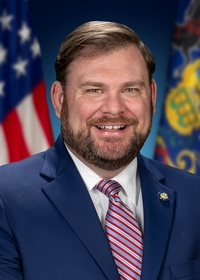
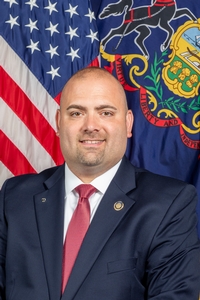
Eric Weaknecht
Eric Weaknecht House · District 5
R
Strong −
14% 66
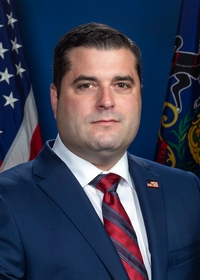
Jamie Walsh
Jamie Walsh House · District 117
R
Strong −
14% 80
Scott Barger
Scott Barger House · District 80
R
Strong −
14% 72
Ryan Warner
Ryan Warner House · District 52
R
Strong −
14% 77
Joe Hamm
Joe Hamm House · District 84
R
Strong −
14% 76
Showing 531–540 of 703 bills

All healthcare bills

in committee · Pennsylvania · Senate Jun 24, 2025

SB 891: An Act amending the act of May 22, 1951 (P.L.317, No.69), known as The Professional Nursing Law, further providing for examinations and certificates; and abrogating regulations.

SB 891 amends Pennsylvania's Professional Nursing Law to streamline the licensing process for nursing applicants. It requires the Board of Nursing to immediately admit eligible applicants who have completed an approved nursing program and provided verification, removing administrative delays. The bill specifically abrogates two existing regulations (49 Pa. Code §§ 21.21 and 21.23) that conflicted with this new requirement. This change directly affects nursing applicants and the Board of Nursing, ensuring timely exam access for qualified candidates. The law takes effect 60 days after enactment.
in committee · Pennsylvania · Senate Jun 24, 2025

SB 884: An Act amending the act of March 20, 2002 (P.L.154, No.13), known as the Medical Care Availability and Reduction of Error (Mcare) Act, in insurance, prohibiting certain adverse actions against legal reproductive health care.

SB 884 amends Pennsylvania's MCare Act to prohibit health insurance companies from taking negative actions against healthcare providers who offer legal reproductive health services, including telemedicine prescriptions for pregnancy termination to out-of-state patients. The bill specifically bans insurers from refusing to renew policies, raising premiums, or making other unfavorable changes solely because a provider offers such services permitted under Pennsylvania law. It defines "adverse actions" to include contract terminations, negative reporting to authorities, and coverage changes. This directly affects medical liability insurers and providers offering reproductive care, ensuring they cannot face financial penalties for serving patients from other states legally. The law takes effect 60 days after enactment.
passed · Pennsylvania · Senate Jul 25, 2025

SR 119: A Resolution urging the Congress of the United States to support the Whole Milk for Healthy Kids Act of 2025 and amend or repeal Federal law relating to program requirements in order to allow for the availability of whole milk and 2% reduced fat milk, flavored or unflavored, in elementary and secondary schools in Pennsylvania and urging the United States Secretary of Agriculture and Secretary of Health and Human Services to update Federal standards relating to the establishment of dietary guidelines in order to permit the availability of whole milk and 2% reduced fat milk, flavored or unflavored, in elementary and secondary schools in Pennsylvania.

This resolution (SR 119) is a non-binding request from the Pennsylvania Senate urging Congress to support the Whole Milk for Healthy Kids Act of 2025 and amend federal law. It specifically seeks to change current requirements under the Healthy, Hunger-Free Kids Act of 2010, which currently restricts school milk options to fat-free or low-fat varieties. The resolution asks Congress to allow whole milk and 2% reduced-fat milk (flavored or unflavored) in Pennsylvania's elementary and secondary schools, and directs federal agencies to update dietary guidelines accordingly. This would permit schools to offer these milk types without risking federal funding, but the resolution itself does not alter any existing law or standards.
in committee · Pennsylvania · House Jan 16, 2025

HB 120: An Act amending the act of February 13, 1970 (P.L.19, No.10), entitled "An act enabling certain minors to consent to medical, dental and health services, declaring consent unnecessary under certain circumstances," providing for consent required for vaccines.

HB 120 requires parental or guardian consent for most minors to receive vaccines in Pennsylvania. Specifically, it mandates that individuals under 18 who haven't graduated high school, aren't pregnant, and aren't legally emancipated cannot consent to vaccines without a parent or guardian's permission. The bill also overrides any local laws (such as city or county rules) that might allow minors to consent to vaccines without parental approval, making those local rules invalid. The law takes effect 60 days after enactment.
in committee · Pennsylvania · Senate Oct 17, 2025

SB 1041: An Act amending the act of June 13, 1967 (P.L.31, No.21), known as the Human Services Code, in public assistance, providing for medical assistance for complex care assistant services.

SB 1041 amends Pennsylvania's Human Services Code to expand public assistance coverage for complex care assistant services. It directly affects individuals requiring long-term, specialized personal care due to disabilities or chronic conditions. The bill establishes a new provision requiring the state to provide medical assistance for these services under the public assistance program. This changes existing coverage by explicitly including complex care assistants, who help with daily living tasks like bathing, feeding, and medication management. The bill is currently pending in the Health & Human Services committee.
passed · Pennsylvania · House Feb 4, 2025

HB 190: An Act amending the act of March 10, 1949 (P.L.30, No.14), known as the Public School Code of 1949, in school health services, providing for eating disorder awareness and education.

HB 190 requires Pennsylvania schools to annually provide eating disorder awareness and education materials to parents, guardians, and key school staff (like counselors and principals) for students in grades 6-12. The bill mandates that schools share this information via email, mail, or website, using materials developed by the Department of Health in collaboration with an advisory committee of experts from groups like the National Alliance for Eating Disorders and school health organizations. These materials must explain warning signs, resources, prevention, and be available in multiple languages. The law directly affects all public, charter, cyber, and nonpublic schools in Pennsylvania, aiming to improve early recognition and support for students facing eating disorders.
Sub-Topics Student Health
passed · Pennsylvania · House Jul 8, 2025

HB 1234: An Act amending the act of June 13, 1967 (P.L.31, No.21), known as the Human Services Code, in public assistance, providing for coverage for blood pressure monitors.

HB 1234 amends Pennsylvania's Human Services Code to require public assistance programs to cover the cost of blood pressure monitors for eligible recipients. This change directly affects individuals enrolled in state public assistance programs who need blood pressure monitoring for health management. The bill adds blood pressure monitors to the list of covered medical equipment under the public assistance program, ensuring these devices are provided without cost to recipients. It does not change eligibility requirements but expands existing coverage to include this specific monitoring tool. The bill passed final passage on July 1, 2025, and was referred to the Health & Human Services committee.
in committee · Pennsylvania · House Mar 5, 2025

HB 809: An Act amending the act of April 14, 1972 (P.L.233, No.64), known as The Controlled Substance, Drug, Device and Cosmetic Act, further providing for definitions and for prohibited acts and penalties; and providing for syringe service programs authorized.

HB 809 amends Pennsylvania's Controlled Substance Act to clarify that syringes, needles, and related harm reduction supplies used in authorized syringe service programs or provided by pharmacies/healthcare providers are **not** considered "drug paraphernalia." This change directly affects syringe service programs, pharmacies, and healthcare providers operating under state regulations. The key provision (Section 2(b)(11)) explicitly exempts these items when used to prevent disease transmission and reduce harm among people who use drugs. The bill makes no changes to penalties or drug schedules - only updating definitions to protect public health initiatives.
in committee · Pennsylvania · Senate Jun 3, 2025

SB 819: An Act prohibiting governmental action against parents, legal custodians and legal guardians of minors in the provision of certain information and services to minors; and providing for certain protection from child abuse claims.

SB 819 prevents Pennsylvania government from blocking parents, legal custodians, or guardians from obtaining or providing medically accurate health information or evidence-based medical services to minors. It defines "medically accurate" as supported by current medical research or major health organizations, and "evidence-based" as care aligned with medical guidelines. The law explicitly states that such actions do not constitute child abuse under state law. It applies broadly to all minors, protecting parents who act based on medical evidence and the child’s specific circumstances.
in committee · Pennsylvania · House Oct 17, 2025

HB 1962: An Act prohibiting State agencies from providing funding and contracting with a person who provides or is affiliated with another person who provides abortion-related activities; requiring a person enrolled in a medical assistance program to attest that the person is not engaging in abortion-related activities; and imposing duties on the Department of Human Services.

HB 1962 prohibits state agencies from providing funding or entering contracts with individuals or entities that provide or are affiliated with abortion-related activities. It requires people enrolled in medical assistance programs to certify they are not engaging in such activities. The bill also mandates the Department of Human Services to establish procedures for verifying these attestations and enforcing the restrictions. These provisions directly impact state-funded programs, healthcare providers receiving state contracts, and medical assistance beneficiaries. The bill is currently under review by the Health committee.
Sub-Topics Women's Health
Showing 531 to 540 of 703 bills
Previous 1 53 54 55 71 Next