Issue · Education

Education

Every education bill, vote, and legislator stance in Pennsylvania, automatically classified by Maddy, our AI policy reader.

Total bills
417
2025-2026 Regular Session
Top supporter
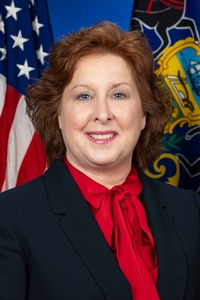
Lynda Culver
89% support rate
Top opponent
Barb Gleim
23% support rate
Ranked legislators
10
5 support · 5 oppose
Key legislators

Who's moving education in Pennsylvania

Legislators moving education in Pennsylvania
Legislator Party Stance Support rate Votes
Lynda Culver
Lynda Culver Senate · District 27
R
Strong +
89% 64
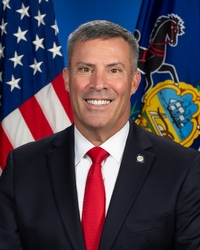
Greg Rothman
Greg Rothman Senate · District 34
R
Strong +
89% 58
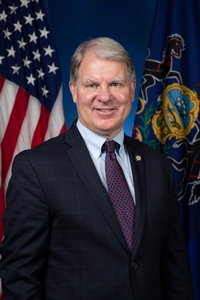
Dave Argall
Dave Argall Senate · District 29
R
Strong +
89% 59
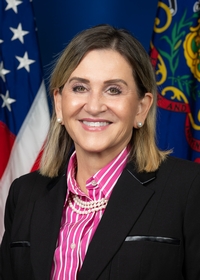
Kim Ward
Kim Ward Senate · District 39
R
Strong +
88% 78
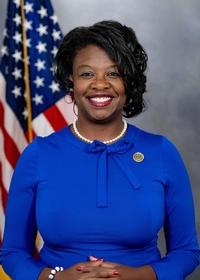
Regina Young
Regina Young House · District 185
D
Strong +
80% 195
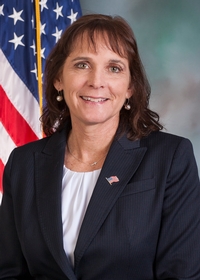
Barb Gleim
Barb Gleim House · District 199
R
Oppose
23% 155
Marc Anderson
Marc Anderson House · District 92
R
Oppose
25% 157
Joe D'Orsie
Joe D'Orsie House · District 47
R
Oppose
26% 159
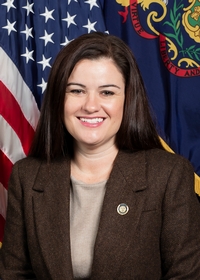
Charity Krupa
Charity Krupa House · District 51
R
Oppose
32% 166
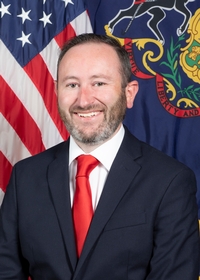
Brian Rasel
Brian Rasel House · District 56
R
Oppose
33% 157
Showing 391–400 of 417 bills

All education bills

in committee · Pennsylvania · House Jan 27, 2025

HB 341: An Act amending the act of March 10, 1949 (P.L.30, No.14), known as the Public School Code of 1949, in grounds and buildings, providing for certified point-of-use filter required; establishing the Safe Schools Drinking Water Fund; and making an interfund transfer.

HB 341 requires Pennsylvania public schools to install certified point-of-use filters on all drinking water outlets by January 1, 2027, and replace older fountains without filters with bottle-filling stations or filtered fountains (at least one per 100 students/staff). It establishes a $10 million annual Safe Schools Drinking Water Fund to provide grants for filter installation and fountain replacement, prioritizing schools built before 2014 and those serving prekindergarten students. The bill also mandates schools to publicly report their compliance plans, filter maintenance schedules, and lead risk information online, while new outlets must meet strict lead-leaching standards (NSF 61). This directly affects all Pennsylvania public school entities, focusing on reducing lead exposure in drinking water.
in committee · Pennsylvania · Senate Aug 27, 2025

SB 982: An Act amending Title 24 (Education) of the Pennsylvania Consolidated Statutes, providing for basic education and bullying and cyberbullying prevention and response.

SB 982 amends Pennsylvania's education code to establish new requirements for preventing and responding to bullying and cyberbullying in public K-12 schools. It requires all school entities (including districts, charter schools, and cyber charters) to adopt or revise anti-bullying policies by July 1 of the year after the law takes effect, including confidential reporting, 24-hour parent notifications for confirmed incidents, and 3-day investigation timelines. Schools must designate a bullying response coordinator, provide age-appropriate prevention education in existing curricula, and train staff every three years. The bill mandates annual anonymized data reporting on incidents through the Safe2Say Program and requires the Department of Education to develop a model policy within 120 days. The law takes effect 60 days after enactment.
in committee · Pennsylvania · House Apr 3, 2025

HB 1121: An Act amending the act of March 10, 1949 (P.L.30, No.14), known as the Public School Code of 1949, in pupils and attendance, providing for access to private pay services.

HB 1121 allows private providers of applied behavior analysis (ABA) services to work with students who have autism or developmental delays during school hours, as specified in their Individualized Education Program (IEP). Schools must permit this access without charging fees or creating barriers, provided parents give written consent and the services align with the student’s IEP. Private providers must coordinate with school staff, hold required certifications, and be supervised by a nationally certified behavior analyst. The bill requires schools to accommodate these services without disrupting classrooms and prohibits discrimination or retaliation against families using private pay services.
in committee · Pennsylvania · House Jan 22, 2025

HB 246: An Act amending the act of March 10, 1949 (P.L.30, No.14), known as the Public School Code of 1949, in miscellaneous provisions relating to institutions of higher education, prohibiting certain diversity training and courses.

HB 246 prohibits Pennsylvania public and state-related institutions of higher education from requiring students to complete diversity training or diversity courses to graduate or earn credit. It specifically bans programs based on theories that systemic racism, sexism, or oppression are inherent in U.S. institutions, as defined in the bill. The law applies to community colleges, rural regional colleges, state universities, state-related institutions, and Thaddeus Stevens College. It does not ban all diversity-related content but targets courses or training explicitly founded on the specified theories. The bill takes effect 60 days after enactment.
Sub-Topics Higher Education
in committee · Pennsylvania · House Jan 8, 2025

HB 24: An Act providing for off-campus student housing rights.

This bill requires Pennsylvania's Department of Education to create and distribute a "student bill of rights" to all off-campus students at accredited colleges and universities in the state. The bill outlines specific tenant protections, including the right to habitable housing, privacy, a hearing before eviction, and reasonable accommodations for disabilities. Institutions must also provide students with an online course about housing rights, which students must complete within their first semester (or pay a $50 fee for non-completion). The law applies to all public and private higher education institutions in Pennsylvania and takes effect January 1, 2026.
in committee · Pennsylvania · Senate Jun 18, 2025

SB 858: An Act amending the act of March 10, 1949 (P.L.30, No.14), known as the Public School Code of 1949, in pupils and attendance, further providing for military child advance enrollment.

SB 858 (Pennsylvania's Public School Code amendment) allows military-connected children to enroll in Pennsylvania schools before their family establishes residency. It requires military families to provide proof of intent to move (like a lease or home purchase contract) and to confirm residency within 45 days of their military transfer date. Schools must accept previously earned credits and grades for GPA calculations when military students transfer between districts. This directly affects military families relocating within Pennsylvania, ensuring smoother educational transitions during reassignments.
passed · Pennsylvania · Senate Feb 4, 2026

SB 974: An Act amending the act of March 10, 1949 (P.L.30, No.14), known as the Public School Code of 1949, in miscellaneous provisions relating to institutions of higher education, further providing for Dual Credit Innovation Grant Program.

SB 974 establishes a grant program within Pennsylvania's Department of Education to fund public colleges and community education councils that offer dual credit courses to high school students. The program prioritizes institutions expanding access for underserved groups, including rural students, low-income students, career and technical education participants, and those experiencing education instability. Grants require recipients to report annual data on students earning college credits through these partnerships and their post-graduation college enrollment, with this information made publicly available online. The bill directly affects public higher education institutions, community education councils, and high school students participating in dual credit programs.
in committee · Pennsylvania · Senate Apr 2, 2025

SR 68: A Resolution urging the Congress of the United States to fully cooperate with Federal efforts to eliminate the United States Department of Education, reaffirming Pennsylvania's sovereign authority over its educational system and recognizing the need for State-led education solutions to improve outcomes for Pennsylvania students.

This resolution (SR 68) urges the U.S. Congress to cooperate with federal efforts to eliminate the U.S. Department of Education. It states Pennsylvania seeks to exercise its state authority over education, arguing federal mandates limit the state's ability to address local needs like teacher shortages and student outcomes. The resolution cites Pennsylvania's constitutional duty to provide public education and claims federal education funding (e.g., $15 billion in Title I) could be redirected to state priorities if the Department of Education is dismantled. As a non-binding resolution, it does not change federal law but expresses Pennsylvania's position on education policy.
in committee · Pennsylvania · House Jul 14, 2025

HB 1732: An Act amending the act of January 28, 1988 (P.L.24, No.11), known as the Private Academic Schools Act, further providing for application for license, for issuance and renewal of license and for promulgation of rules and regulations.

HB 1732 amends Pennsylvania's Private Academic Schools Act to streamline licensing for private schools. It allows schools to submit applications before securing a physical facility (with a site plan and timeline) and to include staffing projections for qualified staff. The bill creates a new six-month conditional license option for schools meeting most requirements but needing to finalize staffing or facility details. It also requires the State Board of Private Academic Schools to establish new rules for teacher qualifications within 180 days, which must be in place before new or renewed licenses are issued. This directly affects private academic schools seeking or renewing licenses in Pennsylvania.
Sub-Topics Teachers
in committee · Pennsylvania · House Jul 24, 2025

HB 1763: An Act amending the act of March 10, 1949 (P.L.30, No.14), known as the Public School Code of 1949, in educational tax credits, further providing for definitions and providing for compliance with Federal tax credit for contributions to scholarship organizations.

HB 1763 aligns Pennsylvania's tax credit program with a federal tax credit for contributions to scholarship organizations. It requires scholarship organizations in Pennsylvania to verify their tax-exempt status, maintain separate accounts for scholarship funds, provide scholarships to at least 10 students from different schools, spend 90% of income on scholarships, and verify applicants' household income to ensure eligibility. Organizations must submit compliance documentation by June 1, 2026, and annually thereafter, with the state department confirming their eligibility for the federal tax credit. This directly affects scholarship organizations seeking to participate in the federal tax credit program, ensuring they meet federal requirements to allow donors to claim tax benefits.
Showing 391 to 400 of 417 bills
Previous 1 39 40 41 42 Next