

Issue · Education
Education (Higher Education)
Every education bill, vote, and legislator stance in Pennsylvania, automatically classified by Maddy, our AI policy reader.
Total bills
70
2025-2026 Regular Session
Top supporter
Craig Williams
100% support rate
Top opponent
Chris Gebhard
0% support rate
Ranked legislators
10
5 support · 5 oppose
Key legislators
Who's moving higher education in Pennsylvania
| Legislator | Party | Stance | Support rate | Votes |
|---|---|---|---|---|
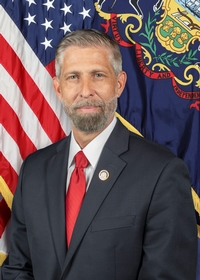
Craig Williams
House · District 160
|
R |
Strong +
|
100% | 16 |

K.C. Tomlinson
House · District 18
|
R |
Strong +
|
100% | 16 |

Tom Mehaffie
House · District 106
|
R |
Strong +
|
100% | 16 |

Dave Argall
Senate · District 29
|
R |
Strong +
|
100% | 5 |

Greg Rothman
Senate · District 34
|
R |
Strong +
|
100% | 5 |

Chris Gebhard
Senate · District 48
|
R |
Strong −
|
0% | 3 |

Scott Hutchinson
Senate · District 21
|
R |
Strong −
|
0% | 3 |
|
AT
Ana Tiburcio
House · District 22
|
D |
Strong −
|
18% | 11 |
|
JM
Jen Mazzocco
House · District 42
|
D |
Strong −
|
18% | 11 |

Dawn Keefer
Senate · District 31
|
R |
Strong −
|
20% | 5 |
Showing 1–10 of 70
bills
All education bills
SB 1390: An Act amending the act of March 10, 1949 (P.L.30, No.14), known as the Public School Code of 1949, in school finances, providing for school mapping services.
Topics
✓ EducationSupports EducationBill mandates improved campus maps for emergency response, enhancing school safety and infrastructure.
✓ TechnologySupports TechnologyBill mandates secure storage of campus maps within the US and compatibility with emergency response software, enhancing cybersecurity and data protection for schools.
HB 2675: An Act amending the act of March 4, 1971 (P.L.6, No.2), known as the Tax Reform Code of 1971, in personal income tax, further providing for classes of income.
Topics
✓ Budget & TaxesSupports Budget & TaxesBill clarifies tax exemptions for educational savings, promoting fiscal responsibility and reducing tax burden on families using qualified financial vehicles.
✓ EducationSupports EducationBill exempts educational savings distributions from state tax, increasing access to education funding for families.
HB 2656: An Act amending the act of March 10, 1949 (P.L.30, No.14), known as the Public School Code of 1949, in community colleges, further providing for definitions, for powers and duties of State Board of Education, for plans and procedures for establishing, for election or appointment and term and organization of board of trustees, for powers and duties of board of trustees, for students, for tuition, for withdrawal of sponsorship and dissolution of community college, for participation in or admission to established community college, for degrees and for financial program and reimbursement of payments; in institutions of higher education, further providing for long-term strategic planning and providing for additional powers and duties; and, in the State Board of Education, further providing for membership, for powers and duties of the board, for powers and duties of Council of Basic Education and Council of Higher Education and for reports and recommendations.
Sub-Topics
Higher Education
SB 1271: An Act amending the act of June 30, 1987 (P.L.163, No.16), known as the Rural Pennsylvania Revitalization Act, in Center for Rural Pennsylvania, further providing for grants.
SB 1240: An Act amending the act of May 26, 1947 (P.L.318, No.140), known as the CPA Law, further providing for requirements for issuance of certificate.
Sub-Topics
Higher Education
HB 2525: An Act amending the act of July 18, 1974 (P.L.483, No.174), known as The Institutional Assistance Grants Act, repealing provisions relating to legislative findings; further providing for definitions, for institutional assistance grants and for assistance grant fund; and repealing provisions relating to appropriation.
Topics
✓ Budget & TaxesSupports Budget & TaxesBill establishes a new maximum grant limit and mandates audits and reporting for student grants, enhancing fiscal oversight and protecting funding for higher education.
✓ EducationSupports EducationBill updates grant procedures and establishes a $400 limit for independent college students, enhancing financial aid access.
HB 2358: An Act amending the act of March 10, 1949 (P.L.30, No.14), known as the Public School Code of 1949, in charter schools, further providing for funding for cyber charter schools.
Topics
✓ EducationSupports EducationBill clarifies funding rules for cyber charter schools and mandates tuition-free access, expanding educational options and support for students.
✓ TechnologySupports TechnologyBill mandates free tuition for cyber charter schools, expanding access to online education and digital learning resources.
HR 489: A Resolution designating May 17, 2026, as the "25th Anniversary of the Educational Improvement Tax Credit Program Day" in Pennsylvania.
Topics
✓ Budget & TaxesSupports Budget & TaxesBill designates a day honoring a tax credit program that provides tax relief for businesses and supports educational options, aligning with fiscal incentives.
✓ EducationSupports EducationBill recognizes a program expanding educational access via tax credits for scholarships, indicating support for diverse schooling options.
HB 2507: An Act amending the act of March 4, 1971 (P.L.6, No.2), known as the Tax Reform Code of 1971, in tax credit and tax benefit administration, further providing for definitions; providing for Internship Tax Credit Program; and promulgating regulations.
Topics
✓ Budget & TaxesSupports Budget & TaxesBill creates a tax credit program to encourage small business hiring of interns, providing fiscal relief and promoting workforce development.
✓ EducationSupports EducationBill creates tax credits for businesses hiring college interns, enhancing student work experience and educational access.
✓ Labor & EmploymentSupports Labor & EmploymentBill creates a tax credit program to incentivize businesses to hire and pay students, promoting paid work experiences and employment opportunities.