

Maddy summaryHR 1919, the "Anti-CBDC Surveillance State Act," prohibits the Federal Reserve from developing, testing, or issuing any central bank digital currency (CBDC) or similar digital assets. It specifically bans the Fed from offering direct financial products to individuals, maintaining individual accounts, or issuing CBDCs directly or indirectly through intermediaries like banks. The bill also blocks the Fed from using any digital asset for monetary policy and clarifies that physical currency's privacy protections remain intact. This policy directly affects the Federal Reserve System's ability to create or manage digital monetary tools.
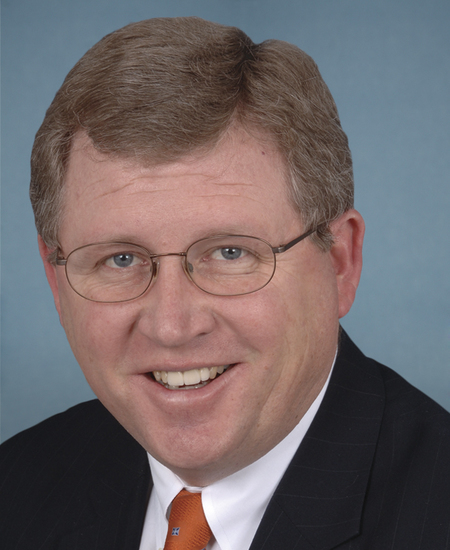
Rep. Frank D. Lucas
Sponsored bills
Maddy summaryHR 4459, the MINT Act of 2025, changes U.S. coin specifications by modifying the weight requirements for 5-cent coins (nickels) and permanently ending the production of 1-cent coins (pennies). It allows the 5-cent coin's weight to range between 4-6 grams (previously fixed at 5 grams for nickel alloy coins) and updates the penny's composition to copper and zinc. The bill mandates an end to new penny production while ensuring all pennies minted before the law's enactment remain valid legal tender for debts and taxes. Existing pennies in circulation will not lose their value, and the law does not affect the production of other coins.
Maddy summaryThe Small Bank Holding Company Relief Act would raise the consolidated asset threshold for small bank holding companies to $25 billion, exempting them from certain federal banking regulations. The Federal Reserve must revise its policy statement to reflect this new threshold within 180 days of the bill's enactment. This change directly affects small banks and savings and loan holding companies with consolidated assets below $25 billion. The policy update aims to reduce regulatory burdens on smaller financial institutions.
Maddy summaryHR 4382 authorizes the U.S. Mint to produce commemorative coins for the 2028 Los Angeles Olympics/Paralympics and 2034 Salt Lake City Winter Olympics/Paralympics. It specifies gold, silver, and half-dollar coin designs with defined mintage limits (e.g., up to 100,000 $5 gold coins for each event), all bearing inscriptions like "2028" or "2034" and standard coin features. A surcharge ($5-$50 per coin) is added to sales, with all funds directed to the respective Olympic committees to support event hosting and legacy programs like youth sports. The bill ensures no net cost to the government by requiring surcharge revenues to cover all design, production, and marketing expenses before funds are disbursed.
Maddy summaryHR 4254 establishes the "Iranian Campaign Medal" to recognize military personnel who served during specific operations in the Iran-Israel War, including "Operation Midnight Hammer" on June 22, 2025. It authorizes the Secretary of Defense to award the medal to active-duty service members deployed in designated areas of operation or performing prescribed service related to the conflict. The medal may also be issued to the next-of-kin of deceased eligible service members. The bill specifies the medal’s design, limits awards to one per person, and requires uniform regulations for issuance.
Maddy summaryHR 1713, the Agricultural Risk Review Act of 2025, requires the Secretary of Agriculture to join the Committee on Foreign Investment in the U.S. (CFIUS) when reviewing transactions involving U.S. agricultural land, biotechnology, or agriculture-related infrastructure (like transportation or processing). It specifically targets acquisitions of agricultural land by foreign entities from China, North Korea, Russia, or Iran, mandating that the Secretary of Agriculture first assesses these transactions before CFIUS decides whether to proceed with a full review. The law includes a sunset provision, ending these requirements for a specific country once it is removed from the federal list of foreign adversaries.
Maddy summaryThe FIRM Act (HR 2702) prohibits federal banking agencies from considering "reputational risk" in supervising banks and credit unions. It requires agencies to remove all references to reputational risk - defined as concerns about negative publicity affecting an institution's reputation - from regulations, examinations, and enforcement actions. The bill directly affects depository institutions (banks and credit unions) and federal regulators like the FDIC and CFPB, banning them from using reputational risk as a basis for supervision or enforcement. This policy change aims to limit regulatory actions based on subjective public opinion rather than financial safety and soundness.
Maddy summaryThis bill requires major internet companies (including social media, streaming services, and app stores) and broadband providers to contribute to the Universal Service Fund, which subsidizes affordable broadband in rural and high-cost areas. It exempts smaller companies that transmit less than 3% of U.S. broadband data or earn under $5 billion annually. The Federal Communications Commission must create a new support mechanism to help rural broadband providers cover costs, while ensuring contributions remain fair and predictable. The bill explicitly states it does not grant the FCC new authority over these companies.
Maddy summaryThis bill changes how federal Bureau of Prisons employees in the "Rest of U.S." pay locality receive compensation. It directs that employees whose official worksite is in "Rest of U.S." be treated as working in the nearest other pay locality (within 200 miles) with the highest comparability payment, rather than the default "Rest of U.S." rate. This adjustment applies to all Bureau of Prisons employees, including prevailing rate staff, and takes effect 180 days after enactment. The change directly affects federal correctional officers and staff working in remote locations currently covered by the "Rest of U.S." pay rate.
Maddy summaryThis bill amends the Food and Nutrition Act to allow federally recognized tribes and tribal organizations to directly manage the Food Distribution Program on Indian Reservations (FDPIR) through self-determination contracts or self-governance agreements. It requires tribes to purchase domestically produced food that maintains similar nutritional value and package size to current FDPIR offerings, while respecting foods of Tribal significance. The Secretary must consult tribes on participation processes and submit annual reports to Congress on program activities. The bill also terminates a prior demonstration program and ensures tribal agreements follow the Indian Self-Determination Act’s rules, with interpretations favoring tribal interests. This directly affects tribal communities managing their own food distribution systems on reservations.