

Maddy summarySB 2009, the "Protecting Patients Act of 2026," makes fertility fraud a felony punishable by up to 20 years in prison. It defines fertility fraud as knowingly misrepresenting reproductive materials or using donor materials without consent, directly affecting fertility clinics, healthcare providers, and patients undergoing assisted reproduction (like IVF or egg donation). Key provisions require facilities to report suspected fraud to law enforcement, protect whistleblowers from retaliation, mandate permanent license revocation for healthcare providers convicted of fraud, and require sex offender registration for offenders (excluding life sentences). The bill also extends the statute of limitations for DNA-identified cases by 10 years and mandates confidentiality for victims and reporters. It becomes effective November 1, 2026.
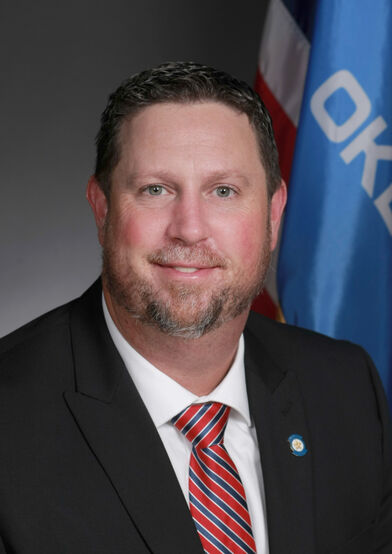
Sen. David Bullard
Sponsored bills
Maddy summarySB 1939 amends Oklahoma law to expand handgun license eligibility for individuals aged 18-20 who are members or veterans of the U.S. Armed Forces, Reserves, or National Guard (discharged honorably). The bill updates Section 1290.9 of the Oklahoma Self-Defense Act to explicitly include this group as qualifying applicants, removing prior age-based barriers for military-affiliated youth. It does not change other eligibility requirements (like age 21, training, or residency). This policy change takes effect November 1, 2026, directly affecting young military personnel seeking concealed carry permits in Oklahoma.
Maddy summarySB 2129, the "Employer Health Plan Transparency Act," requires health insurance plans covering employees (group health plans or public employee plans) to provide employers with full access to claims data, medical records, and itemized cost details in their contracts. It prohibits contracts from including clauses that limit this information or penalize employers for requesting it. The law mandates that insurers comply with federal privacy rules (HIPAA) when sharing data and requires clear, unmodified disclosures of healthcare costs. Violations could result in civil penalties from Oklahoma's Insurance Commissioner. This bill directly affects employers managing health benefits and insurers contracted with them.
Maddy summarySB 1947 allows Oklahoma state employees to opt out of the state's basic health plan if they have separate health insurance or belong to a health care sharing ministry (HCSM). Employees with separate insurance receive $150 monthly instead of the flexible benefit amount, while HCSM members retain their full benefit. The bill amends state law to require proof of coverage and an annual affidavit for opt-outs, with the state retaining any savings from employees opting out. This policy change directly affects active state employees enrolled in the Oklahoma Employees Insurance and Benefits Program.
Maddy summarySB 1868 requires Oklahoma public school teachers presenting biological evolution to also teach creationism or intelligent design. It prohibits school boards and administrators from stopping teachers from objectively analyzing the scientific strengths and weaknesses of evolution, creationism, or intelligent design. The bill explicitly states its provisions must not promote any religious or non-religious doctrine. This law applies to all public school teachers and students in Oklahoma, effective July 1, 2026.
Maddy summarySB 2103 updates Oklahoma's charter school laws by revising the definition of "charter school" to include new sponsor options (like higher education institutions and the Statewide Charter School Board) starting July 1, 2024. It establishes the Statewide Charter School Board to oversee virtual and traditional charter schools, manage applications, and prioritize schools serving at-risk students. The bill also creates rules for "conversion schools" (traditional public schools turning into charters), requiring written conversion plans and public approval, while ensuring they follow charter school accountability standards. Additionally, it mandates the Board to maintain a list of certified high-quality online courses (especially in STEM and AP subjects) and negotiate state-rate contracts for these courses.
Maddy summarySB 1961 would change the process for removing certain state agency leaders in Oklahoma, requiring a majority vote of the Legislature instead of allowing the Governor to remove them unilaterally. It affects positions including the Commissioner of Mental Health, Director of Corrections, and Director of Transportation, among others. The bill amends multiple statutes to specify that these officials can only be removed by a majority vote in both legislative chambers. This is a procedural change to state governance structure, not a policy shift affecting public services.
Maddy summarySB 1917 bans the installation of solar energy devices (like panels) on agricultural land in Oklahoma, directly affecting farmers and ranchers who use land primarily for farming or ranching. The bill restricts solar installations to single-family homes and commercial/industrial properties only, prohibiting them on any land classified as agricultural by the Oklahoma Department of Agriculture. It defines "agricultural land" as property used for farming or ranching under state agriculture department oversight. The law takes immediate effect due to an emergency declaration, with no exceptions for existing installations on farmland after the effective date.
Maddy summarySB 1987 increases Oklahoma's homestead property tax exemption for homeowners. Starting in tax year 2027, all homesteads receive a base exemption of $2,000 (up from $1,000), with an additional $3,000 exemption possible if two conditions are met: the county's property tax revenue grew by at least 5% compared to the prior year, and the county commission approves the extra exemption. This bill directly affects homeowners in counties that meet the revenue growth threshold and receive county commission approval. The changes take effect November 1, 2026.
Maddy summarySB 1866 creates Oklahoma's "Sexual Education Reform and Parental Rights Protection Act," requiring written parental consent for students to participate in "comprehensive sexual education" (as defined by the bill). The bill prohibits curricula that promote non-heterosexual orientations, sexual activity outside marriage, or gender identity concepts beyond male/female, while mandating "optimal sexual health education" that emphasizes abstinence and marriage. School districts must adopt procedures for parental consent, post required information on websites, and ensure only certified teachers lead specified classes. The law directly affects all Oklahoma public school students, parents/guardians, and school districts offering sexuality-related instruction.