

Maddy summaryHouse Bill 2735 revises how state licensing authorities consider an applicant's criminal history when granting occupational licenses or certifications. It specifies that a license can only be denied if the criminal offense directly relates to the job duties and poses a reasonable threat to public safety, health, or welfare. Licensing authorities must consider factors such as the crime's nature, time elapsed, and evidence of rehabilitation. The bill prohibits denials based on arrests not leading to conviction, expunged records, or most convictions older than five years, with exceptions for certain serious offenses. It also allows individuals to request a preliminary review of their criminal history to determine eligibility before applying for a license.
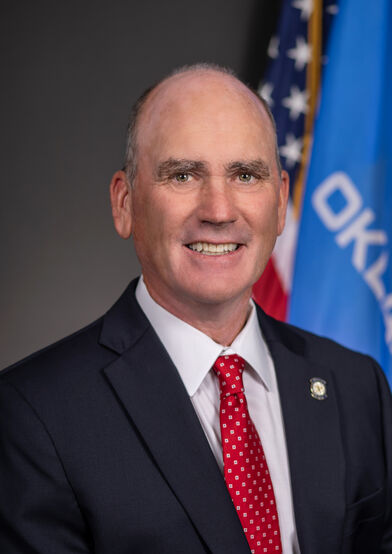
Sen. Jerry Alvord
Sponsored bills
Maddy summaryHB 1832 clarifies rules for electronic monitoring in Oklahoma's long-term care facilities, directly affecting residents of nursing homes, assisted living centers, intermediate care facilities, and continuum of care facilities. The bill requires facilities to obtain written consent from residents or their representatives before monitoring resident rooms and prohibits refusing admission or removal based on monitoring. It also mandates facilities to post notices about monitoring and allows residents to install their own monitoring devices with roommate consent. The law prohibits unauthorized monitoring, tampering with devices, and sharing recordings without consent, ensuring privacy protections for residents.
Maddy summaryHB 1665 increases the maximum annual salary for most county officers in Oklahoma from $49,500 to $74,500, while maintaining a minimum salary of $19,000. It specifically sets the sheriff's minimum salary at $44,000 (unchanged) but raises the sheriff's maximum salary to $74,500. County boards of commissioners will set salaries within these new limits for all elected county officials. The bill takes effect November 1, 2025.
Maddy summaryHB 2265 requires new Oklahoma notaries to pass an exam based on a state-approved course covering notary laws, ethics, and procedures. It mandates that all notaries maintain a detailed journal of every notarial act (including date, identity verification, and fees) for 10 years, in either a physical bound book or a secure electronic format. Notaries must transmit their journals to the Secretary of State upon resignation, suspension, death, or if the journal is lost/stolen. The bill applies directly to all current and new notaries public in Oklahoma and takes effect November 1, 2025.
Maddy summaryHB 1832 amends Oklahoma law to establish rules for electronic monitoring in long-term care facilities, including nursing homes, assisted living centers, and intermediate care facilities. The bill requires facilities to obtain written consent from residents (or their representatives) before monitoring a resident's room and to post clear signage about monitoring at facility entrances. It allows residents to install their own monitoring devices in their rooms with roommates' written consent and mandates that facilities provide room changes if a roommate objects. The law also prohibits tampering with monitoring devices and unauthorized interception of communications, with penalties for violations.
Maddy summaryHB 1665 raises the maximum annual salary for Oklahoma county officers from $49,500 to $74,500, while setting a new minimum of $19,000. It specifically requires sheriff salaries to be at least $44,000 annually (with the same $74,500 maximum as other officers). County boards of commissioners or budget boards must set salaries within these new limits, effective November 1, 2025. The bill directly affects all elected county officials, including sheriffs, by establishing their salary range.
Maddy summaryHB 2265 requires new Oklahoma notaries public to pass an exam covering notary laws, ethics, and procedures before appointment. It mandates that all notaries maintain detailed journals recording each notarial act (including date, identity verification, fees, and document type) for 10 years, with specific format rules for physical or electronic journals. Notaries must transmit their journals to the Secretary of State upon resignation, death, or incompetence, and must notify the Secretary immediately if a journal is lost or stolen. The bill directly affects new notary applicants and all current notaries in Oklahoma, effective November 1, 2025.
Maddy summarySB 466 amends Oklahoma law to increase the maximum annual salary cap for most county officers from $49,500 to $74,500. It specifically raises the sheriff's salary cap to $74,500 (previously $44,000 minimum but unchanged maximum) while maintaining the $19,000 minimum for all county officers. The bill directly affects elected county officials like sheriffs, clerks, and commissioners whose salaries are set by county boards. The change takes effect November 1, 2025, allowing county governing bodies to adjust salaries within the new limits.
Maddy summarySB 466 amends Oklahoma law to increase the maximum annual salary cap for most county officers from $49,500 to $74,500. It specifically sets the sheriff's minimum salary at $44,000 while applying the new $74,500 cap to all other elected county officials, including county commissioners and clerks. The bill updates statutory language to reflect these changes but does not alter how salaries are set (still determined by county boards). The new salary limits take effect November 1, 2025.
Maddy summarySB 449 modifies Oklahoma county rainy day fund rules to allow counties to use portions of these funds for general budget needs under specific conditions. It permits counties to draw up to 25% of their rainy day fund balance to supplement the general budget if it is smaller than the previous year's budget, and up to 12.5% (1/8) to address revenue shortfalls when collections fall below estimates. The bill maintains existing restrictions, requiring budget approval before transfers and limiting emergency use (e.g., natural disasters) to 50% of the fund. It directly affects all Oklahoma counties managing rainy day funds, providing new flexibility for budget adjustments without altering the 50% cap on fund size. The changes take effect July 1, 2025, following an emergency declaration.