

Maddy summaryHB 1027 amends Oklahoma's Law Enforcement Retirement System code to update membership definitions and service credit calculations. It adds new member categories, including agents hired by the Office of the Attorney General or Military Department after July 1, 2024, and university police officers at the University of Oklahoma or Oklahoma State University. The bill revises how service credit is purchased during certain leaves of absence by updating the purchase price calculation formula. These changes directly affect current and future members of the retirement system, covering law enforcement officers across state agencies like the Highway Patrol, State Bureau of Investigation, and university police departments.
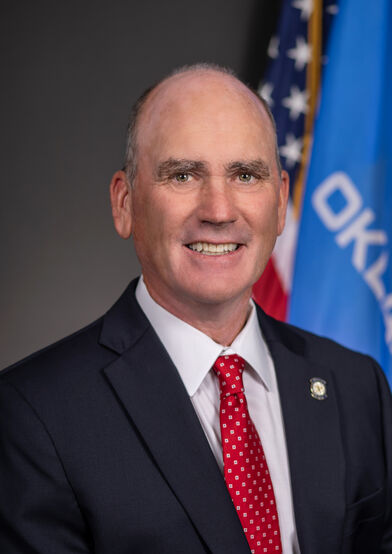
Sen. Jerry Alvord
Sponsored bills
Maddy summaryHB 1364 prohibits the nonconsensual sharing of AI-generated sexual images or real images of someone in a sexual act or showing intimate body parts without their consent. It defines "artificially generated sexual depiction" as images created using AI or photo editing that appear authentic but did not occur in reality. Violating this law is a misdemeanor (up to 1 year in jail or $1,000 fine) for first offenses, and a felony (up to 10 years in prison and sex offender registration) for repeated violations (three or more images within six months). The law applies to both real images and AI-generated content, with exemptions for criminal investigations and public exposure.
Maddy summaryHB 1364 amends Oklahoma law regarding sexual obscenity to create new offenses. It prohibits the nonconsensual dissemination of private sexual images and defines and criminalizes the nonconsensual dissemination of "artificially generated sexual depictions," which are visual depictions created substantially by artificial intelligence or photo editing software that appear to show an individual in a sexual state that did not occur in reality. These acts are unlawful if done without the depicted person's consent, especially if intended to cause harm. Penalties for violations range from a misdemeanor to a felony, with increased punishments for repeat offenses, financial gain, or the dissemination of multiple images. The bill is set to become effective on November 1, 2025.
Maddy summaryHB 2754 establishes the Oklahoma Rural Hospitals Funding Assistance Grant Program to provide financial support to qualifying rural hospitals. It directly affects publicly owned hospitals in towns with fewer than 5,000 residents that meet federal critical access hospital standards. The program creates a revolving fund in the state treasury, administered by the State Department of Health, to award grants prioritizing areas with significant healthcare access barriers due to distance. Grants are limited to the total funds available in the revolving fund, and the program becomes effective July 1, 2025.
Maddy summaryHB 2754 establishes the Oklahoma Rural Hospitals Funding Assistance Grant Program Act of 2025. This program aims to improve access to healthcare for residents in rural areas by providing grants to eligible rural hospitals. The State Department of Health will administer the program, developing criteria to prioritize funding for areas disproportionately impacted by limited access to medical facilities due to distance. To support this, the bill also creates the Oklahoma Rural Hospitals Funding Assistance Grant Program Revolving Fund in the State Treasury to hold and disburse the grant monies.
Maddy summaryHB 1270 modifies Oklahoma's process for issuing alcoholic beverage licenses by removing a provision that would have automatically approved licenses if the Alcoholic Beverage Law Enforcement (ABLE) Commission failed to act within a set timeframe. The bill deletes language requiring a "presumptive issuance" of licenses under specific conditions, instead ensuring all license decisions remain subject to the ABLE Commission's review. This directly affects businesses applying for alcohol licenses in Oklahoma, as it prevents automatic approval and requires the Commission to actively evaluate each application. The change clarifies that license denials or approvals must follow the Commission's formal review process, not automatic issuance.
Maddy summaryHB 1270 addresses the procedures and timeframes for the Alcoholic Law Enforcement (ABLE) Commission when handling the denial of alcoholic beverage licenses, affecting businesses applying for these permits. A key amendment to the bill removed a provision that would have resulted in the presumptive issuance of a license if the ABLE Commission failed to act within a specified time period. Therefore, the bill, as enacted, regulates ABLE's license denial process and sets timeframes without including automatic license approval as a consequence for agency inaction.
Maddy summaryHB 2802 amends Oklahoma's licensing laws for professions and occupations to limit when criminal history can block a license. It prohibits denial based on sealed/expunged records, arrests without conviction, or convictions over five years old (unless involving specific violent offenses like domestic abuse or sex offenses). Licensing agencies must now consider factors like the offense's relevance to the job, time passed, rehabilitation efforts, and provide written notice with appeal rights if denying a license. This directly affects applicants with criminal records seeking licenses for jobs like nursing, contracting, or childcare, ensuring decisions are based on specific, relevant criteria rather than vague standards.
Maddy summaryHouse Bill 2802 amends the rules for state licensing authorities considering an applicant's criminal history for professional licenses and certifications. It specifies that a conviction can only be grounds for denial if it "substantially relates" to the occupation's duties and "poses a reasonable threat" to public safety, health, or welfare. The bill requires authorities to consider factors like the offense's nature, time passed, and evidence of rehabilitation. It also prohibits denying a license based on arrests not followed by conviction, expunged records, or most convictions older than five years, with exceptions for serious offenses like sex crimes or domestic violence. Finally, it creates a process for applicants to receive written notice of potential denial and allows individuals to request a preliminary determination of their eligibility based on their criminal history.
Maddy summaryHB 2735 modifies Oklahoma's licensing rules for professions by establishing clear criteria for denying licenses based on criminal history. It allows denial only if a conviction "substantially relates" to the job duties and "poses a reasonable threat" to public safety, requiring licensing boards to consider factors like offense severity, time passed, and rehabilitation evidence. The bill explicitly prohibits denial for sealed/expunged records, most convictions older than five years (except for domestic violence, sex offenses, or specific felonies), and vague "good character" claims. Applicants can request pre-licensing determinations about their criminal history within 60-90 days, and boards must provide written notice of denial reasons with appeal options. This directly affects individuals seeking state licenses who have criminal records.