

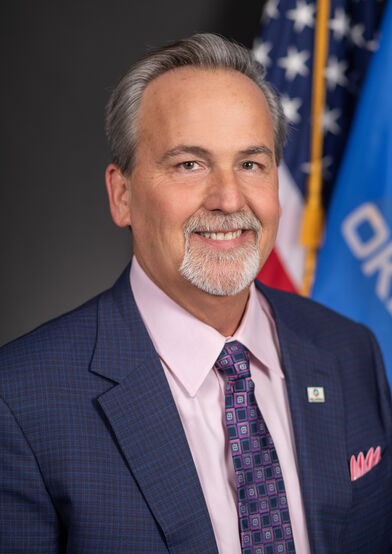
Photo of Bill Coleman
R Oklahoma Senate · District 10 On the 2026 ballot

Sen. Bill Coleman

Compare
Total votes
5,007
all sessions
Attendance
96%
142 missed
Near the chamber average
With party
98%
of cast votes
Higher than 93% of chamber peers
Bipartisan score
1%
crosses aisle rarely
Lower than 94% of chamber peers
Sponsored
456
bills & resolutions
Higher than 77% of chamber peers
Committees
6
assignments
456 bills and resolutions

Sponsored bills

Total
456
Primary
456
Co-sponsor
0
This page
456
matching current filters
Primary HB 3522
Signed into law · Oklahoma House · Lead sponsor
Alcoholic beverages; ABLE Commission; annual report; submission to certain individuals; availability online; effective date.

Maddy summaryHB 3522 requires the Oklahoma Alcoholic Beverage Laws Enforcement (ABLE) Commission to make its annual report publicly available online. The report, due by January 31 each year, must include the number of licenses revoked or suspended (with reasons), the number of enforcement tickets issued, total ticket amounts, and total penalties collected. This bill directly affects the ABLE Commission by mandating transparency in its regulatory actions and the public by providing accessible data on alcohol license enforcement. It does not change licensing rules or alcohol regulations but makes existing reporting requirements publicly accessible on the ABLE website starting November 1, 2026.

Signed into law Apr 20, 2026 0 co-sponsors
Primary HB 3011
Passed · Oklahoma House · Lead sponsor
Alcoholic beverages; personal use manufacturing; requirements; personal use permit; repealer; effective date.

Maddy summaryHB 3011 amends Oklahoma's alcohol laws to regulate home brewing of beer, cider, and wine for personal use. It requires individuals aged 21+ to obtain a personal use permit from the ABLE Commission to make up to 200 gallons annually for their own consumption, family, guests, or nonprofit events - prohibiting sales. The bill updates tax exemptions to align with this new permit system and repeals outdated Section 2-140 of the law. This affects Oklahoma residents who brew alcohol at home, clarifying legal limits and permitting requirements.

Passed Apr 16, 2026 0 co-sponsors
Primary HB 3905
Passed · Oklahoma House · Lead sponsor
Domestic violence; requiring use of Global Positioning System (GPS) monitoring devices; effective date.

Maddy summaryHB 3905 would require Oklahoma courts to mandate GPS monitoring devices for individuals convicted of domestic violence offenses as a standard condition of release or probation, unless the court determines it is unnecessary. This directly affects domestic violence offenders under court supervision and the judicial system managing their cases. The key provision establishes GPS tracking as a default measure, with judges retaining discretion to waive it for specific reasons. The policy aims to enhance victim safety by providing real-time location data of offenders.

Passed Apr 16, 2026 0 co-sponsors
Primary HB 1957
Passed · Oklahoma House · Lead sponsor
Motor vehicles; requiring certain vehicles be registered as a motor vehicle; national standards; authorizing Service Oklahoma to register and license certain vehicles; effective date.

Maddy summaryHB 1957 requires street-legal low-speed electric vehicles and golf carts to be registered as motor vehicles in Oklahoma. It removes the need for an "M" license endorsement for operators (who must be at least 16 with a standard driver’s license) and mandates compliance with federal safety standards for vehicles operated on roads with speed limits ≤35 mph. Service Oklahoma can register converted golf carts meeting federal safety rules without requiring a full 17-digit vehicle identification number. The bill takes effect November 1, 2025, and does not override local city restrictions on low-speed vehicle use.

Passed Apr 16, 2026 0 co-sponsors
Primary SB 1101
Passed · Oklahoma Senate · Lead sponsor
Dental insurance; mandating reports by carrier; requiring certain data to be included in initial report. Effective date.

Maddy summarySB 1101 requires dental insurance companies in Oklahoma to annually report their "dental loss ratio" - the percentage of premium dollars spent directly on dental care services (not administrative costs) - to the Insurance Commissioner. Carriers must submit detailed data by July 31 each year, including the loss ratio calculation, enrollee numbers, plan costs, and coverage limits. The public will be able to access this information online to compare insurers, and the state will investigate carriers with significantly low ratios. This bill directly affects all dental insurers operating in Oklahoma, mandating transparency about how premiums are used for dental care versus other expenses.

Passed Apr 14, 2026 0 co-sponsors
Primary SB 1304
Passed · Oklahoma Senate · Lead sponsor
Alcoholic beverage licenses; increasing tasting limits; limiting tasting requirements for employees. Effective date.

Maddy summarySB 1304 increases daily tasting limits for customers at licensed establishments: spirits to 1.5 fluid ounces, wine to 6 ounces, and beer to 9 ounces per person. It also revises rules for employee training tastings, setting specific daily limits (e.g., 12 ounces of beer, 6 ounces of wine, 1.5 ounces of spirits) and requiring all training tastings to be voluntary for employees. The bill directly affects bars, restaurants, and retailers holding retail spirits, wine, or beer licenses in Oklahoma. Key provisions clarify that samples must be poured from sealed containers, remain on-premises, and prohibit mandatory consumption for employees during training.

Passed Apr 8, 2026 0 co-sponsors
Primary SB 1696
Passed · Oklahoma Senate · Lead sponsor
State government; creating certain revolving fund; creating the Oklahoma Talent Recruitment Program; specifying certain eligibility requirements. Effective date. Emergency.

Maddy summarySB 1696 creates the Oklahoma Talent Attraction and Relocation Revolving Fund in the state treasury to support a new program administered by the Oklahoma Department of Commerce. It provides grants to cities, counties, or qualifying nonprofits to recruit high-income households (earning at least $55,000 annually) relocating to Oklahoma from outside the state, with a maximum grant of $250,000 per municipality per year. Grants are disbursed in two installments: 50% upfront and 50% after verifying at least half of the targeted household relocations. Recipients must submit semiannual reports on relocation numbers, economic impact, and grant usage, and repay funds if goals aren't met or if funds are misused. The program takes effect November 1, 2026.

Passed Apr 6, 2026 0 co-sponsors
Primary HB 3984
Failed · Oklahoma House · Lead sponsor
Workforce recruitment; Oklahoma Talent Attraction and Relocation Act; Oklahoma Department of Commerce; grants; Oklahoma Talent Attraction and Relocation Revolving Fund; codification; effective date.

Maddy summaryHB 3984 creates the "Oklahoma Talent Attraction and Relocation Program" under the Oklahoma Department of Commerce to award grants for recruiting households relocating to Oklahoma from outside the state. It directly affects cities, towns, counties, and nonprofits (as grant applicants) and households earning at least $55,000 annually who move into Oklahoma. Key provisions include a $250,000 annual grant limit per municipality, requiring applicants to cover 20% of program costs, tying 50% of funds to meeting half the household relocation goal, and mandating detailed reports on program outcomes. The bill establishes a revolving fund to reuse repayments and unused grant money for ongoing administration.

Failed Mar 25, 2026 0 co-sponsors
Primary SB 1998
In committee · Oklahoma Senate · Lead sponsor
Oklahoma Quality Events Incentive Act; expanding eligible expenses. Effective date.

Maddy summarySB 1998 expands Oklahoma's Quality Events Incentive Act by broadening the types of expenses eligible for reimbursement from state sales tax revenue generated by qualifying events. It allows local governments (counties or cities) to cover costs like advertising, security, facility rentals, and promotional materials when hosting events that qualify as "new" or "recurring" quality events. Payments are tied to verified incremental sales tax revenue from the event, as determined by an economic impact study reviewed by the Oklahoma Tax Commission. The bill also requires cities designating events to spend at least $5,000 on promotion to qualify.

In committee Mar 16, 2026 0 co-sponsors
Primary SB 1241
In committee · Oklahoma Senate · Lead sponsor
Ticket sales; Oklahoma Fraud and Ticketing Accountability Act; defining terms; prohibiting use of certain bots for certain actions; requiring certain entities to disclose certain information; requiring certain refunds; prohibiting certain actions; establishing violations of the Oklahoma Consumer Protection Act. Effective date.

Maddy summarySB 1241, the Oklahoma Fraud and Ticketing Accountability Act, targets ticket resale abuses by prohibiting sellers and resellers from using bots to bypass purchase limits or security measures on ticket websites. It requires clear disclosure of total prices (including all fees), limits resale prices to 110% of the original ticket cost (excluding charitable events), and mandates refunds for invalid tickets, mismatched locations, or tickets not delivered before an event. The bill directly affects ticket sellers, resellers, venues, and consumers, aiming to increase transparency and prevent price gouging. Key mechanisms include banning bot-assisted ticket scalping, enforcing price caps, and standardizing refund policies under Oklahoma’s Consumer Protection Act.

In committee Mar 16, 2026 0 co-sponsors
Showing 21 to 30 of 456 bills
Previous 1 2 3 4 46 Next