

Maddy summaryHB 3851 requires alcohol wholesalers operating websites or online ordering platforms to display real-time inventory of all products (updated hourly), including quantities to the nearest case. This directly affects licensed alcohol distributors in Oklahoma, with violations subject to $2,000 fines, license suspension, or revocation enforced by the ABLE Commission. The bill also amends definitions in Oklahoma's alcohol control law to clarify terms like "brand," "brand extension," and "controlled label" for regulatory purposes. These changes aim to increase transparency in alcohol distribution while providing the ABLE Commission authority to create implementation rules.
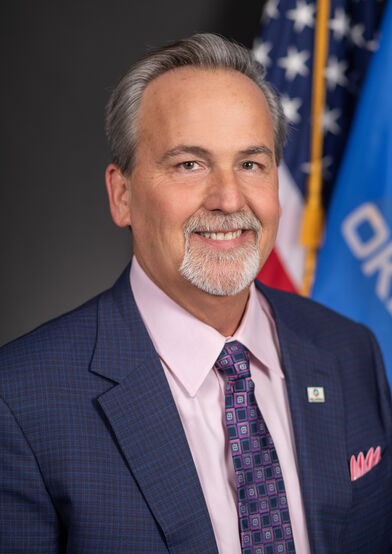
Sen. Bill Coleman
Sponsored bills
Maddy summaryHB 3299 prohibits creating and sharing synthetic media (such as deepfakes) that falsely depict a person's name, image, voice, or likeness without their written consent, unless used for news, commentary, satire, or parody. It requires political advertisements using such media during election periods (45 days before elections) to clearly disclose that the content is synthetic, with violations punishable as misdemeanors. For non-political use, creating synthetic media without consent is a misdemeanor, but becomes a felony if it causes over $25,000 in financial harm or is used for extortion. Victims can also seek civil damages, including legal fees, for violations.
Maddy summarySB 1469 creates Oklahoma's Earned Wage Access Services Act, allowing workers to access earned but unpaid wages (like salary or hourly pay already accrued) before their regular payday through licensed providers. It requires providers to obtain a state license ($1,900 total fee), report all transactions to a state database within 24 hours, and follow specific consumer protections. The law directly affects Oklahoma workers (defined as state residents) and providers of these services, with the Department of Consumer Credit overseeing enforcement. Key provisions include defining "earned but unpaid income" to cover both employees and independent contractors, and prohibiting certain provider fees or practices.
Maddy summarySB 1348 amends Oklahoma's Employment Security Act to give the Oklahoma Employment Security Commission authority to adjust appeal filing requirements when necessary. It also allows the Commission to dismiss certain unemployment benefit cases if claimants fail to provide required information. These changes affect individuals applying for or appealing unemployment benefits and streamline the Commission's administrative process without altering benefit amounts or eligibility rules.
Maddy summarySB 1590 creates Oklahoma's Commercial FORTIFIED Roof Program to encourage commercial property owners to install or retrofit roofs meeting enhanced wind and hail resilience standards. The program, based on Insurance Institute for Business and Home Safety (IBHS) guidelines or approved alternatives, directly affects commercial buildings (including offices, schools, and multifamily residences with five+ units) by offering potential financial incentives. Key provisions include the Insurance Department providing grants/rebates for qualifying roof upgrades, partnering with insurers to offer premium discounts, and certifying compliant roofs for use in insurance underwriting. Participation is voluntary, with no requirement for property owners to retrofit roofs or for insurers to reduce premiums.
Maddy summaryHB 1085 modifies administrative fees for service warranty associations and insurers in Oklahoma. It reduces the quarterly fee from 2% to 1.75% (starting 2026), then to 1% (2027), and sets a fixed annual fee of $3,700 by 2028. Entities with specific insurance coverage may elect to pay the fixed annual fee instead of the percentage-based fee. The bill directly affects businesses selling service warranties that must report and pay these fees to the Insurance Commissioner. The changes take effect January 1, 2026, with phased reductions over three years.
Maddy summaryHB 3903 requires Oklahoma law enforcement agencies to create detailed written domestic violence incident reports (not just dispatch logs), including crime type, day, and time, and submit monthly summaries to the Oklahoma State Bureau of Investigation. It mandates that court clerks accept, file-stamp, and docket protective order petitions without charging victims any fees, while prohibiting courts from requiring victims to pursue other legal actions (like divorce) before seeking protection. The bill also adds provisions allowing courts to grant exclusive custody of animals owned by either party during domestic violence cases and requires annual judiciary training on these procedures. These changes directly affect victims seeking protection, law enforcement agencies, and court clerks handling domestic violence cases.
Maddy summarySB 1305 allows Oklahoma's Medical Marijuana Authority to contract with third-party vendors to handle employee credentialing for medical marijuana businesses. The bill requires the Authority to approve or deny vendor applications within 30 days and sets strict vendor requirements, including IRS 501(c)(3) status and training plans covering state laws, patient privacy, and safe handling. Employees must complete annual training (minimum one hour per topic) on these subjects to maintain credentials. The law affects all medical marijuana business employees and businesses requiring credentialing, effective July 1, 2026.
Maddy summaryHB 3696 requires property and casualty insurers in Oklahoma to submit insurance rates and supporting documentation to the Insurance Commissioner for review before implementation. The bill establishes a 30-day review period during which the Commissioner can disapprove rates, with insurers allowed to request hearings if rates are rejected. It also repeals outdated sections of the insurance code and clarifies definitions related to rate filings and rating processes. This bill directly affects insurers filing rates, the Insurance Commissioner's oversight authority, and policyholders who may see rate changes influenced by this review process.
Maddy summaryHB 3334 allows bars and restaurants (on-premises licensees) to purchase sealed alcoholic beverages directly from liquor stores (off-premises licensees) under specific conditions. It requires all transactions to use original sealed containers, shifts responsibility for liquor taxes to the buying establishment, and prohibits sales tax collection by the seller. Both businesses must keep detailed records of each transaction - including dates, volumes, and tax documentation - for 24 months. The bill explicitly prevents circumventing federal tied-house restrictions or wholesaler requirements and mandates recordkeeping for enforcement. This directly affects licensed alcohol businesses in Oklahoma seeking alternative supply options.