

Maddy summarySB 821 requires Oklahoma state agencies to include detailed information about their information technology (IT) needs and estimated costs in annual budget requests. Specifically, agencies must now quantify technology requirements and associated expenditures (such as software, hardware, and services) when submitting budget forms to the Office of Management and Enterprise Services. This change applies to all state agencies submitting budget reports, excluding higher education institutions and certain other specified entities. The bill aims to improve transparency and planning around technology spending within state operations.
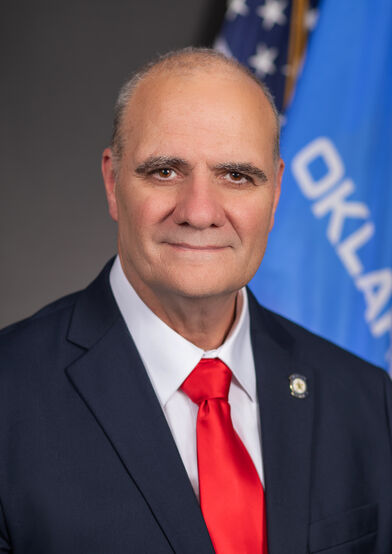
Rep. Daniel Pae
Sponsored bills
Maddy summarySB 821 requires Oklahoma state agencies to include specific details about information technology needs and estimated costs in their annual budget requests to the Office of Management and Enterprise Services. This amendment to existing budget reporting rules (62 O.S. 2021, Section 34.36) mandates agencies to quantify technology expenditures, including IT services and systems, alongside other budget details. The requirement applies to all state agencies submitting budget forms, though it excludes the Oklahoma State Regents for Higher Education and institutions within the Oklahoma State System of Higher Education. This change aims to improve transparency around technology spending in state agency budgets.
Maddy summaryHB 2014 creates the Legal Services Revolving Fund in Oklahoma to provide legal representation for low-income residents in specific civil cases. It prioritizes family law, domestic violence cases, and eviction (forcible entry and detainer) cases, with funds allocated across all 77 counties based on census data showing poverty levels. The bill strictly prohibits using these funds for criminal cases, abortion-related services, or challenges to census data. Eligible legal aid organizations must follow federal auditing standards and report annually on fund usage to state committees.
Maddy summarySB 275 would create the Oklahoma Workforce Housing Commission to develop strategies for expanding affordable housing options. It authorizes the existing Oklahoma Workforce Commission to implement specific reports and housing plans focused on increasing affordable housing access. The bill directly affects low-to-moderate income residents and housing providers by establishing a dedicated commission to coordinate housing initiatives. This proposal aims to increase housing availability through structured planning and implementation, rather than through new funding or regulations.
Maddy summaryHB 2014 expands Oklahoma's Legal Services Revolving Fund to provide civil legal aid to indigent residents (defined as at or below 200% of federal poverty guidelines) across all 77 counties. It prioritizes funding for domestic violence/family law cases and eviction defense (forcible entry and detainer actions), while explicitly prohibiting use for criminal matters, abortion services, or challenges to census data. Funds must be allocated proportionally based on county poverty data, with strict reporting and audit requirements for recipient organizations. The bill takes effect November 1, 2025.
Maddy summarySB 275 creates the Oklahoma Workforce Housing Commission to expand affordable housing options. The commission, composed of 15 members appointed by the Governor, Senate President, and House Speaker, will develop plans targeting households earning 30-160% of the area median income (as defined by HUD). It requires the Oklahoma Housing Finance Agency to implement specific reports and plans for affordable housing growth and submit recommendations to the Governor and Legislature. The bill also establishes a revolving fund to support these efforts, focusing on low- and moderate-income residents across urban and rural areas.
Maddy summaryHB 2021 creates the Oklahoma Kids After-School Grant Program (OKAGP) under the Department of Human Services to fund community-based after-school programs for students in kindergarten through 12th grade. It directly affects qualifying organizations operating at least five locations statewide, granting them exemptions from Oklahoma Child Care Licensing requirements under Title 10 Section 403. The bill establishes a revolving fund in the State Treasury for grants, funded by appropriations and donations, to support these programs without annual budget constraints. The program becomes effective November 1, 2025.
Maddy summaryHB 2015 strengthens tenant rights in Oklahoma by allowing tenants to address landlord failures to maintain health and safety standards. If a landlord doesn’t fix serious issues (like lack of heat or plumbing) within 14 days of written notice, tenants may deduct repair costs (up to one month’s rent) from rent or withhold rent for larger repairs, placing funds in a separate account. Landlords cannot pursue eviction for nonpayment while tenants legally exercise these remedies. The bill also clarifies that tenants can immediately terminate leases for uninhabitable conditions or seek damages up to two months’ rent if landlords fail to act. It takes effect November 1, 2025.
Maddy summaryHB 2016 amends Oklahoma evidence law to establish specific standards for admitting and challenging artificial intelligence system outputs as testimony in court. It requires the party introducing AI-generated evidence (the "proponent") to demonstrate it meets four criteria: it helps the court understand evidence, uses reliable data, applies sound methods, and reflects consistent reliability. The bill also treats AI outputs similarly to human hearsay statements, allowing parties to challenge their accuracy using evidence like inconsistent prior outputs. This law applies directly to courts, lawyers, and parties in legal cases using AI systems, effective November 1, 2025.
Maddy summaryThis Oklahoma bill (HB 2016) sets new standards for admitting AI-generated evidence in court. It requires that when AI outputs are presented as expert testimony or evidence, the party introducing it must prove the output helps the court understand the case, uses reliable data and methods, and has been applied correctly to the facts. The bill directly affects legal cases involving AI-generated reports, analyses, or conclusions used as evidence. It also extends existing hearsay rules to AI outputs, allowing their accuracy to be challenged similarly to human testimony. The changes take effect November 1, 2025.