

Maddy summaryHB 2017 amends Oklahoma laws related to bullying, aiding suicide, and computer crimes, affecting individuals who use electronic devices and school communities. It expands the definition of unlawful electronic harassment to include directing obscene content, making threats, causing fear, and repeated unwanted communications, including those on social media, with penalties ranging from misdemeanor to felony. The bill also makes it a crime to willfully use a computer or electronic device to harass, abuse, threaten, or put another person in fear of physical harm or death. Furthermore, it modifies the School Safety and Bullying Prevention Act, requiring updated control measures, specific investigation procedures, parent notification, and anti-retaliation policies for school employees.
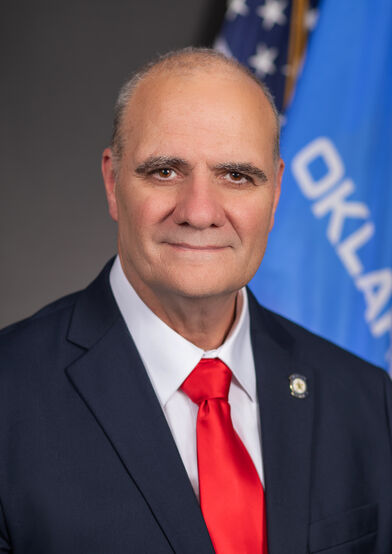
Rep. Daniel Pae
Sponsored bills
Maddy summaryHouse Bill 2019 extends specific income tax credits related to Oklahoma's aerospace industry. It prolongs the availability of a tax credit for qualified employers for compensation paid to eligible aerospace employees, pushing its expiration date from January 1, 2026, to January 1, 2032. The bill also extends an income tax credit for qualified aerospace employees themselves, allowing them to claim up to $5,000 annually, also until January 1, 2032. This legislation continues these tax incentives for businesses and individuals working in the aerospace sector.
Maddy summaryHB 2012 removes the July 1, 2026, expiration date for Oklahoma's harm-reduction services program, making it permanent. It authorizes government agencies, religious institutions, nonprofits, for-profit companies, and tribal governments to provide services including needle distribution, HIV/hepatitis testing, referrals for addiction treatment, and safe needle disposal. Providers must register with the State Department of Health and report quarterly on services delivered, such as the number of people served, needles distributed, and test results. This bill directly affects people who use injection drugs by expanding access to health services aimed at reducing disease transmission and overdose risks.
Maddy summaryHouse Bill 2012 permanently authorizes various entities, including government agencies, religious institutions, and non-profits, to provide harm-reduction services in Oklahoma. The bill achieves this by removing the July 1, 2026, sunset date from the existing law governing these services. Authorized activities include offering referrals for substance use disorder treatment, providing infectious disease education and testing, collecting used hypodermic needles, and distributing clean needles and opioid antagonists. Providers must register with the State Department of Health and submit quarterly reports on their services.
Maddy summaryThis is a symbolic resolution (not a law) expressing Oklahoma's support for deeper ties with Taiwan. It urges the state to back strengthening U.S.-Taiwan partnership, supports a future U.S.-Taiwan tax agreement, and celebrates the 46th anniversary of the Taiwan Relations Act. The resolution specifically highlights Oklahoma's existing sister-state relationship with Taiwan and its $46 million in exports to Taiwan in 2024. It also recommends establishing an Oklahoma Trade and Investment Office in Taiwan to boost business links. As a concurrent resolution, it has no legal effect but formally states the legislature's position.
Maddy summaryOklahoma's legislature passed SCR 6 to designate April 15 as "Purple Up! For Military Kids Day" in the state. The resolution symbolically honors military children and families for their sacrifices, referencing the tradition of wearing purple to represent military unity. It does not create new laws, funding, or policy changes - only serves as a ceremonial recognition. The resolution expresses gratitude to military families for their dedication to Oklahoma and the nation.
Maddy summarySenate Concurrent Resolution 6 designates April 15 as "Purple Up! For Military Kids Day" in Oklahoma. This resolution serves to acknowledge and thank military children and their families for their sacrifices and contributions to the state and nation.
Maddy summarySenate Concurrent Resolution 3 (SCR 3) expresses the Oklahoma State Legislature's support for strengthening its partnership with Taiwan. It supports a tax agreement between the United States and Taiwan, and celebrates the 46th anniversary of the Taiwan Relations Act of 1979 and the 45th anniversary of the Oklahoma-Taiwan sister-state relationship, also supporting the establishment of an Oklahoma Trade and Investment Office in Taiwan.
Maddy summarySB 572 ends Oklahoma's technology business financing program, which previously provided funding to help local businesses commercialize innovations. The bill requires all remaining program funds and annual royalty payments (from businesses that received funding) to be transferred to the state's General Revenue Fund by November 1, 2025. This affects OCAST (the Oklahoma Center for the Advancement of Science and Technology), businesses that had received program funding, and state finances. The program officially ceases upon the bill's effective date, redirecting all unused funds to general state revenue.
Maddy summarySB 572 ends Oklahoma's technology business financing program operated by the Oklahoma Center for the Advancement of Science and Technology (OCAST) effective November 1, 2025. It requires all remaining program funds and annual payments (like royalties or fees) to be transferred to the State Treasurer for the General Revenue Fund. This directly affects OCAST, which must cease program operations, and businesses that previously received financing or were required to pay royalties under the program. The bill makes no changes to program eligibility or new funding, only terminating the existing program and redirecting its remaining resources.