

Maddy summaryHB 1772 restricts Oklahoma's Medicaid program from contracting with out-of-state medical providers for in-person medical treatments when similar services are available from Oklahoma-licensed providers. It defines "treatment" as requiring the patient's physical presence and direct care by a provider, excluding remote services like lab analysis or diagnostics. The Oklahoma Health Care Authority must seek federal approval to implement this change, which takes effect November 1, 2025. This bill directly affects Medicaid patients needing in-person care and out-of-state providers who may lose Medicaid contracts for such services.
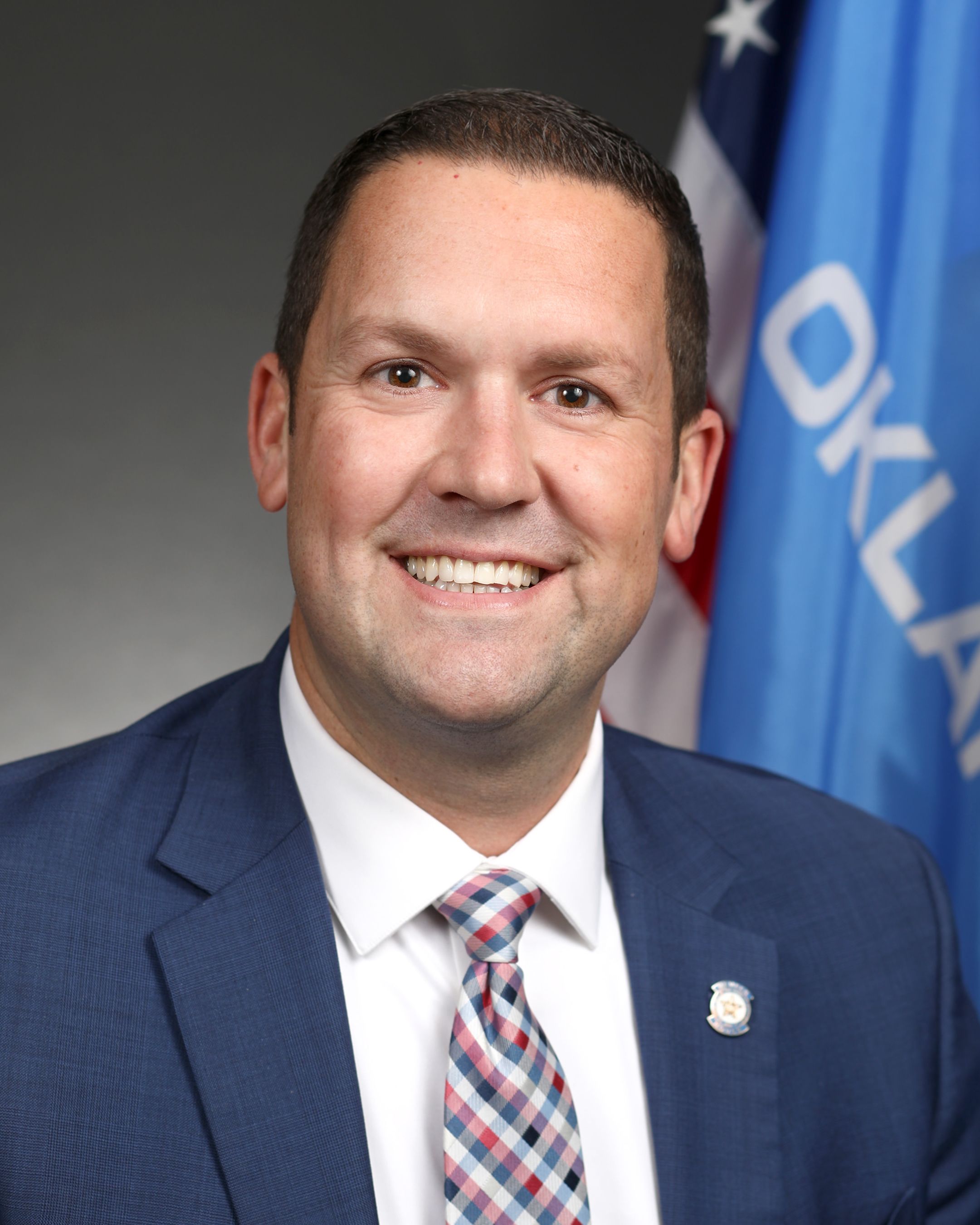
Rep. Anthony Moore
Sponsored bills
Maddy summaryHB 1757 establishes the "Department of Human Services Oversight Board Act of 2024" to create a new oversight board for Oklahoma's Department of Human Services, effective November 1, 2025. The bill names the board and sets its effective date but does not include substantive policy changes or codify the board's structure in Oklahoma Statutes. This procedural bill solely defines the board's title and implementation timeline without altering existing laws or affecting specific programs or individuals.
Maddy summaryHB 1741 amends Oklahoma's Uniform Commercial Code to clarify jurisdiction rules for securities held by financial intermediaries (like banks or brokerages). It specifies that the law of the issuer's state governs security validity and transfer rights, while the law of the intermediary's state governs customer relationships and security entitlements. This affects banks, brokers, and their customers involved in securities transactions across state lines by determining which state's laws apply to disputes. The bill makes these jurisdiction rules explicit without creating new rights or obligations.
Maddy summaryHB 1779 amends Oklahoma's Citizens Participation Act to clarify which lawsuits are excluded from its protections. It specifically excludes government enforcement actions (like those by the Attorney General), business disputes over sales/leases, injury claims, insurance cases, and workplace lawsuits involving trade secrets or restrictive agreements (like non-compete clauses). These changes directly affect government entities, businesses, insurance companies, and employees filing certain civil claims. The bill takes effect on November 1, 2025, and does not alter the core purpose of the Citizens Participation Act.
Maddy summaryHB 1744 amends Oklahoma law to expand who can legally sign corporate deeds for real property. It allows a corporation's chief executive officer, chief financial officer, president, vice-president, chairman, or vice-chairman - not just an attorney-in-fact or specific officers - to sign property transfers. The change applies to all corporations handling real estate transactions in Oklahoma and takes effect November 1, 2025. This bill modifies a procedural requirement without altering property rights or creating new financial obligations.
Maddy summaryHB 1759, titled the "College Credit Reform Act of 2025," is a procedural bill that establishes the act's name and sets its effective date. It does not include substantive policy provisions or describe specific changes to college credit systems. The bill will take effect on November 1, 2025, and is currently in the early stages of the legislative process (referred to the Rules committee after second reading). As a naming and effective date bill, it directly affects Oklahoma's higher education administration by formally designating this legislation.
Maddy summaryHB 1747 prohibits Oklahoma Higher Learning Access Program (OK-HLAP) funding for students reenrolling in courses they previously failed. The bill directly affects Oklahoma students receiving OK-HLAP financial aid, which covers tuition at public or private higher education institutions. Key provisions ban payments for retaking failed courses starting in the 2025-2026 academic year, while maintaining existing rules on funding for remedial courses (banned since 2018-2019) and other eligibility limits. The bill takes effect July 1, 2025, and was declared an emergency.
Maddy summaryHB 1773 requires each Oklahoma county sheriff to create an "Orange Alert" system to notify residents within 40 miles if an inmate escapes from a county jail. The bill directs sheriffs to post registration instructions in the county's newspaper of record, and residents must independently sign up to receive these alerts. Key provisions include mandating sheriff-developed policies for the system and setting a November 1, 2025, effective date. This policy directly affects county residents near jail facilities and shifts notification responsibility to individual registration.
Maddy summaryHB 1745, titled the "Damages Modernization Act of 2025," is a procedural bill that establishes the name and effective date for a non-codified legal provision. It does not create new substantive damages laws but formally designates the act's title and sets its effective date as November 1, 2025. The bill directly affects Oklahoma's legal framework by naming this specific act, though it contains no policy changes to damages law. It was introduced by Representative Moore and referred to the Rules committee on February 4, 2025. This is a routine legislative procedural step, not a policy reform.
Maddy summaryHB 1754 amends Oklahoma's school personnel definitions to clarify which roles qualify for teacher-equivalent benefits and protections under state law. It adds specific definitions for school nurses, athletic trainers, licensed physical therapists, and their assistants, ensuring these professionals receive the same legal protections and benefits as certified teachers. The bill also updates terms like "inductee" (new teachers under mentorship) and "student teacher" (training students), clarifying their compensation and internship rules. This definition-focused bill directly affects all Oklahoma public school districts and their staff in the specified roles, effective November 1, 2025.