

Maddy summaryHB 1740 requires Oklahoma's Department of Mental Health and Substance Abuse Services (ODMHSAS) to create written, individualized service plans within 45 days for people found not guilty by reason of mental illness (NGRI/MI). These plans must be based on comprehensive psychological and psychiatric evaluations, include specific details like treatment history and service schedules, and be written in plain language. The court must approve the plan after reviewing it with input from the individual, their attorney, and treating doctors, and the plan must be updated regularly. The bill also mandates frequent court review hearings - four quarterly in the first year, then two semi-annually - and requires ODMHSAS to provide detailed reports to the court before each hearing.
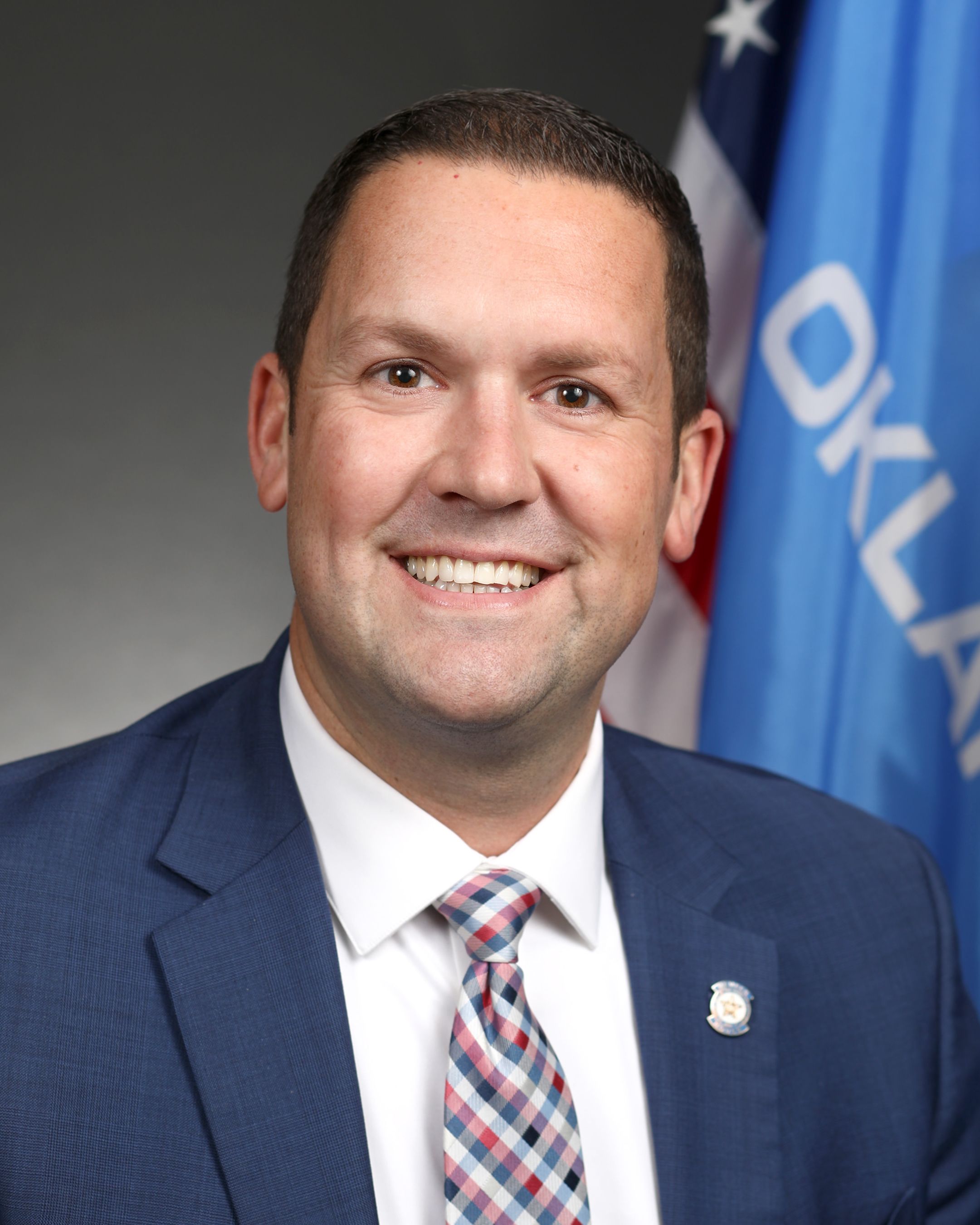
Rep. Anthony Moore
Sponsored bills
Maddy summaryHB 1765 is a procedural bill that names the "Corporation Commission Modernization Act of 2025" without creating new substantive law. It specifies that the act shall not be codified in Oklahoma Statutes and sets an effective date of November 1, 2025. The bill does not alter the Corporation Commission's authority or operations, as it only provides a title and effective date for administrative purposes. This is a purely formal measure with no direct policy changes or affected parties beyond the Commission's official naming.
Maddy summaryHB 1761 requires Oklahoma public schools to screen all kindergarten through third-grade students for dyslexia if they are not meeting grade-level reading targets after the start-of-year assessment. Students identified with dyslexia characteristics must be rescreened every three years until age 18 or until a rescreening shows no dyslexia. School districts must report detailed data to the state education department annually, including screening numbers, rescreening results, and intervention programs. The bill mandates state-developed policies for screening tools, staff training, and parent notifications, effective July 2025.
Maddy summaryHB 1775 is a procedural bill that names a new uncodified law as the "Public Officer Act of 2025" and sets its effective date for November 1, 2025. It contains no substantive policy changes or regulations for public officers. The bill solely establishes the act's title and implementation timeline. This is a routine administrative measure with no direct impact on public officers' duties or rights.
Maddy summaryHB 1773 requires Oklahoma county sheriffs to create an "Orange Alert" system that notifies residents within 40 miles when an inmate escapes from a county jail. County residents must register to receive these alerts, with registration instructions posted in each county's newspaper of record. Sheriffs must establish written policies for the system, and the law takes effect November 1, 2025. This bill directly affects county residents near jails and mandates a new notification process for inmate escapes.
Maddy summaryHB 1750 prohibits pregnant women with medical marijuana licenses from intentionally using marijuana while knowingly pregnant. It directly affects pregnant individuals in Oklahoma who hold state-issued medical marijuana patient licenses. The bill defines "marijuana" using existing Oklahoma Statutes (Title 63, Section 2-101) and makes such use unlawful. The law would take effect on November 1, 2025.
Maddy summaryHB 1745 is a procedural bill that names the "Damages Modernization Act of 2025" and sets its effective date as November 1, 2025. It contains no substantive policy changes or new provisions for damages law. The bill will not be codified in Oklahoma Statutes and serves only to establish the act's title and implementation date. This is a routine administrative measure with no direct impact on citizens, courts, or legal procedures.
Maddy summaryHB 1759 is a procedural bill that names itself the "College Credit Reform Act of 2025" and sets its effective date as November 1, 2025. It contains no substantive policy changes or mechanisms, as it is explicitly designated as non-codified law. The bill directly affects Oklahoma's legislative process by formally naming the act, but it does not alter education policies, credit systems, or impact any specific groups. This is a routine administrative measure, not a policy reform.
Maddy summaryHB 1748 restricts access to death certificates to specific groups, including family members, legal representatives, government agencies (like the DMV for license cancellation), and entities verifying benefits (e.g., insurance companies), while prohibiting unauthorized disclosure. It mandates that death certificates become publicly available 50 years after death and establishes an online index of death records with a 5-year delay for data inclusion. The bill allows electronic verification of death records for government, insurance, and legal purposes at a $4 fee (waivable for state agencies), and requires the Department of Health to share death data with agencies like Medicaid and the Oklahoma Highway Safety Office for administrative purposes. It does not create new programs but updates existing access rules for vital statistics records.
Maddy summaryHB 1746 modifies Oklahoma's juvenile code to change when a jury trial is required for termination of parental rights cases. It requires a jury trial if the initial petition for child deprivation also requests termination, or if termination is requested after a child is adjudicated deprived. The bill sets specific timelines: courts must issue a scheduling order within 30 days, and jury trials must begin within six months unless exceptional circumstances or agreements delay them. This affects parents facing termination proceedings, the state (as prosecutor), and courts handling these cases, with the law taking effect November 1, 2025.