

Maddy summaryHB 1734 modifies Oklahoma's civil procedure rules for sheriff's property sales conducted via online auctions. It prohibits online auction platforms from charging buyers a "buyer's premium" (extra fees on top of the bid amount), requiring such fees to be disclosed upfront if used. The bill also caps all fees and costs charged by online auction platforms at $350 per sale. This directly affects sheriffs conducting online property sales, auction platforms, and buyers participating in these sales, effective November 1, 2025.
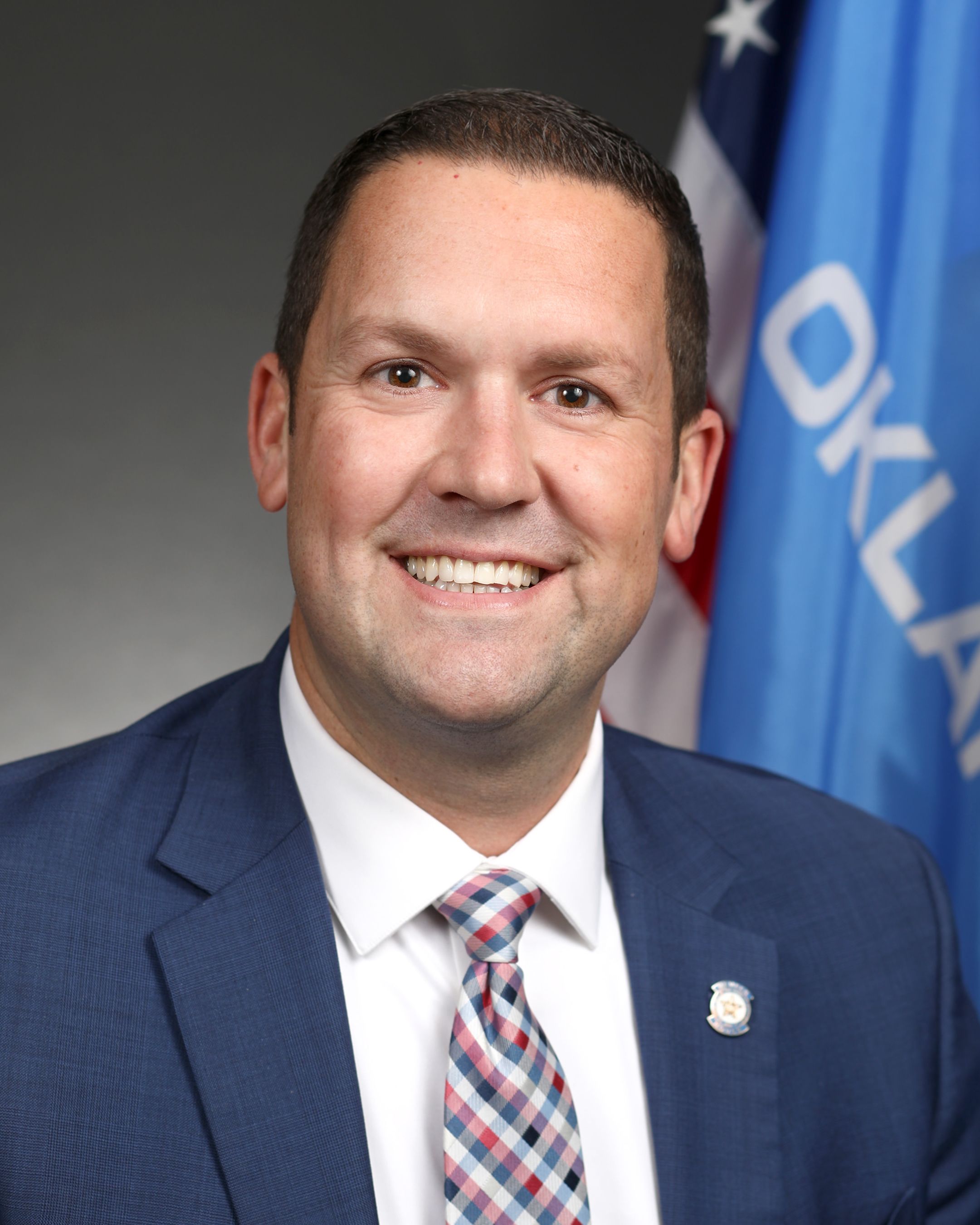
Rep. Anthony Moore
Sponsored bills
Maddy summaryHB 1735 modifies Oklahoma's evidence rules for domestic violence cases. It allows prosecutors to introduce evidence of a defendant's prior domestic violence acts (including psychological, physical, or economic abuse) in criminal trials where the current charge involves domestic violence. Prosecutors must share this evidence with the defense at least 15 days before trial, including witness statements or testimony summaries. The bill clarifies that these rules do not override existing evidence standards and defines "domestic violence" broadly under Oklahoma law.
Maddy summaryHB 1736 establishes the "Oklahoma Tourism Act of 2025" as the official name for tourism-related legislation in Oklahoma. The bill sets an effective date of November 1, 2025, and contains no substantive policy changes or new programs. It is purely procedural, naming the act and specifying its implementation date without affecting any specific entities or creating new requirements. This type of bill typically serves administrative or organizational purposes rather than altering tourism policy.
Maddy summaryThis bill, known as the Civil Procedure Reform Act of 2025, establishes a new legal framework for civil cases in Oklahoma but does not specify any substantive changes to the rules or procedures themselves. The legislation primarily serves to name and cite the act for future reference rather than to alter how civil proceedings are conducted. It will take effect on November 1, 2025, and applies to all civil litigation within the state's court system. The bill does not include specific provisions for how it will modify existing civil procedure laws or impact particular groups of people.
Maddy summaryHB 1761 requires Oklahoma public schools to screen all kindergarten through third-grade students for characteristics of dyslexia if they are not meeting grade-level reading targets after the initial assessment. Students identified with dyslexia characteristics must be rescreened every three years until age 18 or until a rescreening shows no characteristics. School districts must report detailed data on screenings, rescreenings, and interventions to the state Department of Education annually, including student progress and screening tools used. The bill also mandates the State Board of Education to develop policies for screening, including approved tools and parent notification processes. This affects all Oklahoma public schools serving K-3 students and requires ongoing monitoring of dyslexia identification.
Maddy summaryHB 1733 modifies how Oklahoma allocates 0.87% of sales tax revenue (for fiscal years 2022-2025) to three tourism-related funds: the Oklahoma Tourism Promotion Revolving Fund (capped at $5 million annually), the Oklahoma Tourism Capital Improvement Revolving Fund (capped at $9 million), and the Oklahoma Route 66 Commission Revolving Fund (capped at $6.6 million). For fiscal years 2026 and beyond, it increases the allocation to 1% of sales tax revenue, with $6.6 million going directly to Route 66, and remaining funds split 36% to Tourism Promotion and 64% to Tourism Capital Improvement. The bill directly affects these state tourism funds, which support marketing, infrastructure, and historic preservation projects. It does not change overall tax rates but adjusts the distribution of existing sales tax revenue to these specific programs.
Maddy summaryHB 1766 officially names the bill as the "Department of Human Services Act of 2024" and sets its effective date for November 1, 2025. This is a procedural bill that does not create new policies, change existing laws, or affect any specific programs or individuals. It solely establishes the bill's official designation and implementation timeline. The bill is not codified in Oklahoma Statutes and has no substantive policy provisions.
Maddy summaryHB 1768 allows hunters with a primitive firearms hunting license to use specific handguns during the primitive (muzzleloading) firearm season for deer hunting. The Oklahoma Wildlife Conservation Commission must include modern, non-muzzleloading handguns chambered in .38 special +P caliber or larger in its list of legal hunting methods for this season. This bill directly affects licensed hunters participating in the primitive firearm season. It becomes effective November 1, 2025, changing the permitted hunting tools without altering season dates or license requirements.
Maddy summaryHB 1763 establishes the "Oklahoma Guardianship Act of 2025" as a non-codified law, naming the framework for guardianship procedures without altering existing statutes. It sets an effective date of November 1, 2025, for this naming provision. The bill does not describe substantive policy changes or mechanisms, as it solely provides a title and effective date for future guardianship law implementation. No specific provisions or affected parties are detailed in the provided text.
Maddy summaryHB 1775 establishes the "Public Officer Act of 2025" as a new, uncodified law (meaning it won't be added to Oklahoma's official legal code) and sets its effective date as November 1, 2025. This bill does not create new rules or change existing laws regarding public officers; it only names the act and specifies when it takes effect. It directly affects no individuals or entities, as it serves a purely procedural purpose. The bill is a simple naming and timing measure with no substantive policy provisions.