

Maddy summaryHB 2826 allows licensed firearms dealers to purchase unclaimed guns from sheriff's offices after they’ve been held for six months with no owner identified. It amends Oklahoma law to restrict public sales of such firearms to only federally licensed dealers (per 18 U.S.C. § 923), replacing the previous allowance for public bidding. Sheriffs must still follow court procedures - including public notice and hearings - before selling or donating unclaimed firearms valued under $500. This bill directly affects county law enforcement agencies handling unclaimed weapons and federally licensed gun dealers, without changing the six-month holding period or disposal methods for other property.
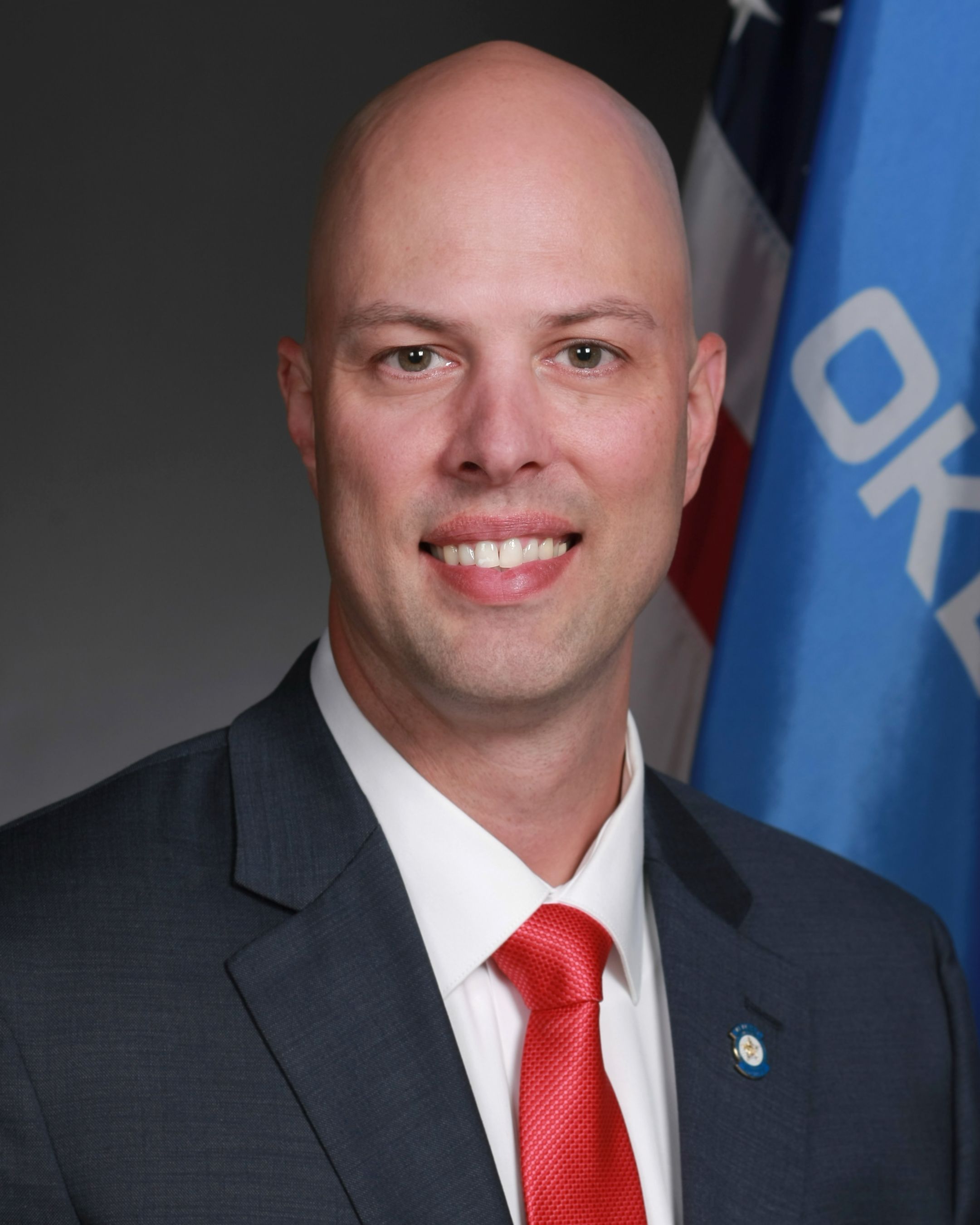
Rep. Jay Steagall
Sponsored bills
Maddy summaryHB 1009 reduces Oklahoma's individual and corporate income tax rates. For individuals, it lowers the top marginal tax rate from 6.75% to 6.65% for taxable years beginning on or after January 1, 2004. It also reduces the corporate income tax rate and specifies the tax years (starting in 2004) when these lower rates apply. The bill directly affects Oklahoma residents and businesses that pay state income tax, lowering their tax liability under the revised rates.
Maddy summaryHB 2824 prohibits businesses, property owners, and employers from enforcing rules that prevent people (except convicted felons) from storing firearms or ammunition in a locked vehicle on property set aside for vehicles. It removes civil liability for entities that don’t ban this practice and allows individuals to sue if denied this right. Key provisions require businesses to allow firearm storage in locked vehicles (defined to include cars, trucks, and motorcycles) and grant courts authority to award damages, stop violations, and cover legal fees for successful lawsuits. The bill does not change concealed carry laws but specifically permits property owners to ban firearm carry entirely with posted signs. This directly affects commercial properties, workplaces, and rental facilities in Oklahoma.
Maddy summaryHB 2828 is a procedural bill that names the "Oklahoma Criminal Procedure Act of 2025" and sets its effective date as November 1, 2025. It does not establish new criminal procedure rules or affect any specific individuals or groups, as it only creates a title for future codification. The bill is purely administrative, with no substantive policy changes described in its text. It was introduced on February 3, 2025, and referred to the Rules Committee.
Maddy summaryHouse Bill 2827 officially names an act as the "DUI Reform Act of 2025" and establishes its effective date as November 1, 2025. This bill is procedural, as it solely provides a short title for an act related to driving under the influence and sets its effective date, without containing any specific policy changes or reforms to existing DUI laws.
Maddy summaryHB 2823 requires individuals carrying firearms in Oklahoma to display a valid driver's license, state photo ID, handgun license, or military ID upon a law enforcement officer's demand during a traffic stop or arrest. The bill amends existing law to mandate this ID presentation while clarifying that officers cannot demand ID solely for carrying a firearm without reasonable suspicion of other criminal activity. Failure to show required ID may result in a $100 citation, though individuals have 10 days after arrest to prove they possessed valid ID to dismiss the citation. The law applies directly to firearm carriers during police interactions and takes effect November 1, 2025.
Maddy summaryHB 2825, the "Firearms Manufacturing Act of 2025," establishes rules for manufacturing firearms, parts, and suppressors in Oklahoma. It defines "manufactured in Oklahoma" as using only state-sourced basic materials (excluding generic parts like screws), exempts such items from federal regulations (including registration), and requires "Made in Oklahoma" stamping. The bill prohibits state/local governments and their employees from enforcing federal gun laws that conflict with Oklahoma's rules, and allows citizens to file complaints with the Attorney General if entities enforce such federal laws. It also directs the Attorney General to seek federal court declarations on the law's constitutionality and authorizes recovery of legal costs for valid complaints.
Maddy summaryHB 2822 modifies Oklahoma's firearm carry laws by prohibiting concealed or unconcealed firearms in specific locations, including government buildings, courthouses, schools (except under certain policies), sports venues during events, and gambling facilities. The bill explicitly allows concealed carry on fairgrounds and in fair buildings during the Oklahoma State Fair and Tulsa State Fair, authorizing event holders to permit open carry. It also permits private schools to adopt policies allowing firearms if they establish such rules, and gives school districts authority to designate personnel with proper licenses to carry on school property. The law updates existing restrictions under the Oklahoma Self-Defense Act while maintaining key exceptions for vehicle parking areas and public parks.
Maddy summaryHB 2819 amends Oklahoma law to authorize the open or concealed carry of firearms on specific properties previously prohibited, primarily affecting residents with valid handgun licenses under the Oklahoma Self-Defense Act. Key provisions allow carry on government-owned vehicle parking areas, public parks, plazas, and school parking lots (with firearms stored hidden in locked vehicles when unattended). It also permits concealed carry, but not open carry, in municipal parks/zoo properties owned by public trusts or nonprofits, with permission from the entity. The bill modifies existing restrictions in Section 1277 of Oklahoma Statutes without changing general carry rules or affecting school buildings themselves.
Maddy summaryHB 2821 establishes the "Oklahoma Firearms Carry Act of 2025" as a named legislative act, effective November 1, 2025. The bill does not change existing firearm laws or create new regulations; it solely provides a formal title and effective date for future legislative reference. This procedural act directly affects how Oklahoma's firearm-related legislation may be cited but does not alter current carry rules or requirements for residents. It is not codified into Oklahoma's official statutes and serves only as a naming convention for future bills.