

Maddy summarySB 382 requires children to be toilet trained before enrolling in Oklahoma public prekindergarten starting with the 2025-2026 school year. Parents must provide written assurance of toilet training upon enrollment, and schools must follow a defined process if a child is not toilet trained (defined as three documented incidents of soiling or urination over four weeks). Schools may temporarily withdraw the child, refer parents to support resources, or allow parent assistance during training. Children with disabilities covered by an IEP or 504 Plan are exempt from this requirement. The bill takes effect July 1, 2025.

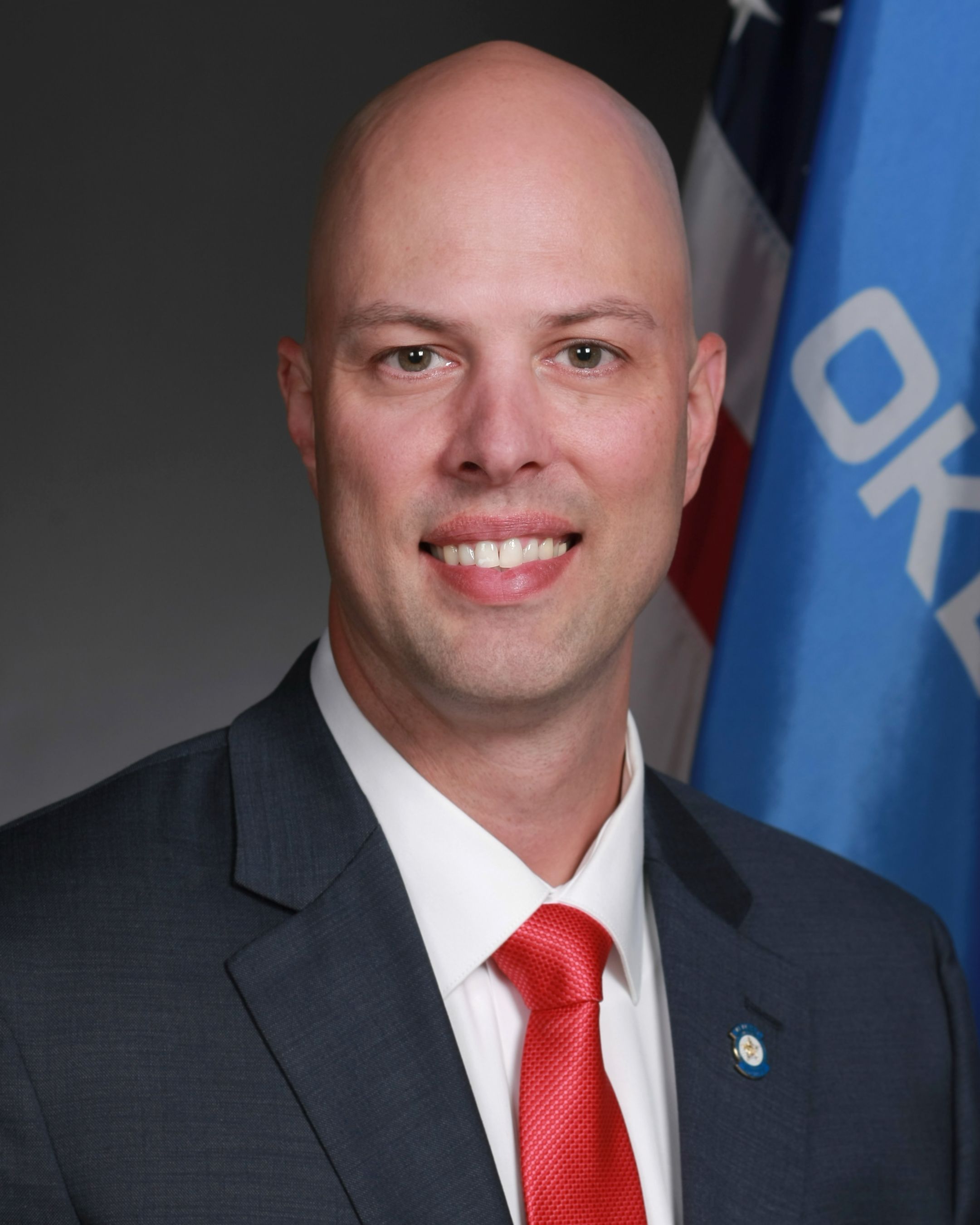
Rep. Jay Steagall
Sponsored bills
Maddy summarySB 372 amends Oklahoma's firearm carry law to clarify where concealed or unconcealed weapons are prohibited. It specifies that "minimum-security" event properties must have an 8-foot metallic fence to restrict carry, and updates rules for schools and colleges (allowing concealed carry by designated staff with proper licenses, but not prohibiting it on campus). The bill also defines penalties as a $250 fine for violations of prohibited areas like government buildings or gambling venues. It does not change existing gun rights but refines restrictions on where firearms may be carried.
Maddy summaryHB 3304, titled the "Ray Davis Safe Roads Act," prohibits the issuance of commercial driver licenses (Class A, B, or C) to certain individuals under Oklahoma law. The bill amends Section 6-101 of the Oklahoma Statutes to clarify that Service Oklahoma cannot issue original commercial licenses to applicants meeting specific disqualification criteria (though the exact disqualifications are not fully detailed in the provided text). This directly affects individuals seeking commercial driver licenses who fall under the prohibited categories. The bill modifies existing licensing requirements to enhance safety by restricting eligibility for commercial driving privileges. It does not change age requirements or existing exemptions for specific vehicle types or purposes.
Maddy summaryHB 3301 refines Oklahoma's definitions for rifles, shotguns, and "sawed-off" firearms under the Oklahoma Firearms Act of 1971. It clarifies that rifles must have barrels over 16 inches and fire single projectiles (even if designed for multiple), while shotguns must have barrels over 18 inches and fire multiple projectiles (even if designed for single shots). The bill also specifies exact length requirements for "sawed-off" firearms, stating that weapons with barrels under 18 inches for shotguns or 16 inches for rifles are illegal unless overall length meets 26 inches. This bill affects law enforcement, gun owners, and courts by creating clearer legal standards for firearm classification, effective November 1, 2026.
Maddy summaryHB 4132 creates liability protection for Oklahoma counties and municipalities if they adopt specific cybersecurity frameworks (NIST, CIS, or ISO standards) and meet compliance requirements. To qualify, local governments must annually certify compliance, maintain detailed security documentation, and undergo independent cybersecurity reviews every three years. This bill directly affects county and municipal operations by reducing legal risk from data breaches when these steps are followed. It does not change existing cybersecurity practices but provides a legal shield for entities that implement recognized standards. The law takes effect November 1, 2026.
Maddy summaryThis resolution designates March 9, 2026, as Bob Wills Day at the Oklahoma Capitol to honor the life and legacy of the musician known as the King of Western Swing. The measure celebrates Bob Wills' contributions to music history, noting his role in developing Western Swing and entertaining millions during his career. It also thanks the Oklahoma Arts Council, Oklahoma Film and Music Office, and Oklahoma Historical Society for their work in reviving this annual celebration. A copy of the resolution will be distributed to these three organizations as a formal acknowledgment of their efforts.
Maddy summarySB 40 modifies Oklahoma law to prohibit businesses, property owners, and employers from banning the transport of firearms or ammunition in a locked motor vehicle (except for convicted felons). It removes liability for entities that allow this practice and prevents lawsuits against them unless they commit a criminal act involving the firearms. The bill allows individuals to sue for damages, attorney fees, and injunctions if a business violates these provisions. It does not affect existing rules prohibiting firearms on property where signs are posted or in specific public venues like stadiums during events.
Maddy summaryHB 3306 amends Oklahoma's campaign finance rules by raising the disclosure threshold for candidate committees. Specifically, it changes Rule 2.70 of the Ethics Commission to require disclosure only for contributions exceeding $400, instead of all contributions. This directly affects political candidates and their committees, reducing reporting requirements for small donations under $400. The change simplifies administrative processes for managing campaign finances while maintaining disclosure for larger contributions.
Maddy summaryHB 3303 requires Oklahoma auto insurers to submit their accident investigation processes to the Oklahoma Insurance Department by July 1, 2027, with fines up to $10,000 for non-compliance or business suspension for repeated violations. It mandates that insurers pay claims based on police reports from auto accidents, allowing insurers to request Department arbitration if they dispute a report. Insurers who violate this rule face a 90-day suspension of new business privileges. The bill directly affects all auto insurers operating in Oklahoma and takes effect November 1, 2026.
Maddy summaryHB 3307 allocates $5 million from Oklahoma's General Revenue Fund to establish a revolving fund specifically for veterans' traumatic brain injury (TBI) treatment and recovery services. The funding supports the Oklahoma Department of Veterans Affairs in providing TBI care to eligible veterans, directly benefiting veterans with TBI injuries who access state veterans' services. The bill becomes effective July 1, 2026, and declares an emergency to allow immediate implementation upon approval. This is a funding measure with no new policy requirements, solely providing financial resources for existing TBI treatment programs.