

Maddy summaryThis ceremonial resolution designates March 10, 2025, as "Bob Wills Day" at the Oklahoma Capitol to honor the legacy of Bob Wills, a Tulsa-born musician known as the "King of Western Swing" and inductee of both the Country Music and Rock and Roll Halls of Fame. It directly recognizes Wills' contributions to Oklahoma's cultural history and thanks the Oklahoma Arts Council, Oklahoma Film and Music Office, and Oklahoma Historical Society for their role in reviving this commemoration. The resolution has no policy impact - it simply designates a day for celebration and expresses appreciation to state cultural agencies.
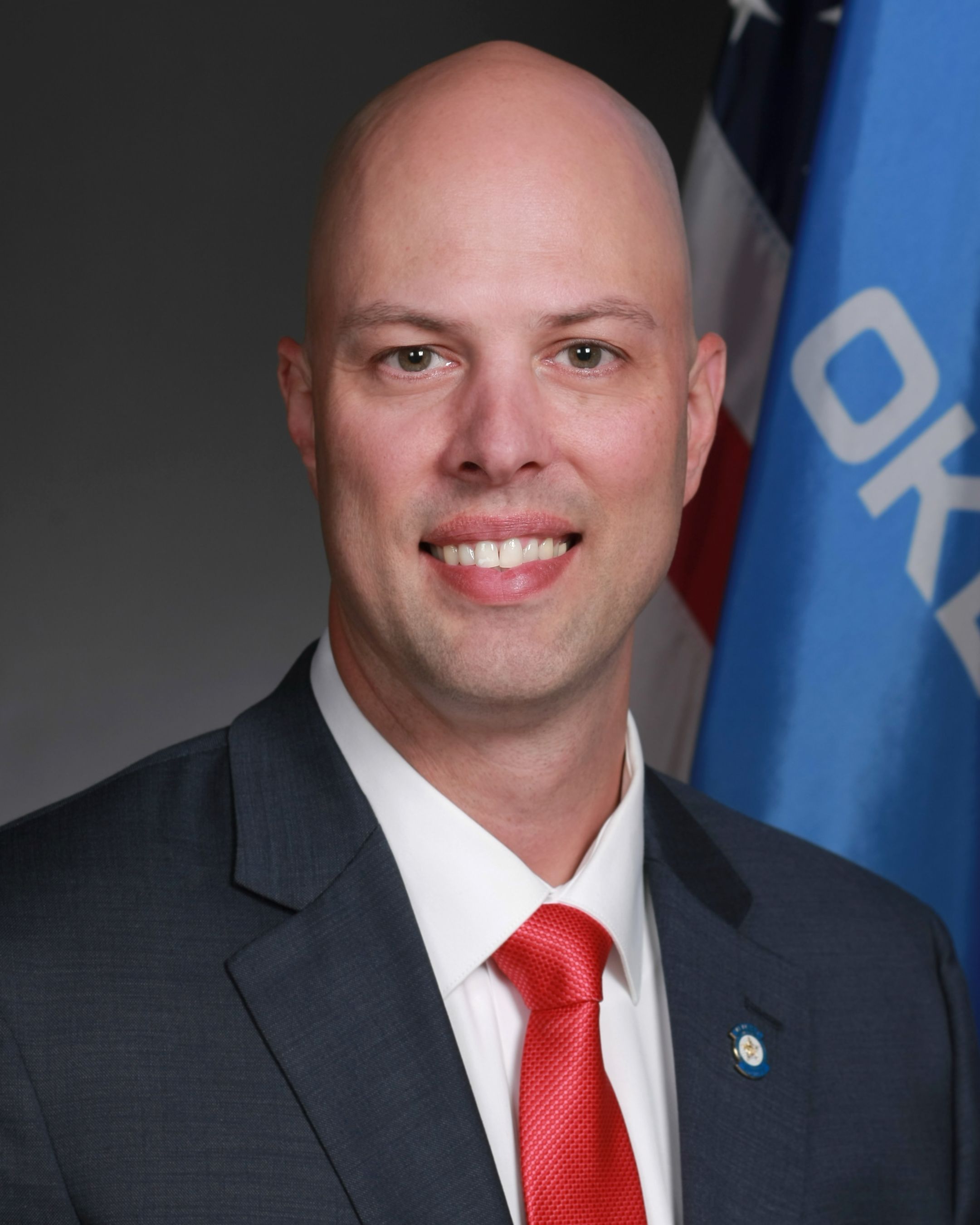
Rep. Jay Steagall
Sponsored bills
Maddy summarySB 40 prohibits businesses, property owners, and employers from banning the transport or storage of firearms in locked vehicles (except for convicted felons) on their premises. It allows individuals to sue for violations, requiring courts to award damages, attorney fees, and injunctions against continued violations. The bill clarifies that businesses may still prohibit firearms on their property by posting signs, but cannot restrict locked vehicle storage. It amends Oklahoma statutes to remove liability for enforcing these provisions and aligns with existing property rights under the Oklahoma Self-Defense Act.
Maddy summarySB 381 modifies Oklahoma law to restore firearm rights for certain nonviolent convicted felons who have completed their sentences and maintained a 5-year clean record (no new misdemeanor or felony charges). It specifically allows these individuals to possess non-semi-automatic firearms and apply for handgun carry permits under the Oklahoma Self-Defense Act. However, rights are denied for those convicted of offenses like domestic abuse, sexual assault, child endangerment, or stalking. The bill maintains existing prohibitions for felons under supervision, delinquents, and undocumented immigrants possessing firearms.
Maddy summarySB 381 modifies Oklahoma's laws regarding firearm possession by convicted felons. It restores the right to possess, carry, or transport non-semi-automatic firearms for nonviolent felons who have completed their sentence and had no new misdemeanor or felony convictions for five years, provided they haven't been convicted of specific offenses like domestic abuse, sexual assault, or stalking. The bill also restores firearm rights for pardoned nonviolent felons and prohibits firearm possession by individuals on probation for any felony. Certain offenses listed in subsection C(3) permanently disqualify individuals from having these rights restored. The law does not affect restrictions on felons currently serving prison terms or those with pending charges.
Maddy summarySB 524 amends Oklahoma law to allow certain individuals to carry concealed firearms at polling places during elections. Specifically, it permits people who are 21 or older, or 18-21-year-old military members/veterans with no firearm disqualifications (as defined in existing law), to carry concealed weapons at polling locations. This change adds polling places to the list of locations where these qualified individuals may carry concealed firearms under current exceptions. The bill does not alter general concealed carry rules or create new exceptions beyond the existing military/veteran and age-based provisions.
Maddy summarySB 524 amends Oklahoma law to explicitly allow qualified individuals to carry concealed handguns at polling places during elections. It adds a new exception (subsection 7) to existing firearm carry restrictions, permitting concealed carry by: (1) individuals aged 21+; or (2) those aged 18-21 who are current or honorably discharged U.S. military members/veterans, with no disqualifying criminal history. The bill does not change general concealed carry rules but specifically authorizes this exception at polling locations. It affects voters meeting these specific criteria during election events, without altering restrictions for other locations like schools or courthouses.
Maddy summarySB 372 amends Oklahoma's firearm carry law to clarify where concealed or unconcealed firearms may be carried. It defines "minimum-security" requirements for properties (like event spaces) where firearms might be permitted, specifying 8-foot fences, officer-staffed access points, and metal detectors. The bill allows lawful carry in vehicle parking areas (including school lots with firearms locked in vehicles), adjacent property to prohibited areas, parks, and temporary public events without minimum security. It directly affects law-abiding gun owners with valid licenses by expanding permitted locations while maintaining restrictions in government buildings, schools (except parking), courthouses, and secured venues. The law updates existing statutory language without creating new prohibitions.
Maddy summaryHB 2823 requires individuals carrying firearms in Oklahoma to show a valid driver's license, state photo ID, handgun license, or military ID to law enforcement upon demand during a routine traffic stop or arrest. It prohibits officers from disarming or restraining a person solely for failing to show ID without reasonable suspicion of other criminal activity. Violating this requirement may result in a $100 citation, though charges can be dismissed within 10 days by presenting valid ID to court. The law directly affects firearm carriers during police interactions and takes effect November 1, 2025.
Maddy summaryHB 2819 modifies Oklahoma's firearms law to allow concealed or unconcealed carry on specific properties previously restricted. It authorizes carry on government-owned vehicle parking areas (Section 1B1), public streets/plazas (1B4), and school parking lots when firearms are stored hidden in locked vehicles (1B5). The bill also permits concealed carry in municipal parks/zoo properties owned by public trusts or nonprofits, with open carry requiring permission (Section E). It maintains prohibitions in courthouses, schools (except as specified), and gambling venues, while adding conditions for private schools (Section C) and school personnel carry (Section D). The law does not alter general carry rules but expands permitted locations with defined safeguards.
Maddy summaryHB 2820 expands Oklahoma's state preemption law to include firearm and ammunition components, preventing local governments from regulating these items. The bill prohibits municipalities from enacting rules on the sale, possession, transportation, or other controls of firearms, knives, ammunition, and these new components, except for limited ordinances about firearm discharge, transportation citations (with penalties capped at Oklahoma Self-Defense Act levels), and air-powered pistol/rifle discharge on property. Individuals can sue local governments for violating this preemption and recover reasonable legal expenses if the local law isn't rescinded within 90 days after written notice.