

Maddy summaryHB 3763 requires all active, CLEET-certified law enforcement officers in Oklahoma to complete additional mandatory training annually. Full-time officers must complete 25 hours yearly, including 2 hours on mental health and 2 hours on domestic violence/intimate partner violence protocols. Reserve officers must complete 8 hours yearly, including 1 hour on each topic. The bill also mandates training on sexual assault response protocols (already required since 2019) and specifies certification suspension for non-compliance after written notice. It becomes effective November 1, 2026.
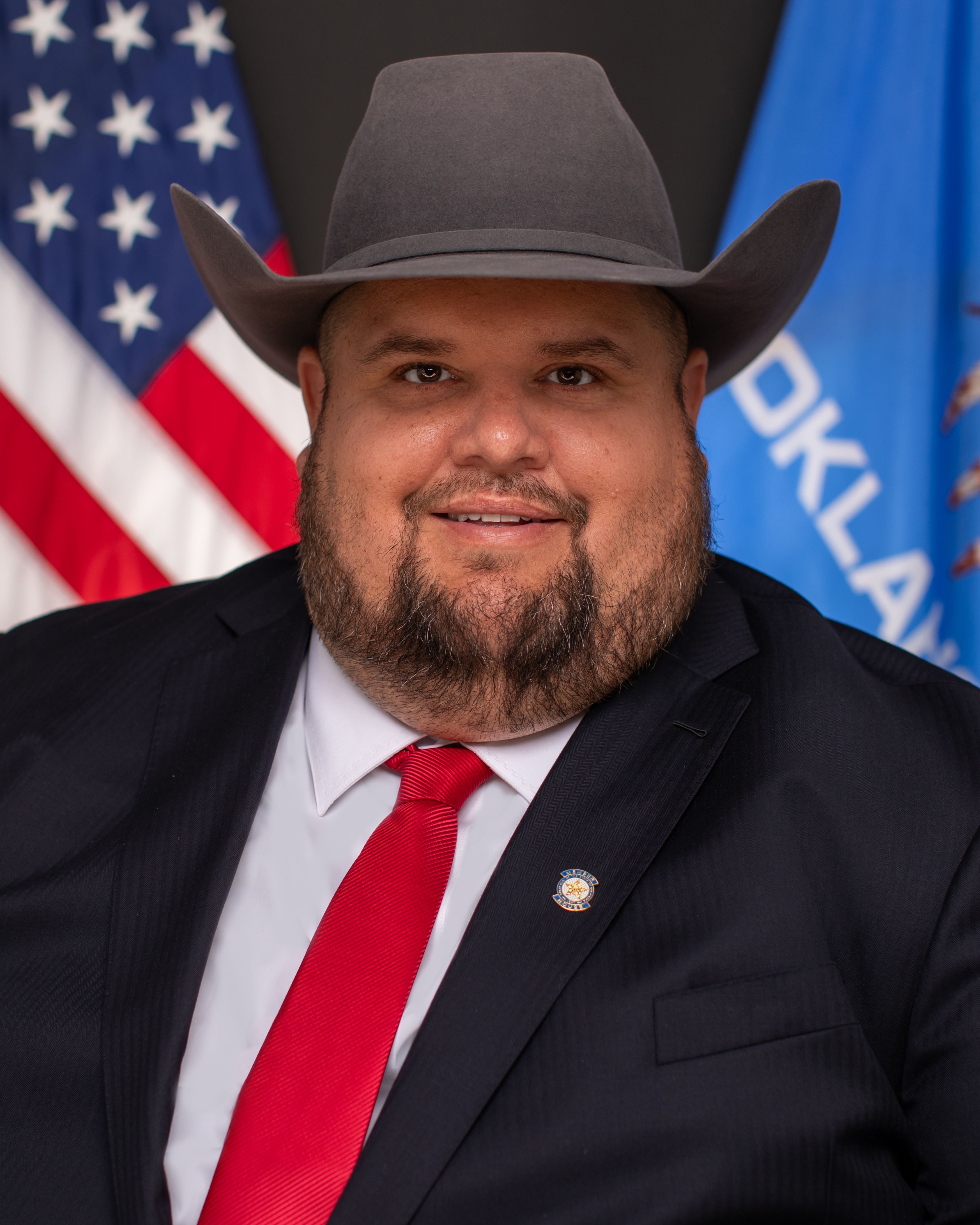
Rep. Tim Turner
Sponsored bills
Maddy summaryHB 3760 creates tax credits for Oklahomans who donate to certified law enforcement foundations supporting local police departments. Taxpayers can claim credits up to $5,000 annually (single filers) or $10,000 (married/joint filers), with a total annual cap of $75 million statewide and $3 million per foundation. Foundations must be certified by the state, and donations must fund specific officer needs like training, equipment, or joint emergency response teams - *not* regular salaries. The bill requires foundations to report spending and sets strict limits to ensure credits don’t exceed state revenue goals.
Maddy summarySB 1981 allows licensed security guards or police officers volunteering security at places of worship to wear their agency's uniform with the employing agency's consent. It prohibits unlicensed volunteers from wearing uniforms or badges that make them appear as licensed security guards or police officers. The bill amends Oklahoma's Security Guard and Private Investigator Act to clarify these uniform rules for volunteer security services. The law takes effect November 1, 2026.
Maddy summaryHB 3766 amends Oklahoma's DUI statutes to update Class B3 criminal offenses, specifically adding two DUI-related offenses: third or subsequent DUI convictions (item 21) and driving with a blood alcohol concentration of 0.15% or higher (item 22). The bill also updates statutory references across multiple DUI-related sections (e.g., Sections 11-902, 11-904, and 11-906.4) and clarifies that metabolite presence alone cannot be used as evidence for DUI of controlled substances. It further specifies requirements for testing controlled substances and allows independent evidence in DUI cases. The bill affects individuals convicted of certain DUI offenses and updates legal references for law enforcement and courts.
Maddy summaryOklahoma's SB 1914 lowers the legal blood alcohol concentration (BAC) limit for DUI convictions from 0.08% to 0.05% for all drivers starting June 1, 2028. It removes timing requirements for administering BAC tests and updates penalties, classifying repeat offenses as felonies (Class C2 for second offenses, Class B4 for third offenses) with mandatory treatment assessments, ignition interlock devices, and longer prison terms. The bill directly affects drivers tested for BAC in Oklahoma, modifying the threshold for legal impairment and escalating consequences for repeat violations. Key changes include revised BAC limits for evidence, updated felony classifications, and removal of outdated procedural requirements across related statutes.
Maddy summaryHB 3774 is a procedural bill that names the "Oklahoma Crimes and Punishments Act of 2026" and sets its effective date for November 1, 2026. It does not create new criminal laws or change existing punishments; instead, it formally establishes the act's name and specifies it will not be codified into Oklahoma's official legal code. The bill directly affects how the state references this legislation but does not alter any substantive criminal law or impact residents' legal responsibilities.
Maddy summaryHB 3768 is a procedural bill that names itself the "Oklahoma Student Athletics Reform Act of 2026" and sets an effective date of November 1, 2026. It contains no substantive policy provisions or mechanisms, as it only establishes the bill's title and effective date without describing any actual reforms. The bill does not specify who it affects or outline any changes to student athletics programs. This is a naming and effective date bill, not a policy measure, and no voting records or committee actions are available as it is still in early introduction stages.
Maddy summaryHB 3762 updates Oklahoma's chiropractic licensing rules to clarify scope of practice and educational requirements. It requires chiropractic colleges to be accredited by U.S. Department of Education-recognized agencies and explicitly defines animal chiropractic care as limited to spinal adjustments (excluding X-rays, surgery, or medications). The bill also specifies that applicants must graduate from accredited programs and pass national exams (including jurisprudence at 75%+) to obtain a license. These changes directly affect chiropractors seeking licensure, practicing animal chiropractic, and the Board of Chiropractic Examiners managing standards.
Maddy summaryHB 3770 establishes the name "Oklahoma Medical Marijuana Authority Act of 2026" for a future regulatory framework but contains no substantive policy provisions. The bill only sets an effective date of November 1, 2026, and specifies that the act will not be codified in Oklahoma Statutes. It does not create new regulations, licensing rules, or define the Authority's responsibilities. This is a procedural bill naming a future framework, not a policy change affecting residents or businesses. The bill is currently in committee referral status with no additional details provided in the text.
Maddy summaryHB 3776 is a procedural bill that names the "Oklahoma Public Health and Safety Reform Act of 2026" and sets its effective date as November 1, 2026. It contains no substantive policy provisions or changes to public health or safety laws. The bill does not directly affect any individuals, organizations, or existing regulations, as it only establishes a title and effective date for future legislation. This is a non-codified act with no voting record or policy impact at this stage.