

Maddy summarySB 597 requires North Carolina state agencies to evaluate the cumulative environmental impact of proposed permits on minority and low-income communities before granting approvals. This applies to mining, waste facilities, hazardous waste sites, and other projects requiring state permits, directly affecting permit applicants and state agencies like the Department of Environmental Quality. The bill mandates that agencies deny permits if they find the proposed project would have a disproportionate adverse impact on these communities, considering existing environmental burdens in the area. The law takes effect July 1, 2025, for all pending permit applications.
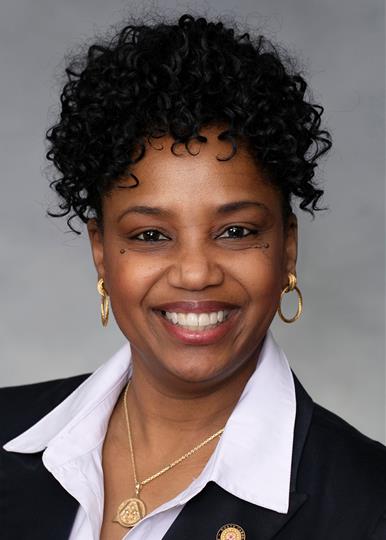
Sen. Kandie Smith
Sponsored bills
Maddy summarySB 560 establishes a state task force to address racial disparities in cases involving missing and murdered Black, Indigenous, and People of Color (BIPOC) women and girls. The task force, composed of state agency representatives and community members with lived experience, will develop policies to improve law enforcement responses, collect better data on missing persons, and create public awareness campaigns. It will specifically focus on ending the misclassification of cases (e.g., labeling Black girls as "runaways"), addressing systemic barriers in reporting, and developing culturally competent protocols for first responders. The task force must submit a report with recommendations within two years of the bill’s enactment.
Maddy summarySB 592 allocates $25 million annually from 2025-2027 to fund one-time grants for North Carolina counties and private employers to expand child care capacity. The grants cover construction, equipment, facility upgrades, and playgrounds, with recipients required to provide a 25% matching contribution. Up to 9% of the grant funds can be used for administrative costs. The bill becomes effective July 1, 2025, directly supporting child care providers seeking to improve facilities and services.
Maddy summarySB 630, the School Mental Health Support Act, creates two programs to improve student mental health services in North Carolina public schools. It appropriates $50 million for a grant program to help schools hire mental health support personnel (like counselors and psychologists), prioritizing schools serving students without insurance or with disabilities. Additionally, it allocates $50 million for a loan repayment program covering 20% of student debt annually for mental health workers (e.g., counselors, psychologists) who graduated from UNC schools and work in high-need areas. Both programs require annual reporting to legislative committees on funding distribution and outcomes. The bill directly affects public school units and mental health professionals in North Carolina.
Maddy summarySB 621 reinstates a temporary sales tax exemption for school supplies in North Carolina, effective July 1, 2025. The bill reenacts G.S. 105-164.13C, which exempts qualifying items like notebooks, pens, and backpacks from state sales tax during a designated period each year. This directly affects families purchasing school supplies for children, reducing their out-of-pocket costs. The policy change is limited to tax relief for specific items and does not alter education funding or curriculum.
Maddy summarySB 626, the Domestic Violence Divorce Reform Act, allows victims of domestic violence in North Carolina to obtain an absolute divorce without waiting the standard one-year-six-month separation period. To qualify, a victim must provide evidence (such as police reports, medical records, or domestic violence program documentation) proving the abuse and submit a statement confirming their status as a victim. The bill also abolishes outdated common-law lawsuits for "alienation of affection" (suing someone for breaking up a marriage) and "criminal conversation" (suing for adultery). These changes directly affect domestic violence survivors seeking divorce and eliminate specific legal claims that no longer align with modern family law. The bill takes effect upon enactment and applies to new divorce cases filed after that date.
Maddy summarySB 588, the Pregnant Workers Protection Act, protects pregnant employees and those with pregnancy-related conditions from workplace discrimination and requires employers to provide reasonable accommodations. It explicitly adds pregnancy to anti-discrimination laws (covering hiring, pay, and termination) and mandates accommodations like modified schedules, temporary transfers to less strenuous roles, or additional break time - unless providing them would cause significant difficulty for the business. The bill also extends these protections to housing by prohibiting discrimination against pregnant people when renting or buying homes. It applies to all employers in North Carolina and takes effect July 1, 2026.
Maddy summarySB 641 reenacts North Carolina's refundable child tax credit, providing financial support to low- and moderate-income families with children. It offers $1,900 annually for each child under age 6 and $1,600 for older qualifying children, with credit amounts phasing out based on income (e.g., married couples filing jointly receive full credit up to $40,000 AGI, reduced to $100 between $40,000-$100,000, and none above $100,000). The credit is refundable, meaning families may receive a cash payment if the credit exceeds their state tax liability. This policy directly affects North Carolina households with children who meet income thresholds, aiming to reduce child poverty by supplementing family income. The bill takes effect for tax years beginning January 1, 2025.
Maddy summaryThis bill requires North Carolina public schools to teach age-appropriate artificial intelligence (AI) literacy from kindergarten through 12th grade starting in the 2025-2026 school year. It mandates state standards covering basic AI concepts, real-world uses, ethical issues like privacy and bias, and responsible AI use - such as preventing academic dishonesty. The standards can be integrated into existing computer science courses for middle and high school students. The bill directly affects all North Carolina public schools and their curriculum planning. It focuses on equipping students with foundational knowledge about AI systems and their societal impacts, rather than creating new programs or funding.
Maddy summarySB 643 expands North Carolina's Teaching Fellows Program by increasing funding for forgivable loans to recruit and support future teachers in high-need areas. It directly affects students pursuing teaching careers in qualifying fields (like STEM, special education, and elementary education) and North Carolina public schools facing teacher shortages, especially in rural communities. The bill establishes a Trust Fund to cover loan costs, administrative expenses, and new support services - including mentoring for teachers in low-performing schools and recruitment efforts targeting regions with the worst teacher retention. Key provisions include prioritizing funding for rural schools and requiring the program to use stricter selection criteria for applicants based on academic performance.