

Maddy summarySB 628, the Safe Schools Transparency Act, requires North Carolina public schools to immediately notify parents or guardians about credible threats targeting their child, the school campus, weapons, or requiring law enforcement action. Schools must provide notifications via multiple methods (text, email, phone, or website) within one hour of law enforcement confirmation, including threat details and response actions. Failure to notify can result in school funding reductions ($5,000 per violation), administrative penalties, or termination for responsible staff, with repeated failures triggering corrective plans or additional training. Additionally, schools must publish annual safety reports online detailing threats, lockdowns, security measures, and safety policies for parent review.
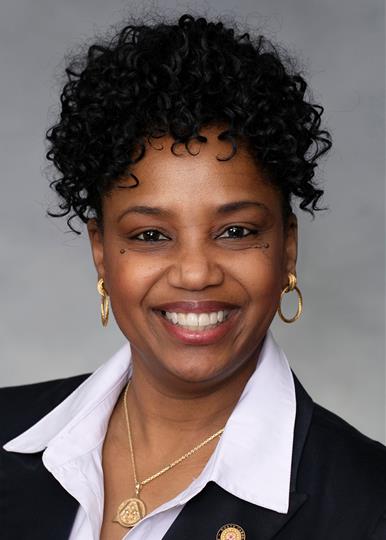
Sen. Kandie Smith
Sponsored bills
Maddy summarySB 627 allows North Carolina small businesses with annual gross receipts under $10 million to reduce their state income tax by deducting funds deposited into a special capital improvement account. Businesses can deduct up to 5% of their adjusted gross income (capped at $1 million), 2% (up to $2 million), or 1% (up to $3 million) for qualifying property improvements like upgrades that add value, extend property life by 10+ years, or adapt property for new business uses. Funds must be deposited into a federally insured bank account and used solely for these improvements; unused funds must be added back to taxable income. The bill takes effect for tax years beginning January 1, 2025, and directly affects small businesses making eligible capital investments.
Maddy summarySB 636, the School Psychologist Omnibus, increases compensation for North Carolina school psychologists and creates programs to boost recruitment and training. It provides a $650 monthly salary supplement for all school psychologists, plus a 12% supplement for those with a nationally certified credential, funded by $8.1 million. The bill also allocates $1.7 million for grants to school districts offering up to $5,000 signing bonuses to recruit psychologists, $5 million for internship stipends, and $5 million for a virtual training program at Appalachian State University, plus $1.6 million to expand university training programs at five UNC schools. These changes, effective July 2025, directly affect school psychologists, public school districts, and university training programs to address staffing shortages.
Maddy summarySB 634, "Kayla's Act: Protecting Domestic Violence Victims," allows domestic violence victims to testify remotely in court to reduce trauma from facing their abuser. It directly affects victims in criminal cases involving domestic violence (as defined under North Carolina law), including assault, stalking, or violations of protection orders. The bill requires prosecutors to notify the defense 15 business days before remote testimony, with the defense needing to object in writing 5 days prior to prevent it. If the defense objects, a judge may still allow remote testimony if the victim would suffer serious emotional distress from testifying in person or if their communication would be impaired. The law also sets specific standards for how remote testimony must be conducted, including real-time audio/video and safeguards for cross-examination.
Maddy summarySB 625 creates two statewide awareness initiatives: one by the Department of Justice (Section 1) to educate North Carolinians about consumer finance risks like identity theft and fraud, and another by the Department of Health and Human Services (Section 2) to address health and civil rights topics including reproductive, LGBTQIA+, gender, and racial health issues. Both initiatives require developing public websites, local community toolkits, and state-coordinated outreach by July 2025, with reports due in September 2026. The bill prohibits using state funds for advocacy or lobbying on new laws, restricting the initiatives to explaining existing resources and laws. These programs directly affect residents through public education and local communities through customizable toolkits for community-led campaigns.
Maddy summarySB 618, the Lasting Economic and Academic Prosperity (LEAP) Act, establishes a state-funded endowment program to support early childhood development and child care initiatives in North Carolina. It directs the Department of Health and Human Services' Division of Child Development and Early Education (DCDEE) to use private donations (called "excluded amounts") and state funds held in a LEAP Reserve to generate investment income, which will supplement existing early childhood programs. The bill requires strict accounting to separate these funds, mandates annual reporting on spending and income to lawmakers, and appropriates $450,000 for fundraising in 2025-2026, with annual 5% increases for eight years. This directly affects North Carolina children by stabilizing early childhood program funding and incentivizes private donors through state matching.
Maddy summarySB 593, the "Grant Our Kids Care Act," allocates $30 million annually (2025-2027) for a pilot program to help licensed child care providers in North Carolina. It provides grants covering 75% of child care tuition for full-time staff (earning ≤85% of state median income) who have children under age five, with providers covering the remaining 25%. The program aims to expand licensed child care capacity by helping staff afford care for their own children, prioritizing counties with high unmet demand. It requires participating programs to create new slots without displacing existing children and mandates annual progress reports to the legislature.
Maddy summaryThis bill requires most North Carolina employers to provide earned paid sick leave to workers. Employees would earn one hour of paid sick time for every 30 hours worked, with small businesses (10 or fewer employees) limited to 32 hours annually and other employers to 56 hours. Workers could use this time for their own illness, family medical care, or safety-related needs like domestic violence or sexual assault recovery. The law applies to most private-sector employees but excludes volunteers and certain exempt workers, directly affecting over 1.6 million North Carolinians currently without access to paid sick days.
Maddy summarySB 632 ("Homes for Heroes") creates a homebuyers' assistance program for North Carolina public servants (including teachers, firefighters, law enforcement, and emergency medical personnel) who are first-time homebuyers. It provides up to $25,000 or 10% of a home's purchase price - covering down payments, mortgage insurance, and closing costs - using $200 million in state funds, with mortgage assistance limited to 60 months. Separately, it establishes a tax credit for volunteer firefighters and rescue workers who incur unreimbursed work expenses, capping the credit at $5,000 or the taxpayer's annual income tax liability, requiring 36 hours of annual training. The program begins July 1, 2025, and the tax credit applies to taxable years starting January 1, 2025.
Maddy summarySB 608 expands North Carolina's Work First Cash Assistance program to include pregnant women as eligible family members, increasing access for low-income households. It raises cash benefit amounts to 50% of the federal poverty level (up from 40%), increases income eligibility to 75% of federal poverty guidelines, and raises resource limits to $5,000 (with vehicle exemptions). The bill removes state-imposed time limits on assistance, keeping only federal requirements (e.g., 24-month limits for most cases), and updates definitions to clarify eligibility. These changes directly affect low-income families, particularly pregnant individuals and those with modest assets, by expanding support and reducing barriers to aid.