

Maddy summarySB 497 requires all North Carolina local governments to allow "middle housing" types - including duplexes, fourplexes, townhouses, and similar multi-unit structures - in every residentially zoned area, including zones currently permitting only single-family homes. It prohibits local governments from blocking these housing types through excessive regulations, such as requiring public hearings, restricting building height to less than three stories, or mandating commercial building codes or fire sprinklers. The law also prevents restrictions on long-term rentals and private parking arrangements, while exempting historic districts and requiring existing municipal infrastructure (water/sewer systems) to be available. Local governments must use the same permitting processes for middle housing as for single-family homes, with an 18-month implementation deadline. This bill aims to increase housing options and affordability by expanding where multi-unit housing can be developed without changing zoning maps.
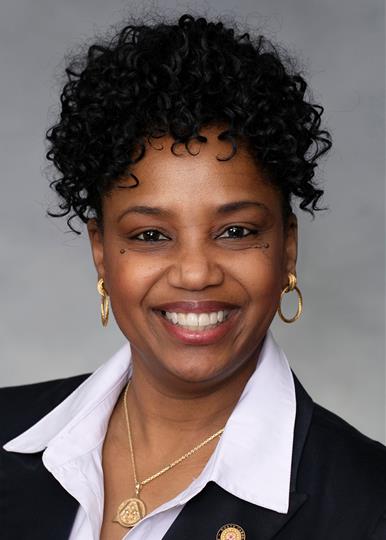
Sen. Kandie Smith
Sponsored bills
Maddy summarySB 583, the Lead. Invest. Families/Foster Teen Act (LIFT), creates a program providing $1,000 monthly cash payments to four specific groups: homeless high school seniors (grade 12), expectant or new mothers with children under 18 months, natural disaster survivors qualifying for FEMA aid, and young adults exiting foster care (aged 16-27). Payments begin April 1, 2026, and continue until April 1, 2035, with disaster survivors receiving payments for 12 months post-disaster. The program is funded through a new LIFT Fund established within the Department of Health and Human Services, which receives state appropriations and other designated funds, and payments are exempt from state income tax and do not affect eligibility for other public benefits. The bill also modifies the corporate income tax rate to offset program costs, aligning the effective tax rate for corporations more closely with individual taxpayers.
Maddy summarySB 633 prohibits individuals convicted of a misdemeanor domestic violence offense from buying or owning firearms. It requires universal background checks for all firearm sales (including private transactions) and mandates that parents/guardians certify safe firearm storage for students in public schools. The bill also reinstates North Carolina’s pistol permit law. These provisions directly affect firearm sellers, private sellers, and people with domestic violence misdemeanor convictions, aiming to restrict firearm access for specific high-risk groups. The law takes effect December 1, 2025, for new offenses.
Maddy summarySB 623 would allow firefighters, police officers, and EMTs (first responders) in North Carolina to collectively bargain with local governments or state agencies over wages, benefits, and working conditions. It amends a current law that prohibits such negotiations for first responders, making it the first time they could formally negotiate as a group. The bill maintains the existing ban on strikes by public employees. If passed, it would directly affect all first responders statewide, changing their labor rights under state law.
Maddy summarySB 537 defines the scope of practice for Advanced Practice Registered Nurses (APRNs) in North Carolina, specifically for nurse practitioners (NPs), certified nurse midwives (CNMs), certified registered nurse anesthetists (CRNAs), and clinical nurse specialists (CNSs). The bill provides statutory definitions for each role, detailing permitted activities like diagnosing conditions, prescribing medications, ordering diagnostic tests, and managing patient care within their specialized focus areas. By codifying these definitions in state law, the bill removes longstanding ambiguity about APRN practice that has persisted for decades, as noted by North Carolina courts and the executive branch. This change directly affects over 20,000 APRNs in the state by legally clarifying their scope of practice.
Maddy summarySB 631 allocates $10.4 million for the 2025-2026 fiscal year and $14.1 million for 2026-2027 to increase salaries for juvenile justice staff in North Carolina. It directly affects Youth Counselor Technicians, Youth Services Behavioral Specialists, Youth Counselors, and Juvenile Court Counselors within the Division of Juvenile Justice and Delinquency Prevention. The bill establishes new annual salary schedules for these roles, including specific pay rates based on experience levels for the 2025-2027 biennium. Additionally, $3.9 million is specifically designated to address existing pay gaps ("salary compression") among these staff members. The funding is intended to support workforce retention and recruitment within the juvenile justice system.
Maddy summarySB 620, the STRONG Act of 2025, targets North Carolina's fentanyl crisis through several key measures. It significantly increases prison terms and fines for drug trafficking, especially for fentanyl, heroin, or carfentanil (e.g., 28+ grams carries a minimum 225-month sentence), and adds 60 months to sentences for offenses near schools or parks (Section 3.3). The bill appropriates $10 million for the State Bureau of Investigation's Drug Task Force (Section 4.1) and expands the Controlled Substances Reporting System. It also funds opioid prevention/treatment programs and creates a tax credit for businesses hiring staff trained in substance use disorder (Section 4.2). These provisions directly affect traffickers, law enforcement, healthcare providers, and eligible businesses.
Maddy summarySB 549 creates two new paid leave programs for North Carolina state employees, public school staff, and community college workers. It provides at least 56 hours of paid leave for pregnancy loss (including miscarriage, failed adoption, or surrogacy) and up to three consecutive workdays of paid bereavement leave for the death of an immediate family member (spouse, parent, child, etc.). The leave is in addition to existing sick/vacation time, requires a minimum service period that can be aggregated across state agencies and schools, and has no cash value upon termination. Funding of $1.8 million for pregnancy loss and $2 million for bereavement is appropriated from the General Fund for fiscal years 2025-2027, effective July 1, 2025.
Maddy summarySB 534 allocates $237.5 million in one-time state funding from the Capital and Infrastructure Fund for capital projects at two North Carolina universities. Specifically, it provides $125 million to North Carolina A&T State University for an Agricultural Research Classroom and $112.5 million to Winston-Salem State University for a Health, Physical Education, and Recreation Complex. The funding is designated for the 2025-2026 fiscal year and becomes effective July 1, 2025. This bill directly affects the operations and infrastructure development of these two public universities.
Maddy summarySB 638, the "Fair Maps Act," proposes a constitutional amendment to replace North Carolina’s current legislative redistricting process with an independent commission. It would establish the North Carolina Citizens Redistricting Commission to draw congressional and state legislative districts after each federal census, removing direct control from the General Assembly and governor. The law requires districts to have equal population, remain contiguous, avoid splitting counties, and preserve communities of interest (like shared cultural or geographic ties). If approved by voters in 2026, this change would take effect for the 2030 census-based redistricting cycle.