

Maddy summaryThis bill, known as Tyler's Law, requires North Carolina to conduct a full investigation before officially ruling any death as a suicide. Under the new rules, medical examiners must interview people connected to the scene and test for gunshot residue if a firearm was involved, ensuring these steps are documented before a final determination is made. To support this expanded work, the legislation increases the fee paid to county medical examiners from $200 to $400 per case and provides state funding to cover the cost increase starting in 2026. The law applies to all deaths occurring on or after it becomes effective, aiming to ensure thorough reviews of apparent suicides.
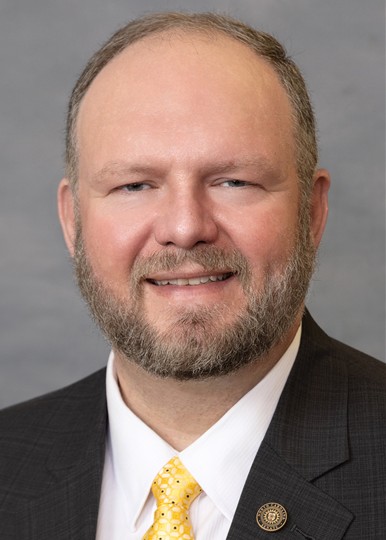
Sen. Ralph Hise
Sponsored bills
Maddy summarySB 848, known as Rio's Law, mandates that criminal justice officers and emergency medical services personnel in North Carolina receive specific training on interacting with individuals who are deaf, hard of hearing, or have autism spectrum disorder. The bill requires these professionals to recognize autism special registration plates and complete certified autism and neurodiversity training by set deadlines for initial credentialing and renewal. Additionally, the law updates the state's special license plate program to include an "Autistic/Neurodivergent" designation featuring a specific logo for individuals with a verified autism diagnosis. These changes aim to standardize educational requirements for public safety workers to better serve neurodivergent communities.
Maddy summaryThis North Carolina bill allocates $4.4 million in recurring state funds starting in the 2026-2027 fiscal year to support tax fraud detection efforts. The money will be given to the Department of Revenue to expand its existing contract with the Government Data Analytics Center for software, data analysis, and technical infrastructure. These resources are intended to improve the state's ability to identify tax evasion and manage collection cases through enhanced analytics and managed services. The legislation takes effect on July 1, 2026, and directs the department to continue working with the analytics center's public-private partnerships.
Maddy summarySB 50, "Freedom to Carry NC," allows most North Carolina residents aged 18 or older (who are U.S. citizens) to carry concealed handguns without a permit, while maintaining existing permit options for reciprocity. The bill prohibits concealed carry for individuals with certain felony convictions, domestic violence misdemeanors, active warrants, or specific mental health or substance use conditions. It also requires carrying valid ID and disclosing concealed weapons to law enforcement upon request. Additional provisions include increased penalties for assaults on first responders, new offenses for felons discharging firearms during crimes, and expanded benefits for law enforcement families. The bill does not change current restrictions on carrying firearms in sensitive locations like schools or government buildings.
Maddy summarySB 405, titled "Healthcare Investment Act" (though it focuses on chiropractic regulation), revises North Carolina's chiropractic practice laws. It updates the State Board of Chiropractic Examiners' composition (requiring 6 practicing chiropractors with 8+ years of experience, plus 2 public members), adds certification standards for chiropractors performing acupuncture, and establishes supervised preceptorship programs for chiropractic students. The bill also clarifies educational requirements (4,200 accredited hours, bachelor's degree) and reinforces that chiropractors cannot prescribe drugs or perform surgery. It directly affects chiropractors, chiropractic students, and the Board, with effective changes starting October 1, 2025.
Maddy summaryThis bill, officially titled "An Act to Establish Exemptions from Certain Floodplain Requirements for the Replacement or Reconstruction of Structures Damaged by Historic Flood Events," corrects the misstated title "Power Bill Reduction Act." It directly affects property owners seeking to rebuild or replace structures damaged by a "historic flood event" (defined as a flood meeting or exceeding a 200-year flood standard) within the base floodplain. The key provision allows rebuilding to the same or lesser size/volume as before the flood, without adhering to newer state or local flood regulations, but prohibits increases in size/volume unless hydrologic analysis proves it won’t raise flood elevations. This exemption applies to structures lawfully established before the flood event.
Maddy summarySB 416, the Personal Privacy Protection Act, prohibits North Carolina public agencies from collecting, disclosing, or releasing personal information about members, volunteers, or donors (financial or nonfinancial) to 501(c) nonprofit organizations. It directly affects individuals who support nonprofits, shielding their identities from public agency records. Key provisions ban agencies from requiring such information, publicly sharing it, or asking contractors/grantees for lists of nonprofit supporters. The bill designates this information as non-public under state law, with limited exemptions for court orders, required disclosures, or voluntary releases by the individual.
Maddy summarySB 311, titled "The Law and Order Act," increases penalties for assaulting utility and communications workers while they are identifiable in uniform and performing duties. It also creates new offenses, including criminal possession of embalming fluid, larceny of gift cards, and unlawful possession of certain explosive devices. The bill enhances punishments for reckless driving causing death, hit-and-run offenses, and firearm use by felons during crimes, while adding a mitigating factor for impaired drivers using ignition interlocks. Additional provisions revise burglary penalties, expand workplace violence prevention to cover mass picketing, and establish civil liability for gift card theft. The bill directly affects workers in essential services and individuals committing specified violent or property crimes.
Maddy summarySB 479, the SCRIPT Act, requires health insurers in North Carolina to allow patients to choose any participating pharmacy without restrictions. It prohibits insurers from imposing unequal copayments, financial penalties, or incentives that steer patients toward specific pharmacies. The bill directly affects insurers offering prescription drug coverage, independent pharmacies (defined as groups of 10 or fewer under common ownership), and patients seeking pharmacy services. Key provisions ensure equal treatment for all pharmacies in a plan and prevent insurers from limiting patient choice based on financial incentives.
Maddy summarySB 442, the "Parents Protection Act," prohibits using a child's biological sex as a basis for abuse or neglect petitions in juvenile care cases. It also bars adoption agencies from denying placements or delaying adoption opportunities due to adoptive parents' refusal to support a child's gender transition. The bill amends North Carolina law to clarify that parents or caregivers raising children consistent with their biological sex - including making related medical and mental health decisions - cannot be charged with child abuse under misdemeanor (§14-318.2) or felony (§14-318.4) statutes. These provisions apply to all adoption placements and abuse petitions filed before, on, or after July 1, 2025. The law explicitly states it does not override other prohibitions against abuse, such as causing serious injury.