

Maddy summarySB 445 automatically adopts federal temporary waivers or modifications issued by the U.S. Department of Health and Human Services or Centers for Medicare & Medicaid Services under specific Social Security Act sections (1135 or 1812(f)) for North Carolina hospitals during declared emergencies. This means hospitals in disaster zones no longer need separate state approval to implement federal rule changes, directly affecting hospitals operating under such declarations. Key provisions include automatically waiving state hospital regulations to align with federal waivers and allowing temporary increases in bed capacity without additional state review. The bill streamlines emergency hospital operations by eliminating bureaucratic delays in applying federally authorized relief measures.
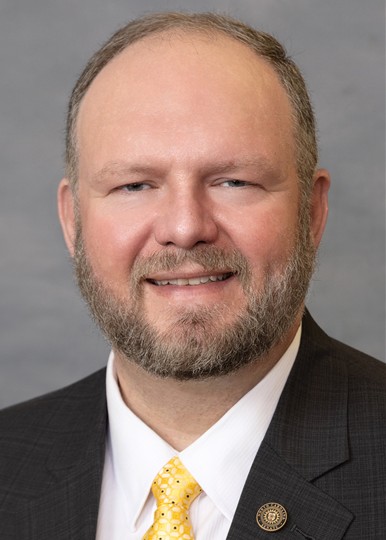
Sen. Ralph Hise
Sponsored bills
Maddy summarySB 177 expands North Carolina's Medicaid Healthcare Access and Stabilization Program (HASP) to include qualifying freestanding psychiatric hospitals, allowing them to receive increased reimbursements for services. The bill creates a new assessment (a fee) on these hospitals, calculated as a percentage of their hospital costs, to fund the program. To implement this, the state must seek federal approval from CMS to include psychiatric hospitals in HASP. This change directly affects all Medicare-certified, state-licensed freestanding psychiatric hospitals in North Carolina, requiring them to pay the new assessment while gaining eligibility for enhanced Medicaid payments.
Maddy summarySB 403 (North Carolina) prepares the state for potential federal approval of Medicaid work requirements. It requires the Department of Health and Human Services (DHB) to negotiate with the Centers for Medicare and Medicaid Services (CMS) if work requirements become authorized, and to notify specific legislative committees within 30 days of starting talks. After CMS approves a plan, DHB must submit a detailed report to those committees, including implementation dates and funding needs. The bill does not create new requirements but establishes a process for the state to implement them if federally approved. This is a procedural measure affecting Medicaid administration, not the current benefit structure.
Maddy summarySB 474, the DAVE Act, creates a new Division of Accountability, Value, and Efficiency within North Carolina's State Auditor's office. It requires all state agencies to report by October 2025 on how they spend public funds and list vacant positions held for six months or longer, including reasons for vacancies. The Division will assess whether agencies or specific positions remain necessary, using AI tools to analyze spending effectiveness, duplication, and budget use. By December 2025, the Division must recommend to the legislature which agencies or positions should be eliminated based on this review.
Maddy summaryThis bill establishes a new chapter in North Carolina law to modernize and simplify the state's human resources system for employees in state agencies and universities. It creates a decentralized system under the Governor's direction where agency heads are responsible for managing their own personnel, while the Office of State Human Resources provides oversight. The legislation sets core principles for the workforce, including equal opportunity, fair compensation, and clear accountability, and it defines specific categories of employees such as career and temporary staff. Additionally, the bill appropriates funds to support these modernization efforts and clarifies the roles of various government bodies within the new framework.
Maddy summarySB 257, the 2025 Appropriations Act, allocates funding for North Carolina's state agencies, departments, and institutions for the 2025-2027 fiscal biennium. It provides budget authority from the General Fund, Highway Fund, and Highway Trust Fund to cover current operations, maintenance, and specific programs like those managed by the Department of Transportation. The bill also includes federal block grant funding for health and human services (DHHS) and other designated programs. This funding measure directly affects all state entities receiving these appropriations and becomes effective July 1, 2025.
Maddy summarySB 602 would temporarily allow owners of commercial buildings damaged by Hurricane Helene to rebuild using the same fire-rated windows that were in place before the storm, instead of upgrading to current building code standards. It applies only to downtown commercial structures in counties declared disaster areas by the federal government, where reconstruction is limited to restoring the building to its pre-storm condition without expansion. Owners must submit a signed affidavit confirming eligibility and acknowledging the risks of not using upgraded windows, and the exemption expires two years after the bill takes effect. This exemption specifically covers window requirements but does not affect other building code provisions.
Maddy summaryThis bill removes the Town of Spruce Pine from a state law list that restricts the total area of noncontiguous land the town can annex. Under current rules, many municipalities cannot annex disconnected areas that exceed 10% of their primary city limits. By exempting Spruce Pine from this cap, the town gains the ability to expand into separate areas beyond that specific percentage limit. The legislation does not change the general annexation laws for other towns or cities in North Carolina.
Maddy summarySB 227 prohibits North Carolina public schools from teaching or promoting 12 specific "divisive concepts" defined in the bill, such as claims that one race is inherently superior or that individuals bear responsibility for past actions of their race. The bill directly affects K-12 students, teachers, and school employees by banning instruction on these concepts and restricting professional development that includes them. Key provisions include requiring schools to avoid "discriminatory practices" and preventing staff from being compelled to affirm divisive concepts. The bill does not ban all diversity initiatives but targets specific teachings it deems contrary to "equality and rights of all persons." This is a proposed bill (not yet law) currently under review in the North Carolina Senate.
Maddy summarySB 558 (North Carolina Senate Bill 558) requires public universities and community colleges to adopt diversity, equity, and inclusion policies that comply with state law while prohibiting the promotion of specific "divisive concepts." It defines 12 concepts as "divisive," including claims that one race or sex is inherently superior, individuals bear guilt for past actions of their race, or meritocracy is inherently racist. The bill mandates that institutions avoid teaching these concepts and bars community colleges from investigating protected speech (like satire) labeled as "microaggressions." It directly affects all public higher education employees, faculty, and students in North Carolina's university system and community colleges.