

Maddy summarySB 124 aims to make North Carolina state government hiring more accessible by reducing unnecessary barriers. It requires the State Human Resources Commission to review job requirements starting October 2025, removing mandatory four-year degree requirements where practical experience (like military service or trade school) is sufficient. The bill also modernizes the application process by allowing resume uploads to auto-fill forms and simplifies job postings to limit additional qualifications to five, ensuring applicants clearly see basic requirements. These changes apply to all state agencies hiring staff, directly affecting job seekers and hiring managers across North Carolina's government workforce.
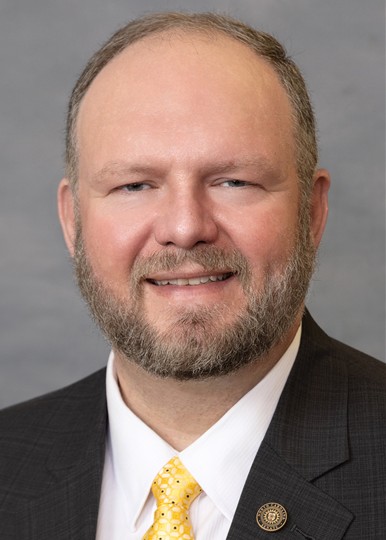
Sen. Ralph Hise
Sponsored bills
Maddy summarySB 771 proposes a constitutional amendment to allow North Carolina to provide state funds for restoring privately-owned business buildings damaged by federally declared natural disasters. Currently, the state constitution prohibits such payments under its "emoluments" clause, but this bill would create an exception specifically for disaster recovery. If approved by voters in March 2026, the amendment would permit the state to use funds for rebuilding private structures after events like hurricanes or floods officially labeled major disasters by the federal government. This change directly affects businesses that own property damaged in these events, removing a legal barrier to receiving state disaster relief.
Maddy summarySB 402 allows North Carolina lottery winners who claim prizes of $50 million or more to request that their personal identifying information be treated as confidential for 90 days after claiming their prize. This applies to winners of the largest jackpots, such as Powerball or Mega Millions prizes, and does not affect how prizes are paid or distributed. The confidentiality only applies to the winner's identity, not to required disclosures for tax reporting (to North Carolina Department of Revenue, IRS, or state tax authorities), debt collection under state law, or court orders. The bill takes effect on July 1, 2025, and does not change existing rules for smaller prizes.
Maddy summarySB 248 would allow adopted individuals to obtain their original birth certificates directly from state vital records offices, without requiring a court order. This bill directly affects adults who were adopted, removing a current barrier to accessing their birth records. The key provision eliminates the need for judicial approval, streamlining the process for adopted persons to access their original birth certificates. The bill passed its first reading on March 10, 2025, and is now under review by the Judiciary Committee.
Maddy summarySB 176 allows Mitchell County, North Carolina's Sheriff's Office to formally agree with Unicoi County, Tennessee's Sheriff's Office for joint cross-state law enforcement operations. The bill requires any such agreement to clearly define how liability for property damage or injuries during these missions will be shared or assigned, while minimizing liability for Mitchell County and the state. It also mandates that these agreements be reported annually to the North Carolina Department of Justice by November 1. This bill directly affects Mitchell and Unicoi County law enforcement agencies by enabling structured cooperation across state lines.
Maddy summaryThis bill provides local boards of education with a new alternative for setting their school calendars, directly affecting public schools and students. It allows schools to start as early as the Monday closest to August 19, provided fall and spring semesters have an equal number of instructional days, and end no later than the Friday before the last Monday in May. The bill also establishes stricter enforcement mechanisms, enabling the State Board of Education to investigate non-compliance and withhold central office administration funds from local boards that fail to follow calendar requirements. Additionally, it permits residents or businesses to file civil actions against non-compliant local boards, potentially leading to court-ordered remedies, attorney's fees, and civil penalties.
Maddy summarySB 357 expands and modernizes collaborative practice agreements between physicians and pharmacists. It allows licensed pharmacists, designated as "clinical pharmacist practitioners," to provide a broader range of "health care services" under a physician's supervision, including modifying drug dosages, ordering tests, and managing drug therapy for patients. These services must be conducted under specific, written collaborative practice agreements and adhere to rules set by the North Carolina Medical Board and Board of Pharmacy. The bill also permits therapeutic drug substitutions by pharmacists with physician authorization and allows for multi-provider collaborative agreements in institutional settings.
Maddy summarySB 89 requires all public schools and certain nonpublic schools in North Carolina to install automatic external defibrillators (AEDs) and provide training to staff on their use and on CPR. The State Board of Education will adopt rules for public schools, which include placing at least two AEDs per school, with one in an athletic facility, and implementing staff training. Local school boards, charter schools, and other public school entities must then develop policies in line with these state rules. The bill appropriates $4,000 per school to assist with the purchase and installation of AEDs and staff training.
Maddy summaryThis bill establishes the Physician Assistant (PA) Licensure Compact, a multi-state agreement designed to enhance the ability of PAs to practice in multiple participating states. It allows PAs who hold a qualifying license and meet national standards, including specific education and certification requirements, to obtain a "Compact Privilege" to practice in other member states. The Compact aims to improve access to medical services and ease licensing burdens for PAs, including military spouses. It also maintains patient safety through shared regulatory oversight and a central data system for tracking licenses and disciplinary actions across participating states.
Maddy summaryThis bill proposes to repeal North Carolina's Certificate of Need (CON) laws, which currently require healthcare providers to obtain state approval for certain projects. These projects include building new facilities, expanding existing services, or acquiring major medical equipment. By eliminating these requirements, the bill would remove a regulatory step for various healthcare facilities, such as hospitals, nursing homes, and diagnostic centers, looking to establish or grow their operations. The bill achieves this by amending several state statutes to remove references to the Certificate of Need process.