

Maddy summarySB 350, the Marijuana Justice and Reinvestment Act, would legalize recreational cannabis for adults 21 and older in North Carolina, allowing possession of up to 2 ounces of cannabis, 15 grams of concentrate, or products containing no more than 2,000mg THC. It establishes a regulatory framework requiring licenses for cultivation, manufacturing, and retail sales, with mandatory lab testing, potency labeling, and restrictions on advertising. The bill directly affects North Carolina residents over 21, cannabis businesses, and communities disproportionately impacted by past cannabis prohibition - addressing the ACLU finding that Black individuals were 3.6 times more likely to be arrested for possession than white individuals despite similar usage rates. Key provisions include creating three funds to reinvest tax revenue into affected communities for substance abuse treatment, education, and business support, while requiring licensed businesses to prioritize diversity, fair wages, and community investment.
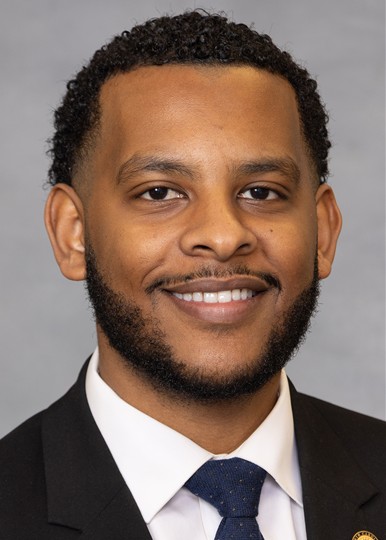
Sen. Caleb Theodros
Sponsored bills
Maddy summarySB 351, the Right to Start Act, allows new businesses (corporations, S corporations, LLCs, partnerships, and other entities) less than five years old with under $5,000 in net income to defer their state income tax payment for one year. It also requires state agencies to prioritize contracting with businesses operating under five years and mandates the Department of Administration to collect and report annual data on these contracts, including demographic and geographic breakdowns. The bill directly affects small, newly formed businesses seeking tax relief and state procurement decisions. Key provisions include the tax deferral eligibility criteria and the data collection/reporting requirements for state contracts.
Maddy summarySB 303 repeals North Carolina's service tax, which previously applied to certain services like repairs, maintenance, installation, and service contracts. This directly affects retailers and service providers who collected this tax on qualifying transactions. The bill removes specific tax code provisions (including those governing real property services and bundled transactions) and makes necessary adjustments to other related tax laws. The repeal would eliminate the tax obligation for businesses and customers involved in these service transactions.
Maddy summarySB 301 modifies North Carolina's Film and Entertainment Grant Fund to clarify eligibility and funding limits for film and TV productions. It sets minimum qualifying expenses (e.g., $1.5 million for theatrical films, $500,000 per TV episode) and caps grants at 35% (for rural areas) or 25% (for urban areas) of production costs, with maximums like $7 million for feature films. Priority is given to productions hiring North Carolina residents and featuring state landmarks to boost tourism. The bill directly affects film producers meeting these financial and geographic criteria who seek state funding.
Maddy summarySB 297 establishes a Nursing Fellows Program at Winston-Salem State University (WSSU) to provide forgivable loans to nursing students. The program offers up to $5,000 per semester (or $2,500 per summer) for tuition, books, and fees toward a Bachelor of Science in Nursing (BSN) or Master of Science in Nursing Education (MSN) degree, contingent on recipients committing to work as nurses or nursing instructors in North Carolina. Eligibility requires WSSU nursing degree completion within 10 years, North Carolina RN licensure, and a demonstrated commitment to serve in-state, with loan forgiveness tied to employment in qualifying nursing roles after graduation.
Maddy summaryThis bill reinstates North Carolina's Earned Income Tax Credit (EITC) program, which provides a state tax credit to low-income workers who qualify for the federal EITC. It sets the state credit at 5% of the federal credit amount (down from 4.5% in 2013), making it refundable so eligible taxpayers receive cash even if they owe no state tax. The credit applies to tax years beginning January 1, 2025, and continues a program that expired after 2013. The bill does not change eligibility rules or create new benefits - it simply reenacts the prior policy structure.
Maddy summarySB 282 aims to expand access to clubhouse model psychosocial rehabilitation programs for adults with severe mental illness in North Carolina who are Medicaid beneficiaries. It requires the Department of Health and Human Services to develop a statewide reimbursement plan by December 2025, including incentives for clubhouse accreditation, consistent payment rates across managed care organizations, and staff training. The bill also appropriates $2.5 million annually (2025-2027) from the General Fund to the North Carolina Clubhouse Coalition to support member clubhouses for program expansion, accreditation, or staff training. This directly affects Medicaid-funded clubhouses, managed care organizations, and the coalition itself. The plan must be reported to the legislature by December 2025, with implementation effective July 2025.
Maddy summarySB 294 requires greater public involvement in North Carolina's state budget process. It mandates at least one week for virtual public comments, one in-person public hearing, and three nonvoting committee meetings before key budget votes. The bill also removes confidentiality for budget-related communications between state agencies, legislators, and legislative staff, making these documents public records once the budget is enacted. These changes apply to the Current Operations Appropriations Act for fiscal years starting after the bill takes effect.
Maddy summarySB 283 appropriates $1.678 million annually in recurring funds (plus supplemental nonrecurring funds) to expand sickle cell disease services for North Carolina's estimated 7,000+ patients. It directly funds six medical centers (including Duke, UNC Chapel Hill, and Atrium Health) for comprehensive care, creates transition coordinator positions to support youth moving from pediatric to adult care, and provides grants to community organizations in underserved areas. The bill also allocates funds to develop a statewide emergency department toolkit for better acute care and supports the state's sickle cell program with new staff positions. All funding is allocated for the 2025-2027 biennium and becomes effective July 1, 2025.
Maddy summarySB 281, the Essential Relief for Child Care Act, appropriates $50 million in nonrecurring state funds for the 2024-2025 fiscal year to continue compensation grants for child care providers. This funding directly supports licensed child care facilities across North Carolina, helping them cover operational costs and prevent closures. The bill requires the Department of Health and Human Services to maintain these grants at current 2024-2025 funding levels through the fourth quarter. It aims to address ongoing financial pressures on providers, which the bill states could lead to 20% facility closures without continued support.