

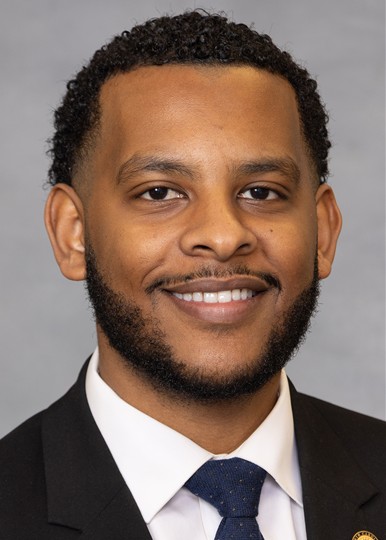
Photo of Caleb Theodros
D North Carolina Senate · District 41 On the 2026 ballot

Sen. Caleb Theodros

Compare
Total votes
293
all sessions
Attendance
84%
47 missed
Near the chamber average
With party
98%
of cast votes
Near the chamber average
Bipartisan score
1%
crosses aisle rarely
Near the chamber average
Sponsored
214
bills & resolutions
Higher than 89% of chamber peers
Committees
6
assignments
214 bills and resolutions

Sponsored bills

Total
214
Primary
28
Co-sponsor
186
This page
214
matching current filters
Co-sponsor SB 362
died · North Carolina Senate · Co-sponsor
Strengthen Long-Term Care Ombudsman Program.

Maddy summarySB 362 appropriates $1 million annually from 2025-2027 to strengthen North Carolina's Long-Term Care Ombudsman Program. It funds $855,000-$893,250 yearly for nine new regional ombudsman positions targeting areas with the greatest need, plus $145,000-$106,750 for operational costs like equipment and transportation. The bill also mandates a study by the Department of Health and Human Services to recommend statutory changes improving the ombudsman program and its volunteer Community Advisory Committees. These changes directly support long-term care residents and their advocates by increasing staffing and program capacity, effective July 1, 2025.

died Mar 24, 2025 1 co-sponsor
Co-sponsor SB 382
In committee · North Carolina Senate · Co-sponsor
Mental Health Protection Act.

Maddy summarySB 382 prohibits licensed mental health professionals from providing conversion therapy to minors or adults with disabilities. The bill bans attempts to change a person’s sexual orientation, gender identity, or gender expression. It directly affects vulnerable individuals, including minors and adults with disabilities, who might otherwise be subjected to these practices. The law aligns with medical consensus from major health organizations stating such therapies are ineffective and harmful. Licensed practitioners would be barred from offering these services under this legislation.

In committee Mar 24, 2025 1 co-sponsor
Co-sponsor SB 383
In committee · North Carolina Senate · Co-sponsor
Right to IVF.

Maddy summarySB 383, titled "Right to IVF," protects patients' access to assisted reproductive technology (ART) like in vitro fertilization (IVF), gamete intrafallopian transfer, and zygote intrafallopian transfer. It prohibits North Carolina or its subdivisions from restricting or interfering with patients' access to ART or healthcare providers' ability to offer or perform these services. The bill also clarifies that fertilized eggs or embryos outside the uterus are not legally considered "human beings" under state law. Additionally, it allocates $500,000 annually from 2025-2027 to expand Medicaid maternal support services (the Baby Love Program), matching federal funds for this purpose. The bill directly affects patients seeking ART and healthcare providers offering these services in North Carolina.

In committee Mar 24, 2025 1 co-sponsor
Co-sponsor SB 371
In committee · North Carolina Senate · Co-sponsor
Stop Chronically Low-Performing Charters.

Maddy summarySB 371 would require North Carolina charter schools with four consecutive years of low academic performance (grades D/F with insufficient growth) to have their charters revoked. It directly affects charter schools identified as "continually low-performing," including the 14,400 students currently enrolled in such schools, and restricts their enrollment expansion until performance improves. Key provisions include mandating that charter schools display their annual performance grade on enrollment applications, limiting remote charter academies to three-year terms, and requiring the state board to identify consistently failing schools annually. The bill aims to address chronically underperforming schools by creating a clear pathway for charter cancellation while allowing limited exceptions for schools showing improvement. It takes effect for the 2025-2026 school year.

In committee Mar 24, 2025 1 co-sponsor
Co-sponsor SB 91
died · North Carolina Senate · Co-sponsor
Newborn Safety Devices.

Maddy summarySB 91 allows qualified emergency facilities (like hospitals, police stations, and fire departments) to install secure "newborn safety devices" where parents can safely leave infants under 30 days old without legal consequences. The bill requires these devices to be temperature-controlled, equipped with dual alarms, inspected weekly, and located visibly on the facility exterior. Facilities must cover installation costs, develop emergency response plans, and undergo annual inspections by the Department of Health and Human Services. This law directly affects parents seeking to surrender infants safely and the 24-hour emergency facilities that install these devices, effective October 1, 2025.

died Mar 20, 2025 1 co-sponsor
Primary SB 343
In committee · North Carolina Senate · Lead sponsor
Secure Home, Secure Future Act.

Maddy summarySB 343, the "Secure Home, Secure Future Act," creates a new property tax relief program for qualifying North Carolina homeowners. It allows owners who have lived in and owned their primary residence for 15 consecutive years to cap annual property tax increases at 2% of the prior year’s tax amount (or the prior year’s tax, whichever is higher), deferring the difference as a lien on the property. To qualify, owners must be North Carolina residents, occupy the home as their permanent residence, and notify tax assessors of property improvements. The relief ends if the owner sells the home (unless transferred to a spouse/co-owner who continues living there), dies (if passed to a spouse/co-owner), or stops using it as a primary residence.

In committee Mar 20, 2025 0 co-sponsors
Primary SB 348
In committee · North Carolina Senate · Lead sponsor
Home Comfort Act.

Maddy summarySB 348, the "Home Comfort Act," provides $7 million annually for home modifications (like ramps, grab bars, and widened doorways) to help seniors aged 65+ with household incomes at or below 250% of the federal poverty level safely age in place. It also allocates $42.25 million yearly to expand in-home care services, including home health agency support and a $500 monthly stipend for family caregivers meeting income criteria. The bill funds a statewide resource guide and online portal to help seniors access aging-in-place programs, with priority given to rural communities. These provisions directly affect eligible seniors and their caregivers through concrete financial assistance and service expansions.

In committee Mar 20, 2025 0 co-sponsors
Co-sponsor SB 347
In committee · North Carolina Senate · Co-sponsor
Supporting Parents Who Serve.

Maddy summarySB 347 allows North Carolina legislators experiencing childbirth, adoption, stillbirth, or miscarriage (a "triggering event") to vote remotely via a designated proxy. A legislator must file a written "voting designation" with the clerk, appoint a party leader as their proxy, and access real-time session streams. The proxy must vote in the chamber after over half the chamber has voted, and the arrangement lasts up to 16 weeks. This policy change enables legislators to fulfill constitutional voting duties while caring for newborns or managing family events, without altering voting outcomes or other legislative processes.

In committee Mar 20, 2025 1 co-sponsor
Primary SB 354
In committee · North Carolina Senate · Lead sponsor
NC Breakthrough Act.

Maddy summarySB 354 reenacts North Carolina’s Research and Development (R&D) tax credit with updated eligibility rules, primarily affecting small businesses conducting qualified research in the state. To qualify, businesses must meet specific wage standards (e.g., paying at least 90% of county average wages in certain areas), provide health insurance covering 50% of premiums for full-time employees, maintain environmental and safety compliance, and have no overdue tax debts. The credit applies to expenses for research performed in North Carolina, including costs paid to state universities for research. This bill modifies existing rules to tighten eligibility while maintaining the credit for qualifying small businesses through 2040.

In committee Mar 20, 2025 0 co-sponsors
Primary SB 353
In committee · North Carolina Senate · Lead sponsor
The Second Chance Coding Act.

Maddy summarySB 353, the Second Chance Coding Act, requires North Carolina's Division of Juvenile Justice to create a program teaching coding and computer skills to juveniles in youth development centers. The program must include specialized courses, industry certification opportunities, and workforce connections like mentorship and job placement to help these youth transition into careers after release. Implemented by January 1, 2026, with $250,000 in funding for 2025-2026, the bill aims to reduce recidivism by improving job prospects. It directly affects youth committed to juvenile facilities, focusing on concrete skill-building rather than speculative outcomes.

In committee Mar 20, 2025 0 co-sponsors
Showing 171 to 180 of 214 bills
Previous 1 … 17 18 19 … 22 Next