

Maddy summarySB 324, the 2025 Safe Drinking Water Act, requires North Carolina's Commission for Public Health to establish safe limits for harmful chemicals in drinking water by October 2025. It directly affects all North Carolina residents by mandating maximum contaminant levels (MCLs) for specific toxins like PFAS, PFOA, PFOS, hexavalent chromium, and 1,4-Dioxane - chemicals linked to cancer or serious health risks. The bill directs the Commission to base these limits on scientific evidence from other states and federal agencies, ensuring protections for vulnerable groups like children and pregnant people, while aligning with U.S. Environmental Protection Agency standards. The law also requires annual reviews to update these limits as new health science becomes available.
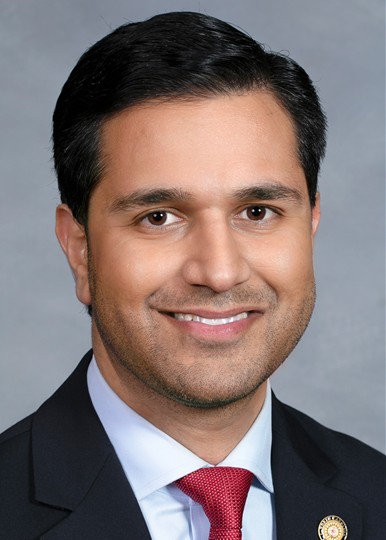
Sen. Mujtaba Mohammed
Sponsored bills
Maddy summarySB 301 modifies North Carolina's Film and Entertainment Grant Fund to clarify eligibility and funding limits for film and TV productions. It sets minimum qualifying expenses (e.g., $1.5 million for theatrical films, $500,000 per TV episode) and caps grants at 35% (for rural areas) or 25% (for urban areas) of production costs, with maximums like $7 million for feature films. Priority is given to productions hiring North Carolina residents and featuring state landmarks to boost tourism. The bill directly affects film producers meeting these financial and geographic criteria who seek state funding.
Maddy summarySB 297 establishes a Nursing Fellows Program at Winston-Salem State University (WSSU) to provide forgivable loans to nursing students. The program offers up to $5,000 per semester (or $2,500 per summer) for tuition, books, and fees toward a Bachelor of Science in Nursing (BSN) or Master of Science in Nursing Education (MSN) degree, contingent on recipients committing to work as nurses or nursing instructors in North Carolina. Eligibility requires WSSU nursing degree completion within 10 years, North Carolina RN licensure, and a demonstrated commitment to serve in-state, with loan forgiveness tied to employment in qualifying nursing roles after graduation.
Maddy summarySB 320 creates an additional retirement allowance for North Carolina state and local law enforcement officers who retire after meeting specific service and age requirements. Eligible officers with at least 30 years of service (or 55+ with 5+ years) under age 62 can choose between two calculation methods for their annual allowance: one based on their current pay rate and service, or one based on their pay rate at 30 years of service. The allowance, paid monthly from state funds, stops upon the officer’s death, reaching age 62 (for the first method), or meeting a time-based condition (for the second method). This change supplements retirement income without affecting other retirement benefits or salary increases.
Maddy summarySB 282 aims to expand access to clubhouse model psychosocial rehabilitation programs for adults with severe mental illness in North Carolina who are Medicaid beneficiaries. It requires the Department of Health and Human Services to develop a statewide reimbursement plan by December 2025, including incentives for clubhouse accreditation, consistent payment rates across managed care organizations, and staff training. The bill also appropriates $2.5 million annually (2025-2027) from the General Fund to the North Carolina Clubhouse Coalition to support member clubhouses for program expansion, accreditation, or staff training. This directly affects Medicaid-funded clubhouses, managed care organizations, and the coalition itself. The plan must be reported to the legislature by December 2025, with implementation effective July 2025.
Maddy summarySB 283 appropriates $1.678 million annually in recurring funds (plus supplemental nonrecurring funds) to expand sickle cell disease services for North Carolina's estimated 7,000+ patients. It directly funds six medical centers (including Duke, UNC Chapel Hill, and Atrium Health) for comprehensive care, creates transition coordinator positions to support youth moving from pediatric to adult care, and provides grants to community organizations in underserved areas. The bill also allocates funds to develop a statewide emergency department toolkit for better acute care and supports the state's sickle cell program with new staff positions. All funding is allocated for the 2025-2027 biennium and becomes effective July 1, 2025.
Maddy summarySB 281, the Essential Relief for Child Care Act, appropriates $50 million in nonrecurring state funds for the 2024-2025 fiscal year to continue compensation grants for child care providers. This funding directly supports licensed child care facilities across North Carolina, helping them cover operational costs and prevent closures. The bill requires the Department of Health and Human Services to maintain these grants at current 2024-2025 funding levels through the fourth quarter. It aims to address ongoing financial pressures on providers, which the bill states could lead to 20% facility closures without continued support.
Maddy summarySB 279 establishes a Baby Bond Trust Fund that automatically deposits $2,000 into individual accounts for eligible North Carolina infants born on or after January 1, 2024. Eligibility requires parents to reside in North Carolina (or establish residency within six months of birth) and have household income at or below 200% of the federal poverty level. Funds in these accounts cannot be accessed before age 18 (except for qualified education expenses), and after age 18, distributions may be used for postsecondary education, home purchases, business startup, or approved long-term investments. The State Treasurer administers the accounts with a Board of Trustees, ensuring funds remain protected from creditors and are managed solely for the account holder’s benefit.
Maddy summarySB 273 requires day camps providing aquatic activities (like swimming or water instruction) for school-age children (up to age 18) to have certified lifeguards on-site. It mandates specific ratios (two lifeguards for every 25 children, plus one additional per 15 children), a 6-foot lifeguard chair, and a mandatory swim test before activities begin - requiring U.S. Coast Guard-approved life jackets for non-swimmers. The bill prohibits aquatic activities in hot tubs, spas, saunas, portable pools, and unfiltered water containers. It applies to all day camps operating for less than four months yearly and takes effect June 1, 2026.
Maddy summarySB 278, the Smart Heart Act, requires all North Carolina public schools to create cardiac emergency response plans (CERPs) and install at least one AED per school. The plan must include trained response teams, annual drills, staff CPR/AED training (for nurses and athletic supervisors), and integration with local emergency services. Schools must place AEDs in unlocked, visible locations accessible within three minutes, with maintenance and training protocols set by the State Board of Education. The bill allocates $2 million for school AED purchases and plan development, effective for the 2025-2026 school year.