

Maddy summarySB 453 limits nonrefundable "due diligence" fees in home sales to 1% of the purchase price, preventing sellers from requiring higher amounts as a condition of accepting offers. Any contract clause exceeding this amount is void, and sellers who enforce it may face legal costs and attorney fees. The bill also allocates $10 million to the North Carolina Housing Coalition to fund homebuyer education programs statewide. These provisions directly affect homebuyers and sellers in residential transactions, aiming to reduce upfront financial barriers and improve buyer preparedness. The law takes effect for new offers on or after October 1, 2025, with the funding provision beginning July 1, 2025.
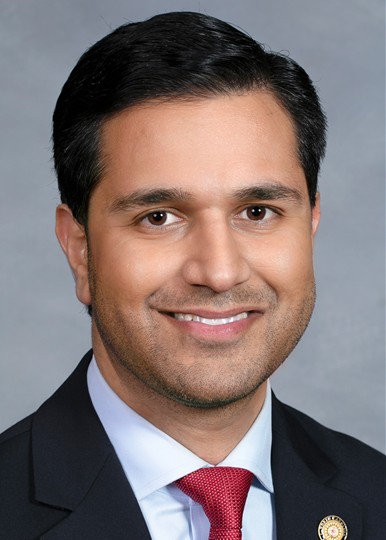
Sen. Mujtaba Mohammed
Sponsored bills
Maddy summarySB 395, the Disaster Relief Eviction Moratorium Act, allows North Carolina's Governor to issue an executive order banning residential evictions in declared emergency areas during disasters causing widespread job loss or economic hardship. The moratorium starts at up to 90 days, with possible 30-day extensions, for a maximum total of 180 days, and applies directly to renters and landlords in the affected area. The Governor must determine that the disaster would lead to increased homelessness without the ban, and the moratorium cannot be overridden by the General Assembly or Council of State. The bill also permits the Governor to direct state and federal funds toward rental assistance programs to support both tenants and landlords during the moratorium.
Maddy summarySB 435 restores education-based salary supplements for North Carolina teachers and instructional support personnel (ISP) that were previously eliminated. It directs the State Board of Education to use the 2013 policy (TCP-A-006) to determine eligibility for the "M" salary schedule and degree-based pay increases (e.g., for master's or doctoral degrees). The bill appropriates $8 million from the General Fund for the 2025-2026 fiscal year to fund these reinstated supplements. The law takes effect on July 1, 2025, directly affecting eligible educators' pay through revised salary calculations.
Maddy summarySB 454, the Community Safety Act, allocates $5.5 million in state funds for North Carolina law enforcement agencies over the 2025-2026 fiscal year. It provides grants for community policing programs ($1 million), officer incentives for exemplary service or diversity efforts ($1.5 million), and additional detective funding for severe crimes ($2 million). The bill also revises use-of-force policies to ban strangleholds and neck restraints as acceptable tactics, requiring officers to use minimum force and prioritize de-escalation. Additionally, it sets a minimum hiring age of 21 for officers and allows denial of certification based on certain felony or misdemeanor convictions, regardless of expungement. These provisions directly affect all law enforcement agencies and officers in North Carolina.
Maddy summarySB 457 requires automatic voter registration for eligible North Carolina residents at driver's license offices, public agencies, community colleges, and UNC system institutions starting January 2026. Individuals applying for or renewing a driver's license, ID card, or college enrollment would be automatically registered to vote unless they explicitly decline during the process. The bill mandates clear disclosures about voter qualifications, penalties for false information, and an outreach campaign by the State Board of Elections. Registration applications submitted at these locations must meet standard deadlines (e.g., received by 5:00 PM, 25 days before an election) to be valid for upcoming votes.
Maddy summarySB 356 requires the North Carolina Secretary of Revenue to refund local sales and use taxes paid indirectly by the North Carolina Global Transpark Authority (GTA) directly back to the GTA itself. This administrative change ensures the GTA receives tax refunds it has already paid, rather than having them processed through other channels. The bill applies to refunds for the first full quarter occurring after it becomes law. This is a procedural adjustment to tax refund handling for the GTA, a state agency focused on economic development.
Maddy summarySB 366 increases Medicaid payment rates for personal care services to $7.50 per 15-minute increment and private duty nursing to $16.25 per 15-minute increment. It directly affects healthcare providers who deliver these services to Medicaid beneficiaries through programs like personal care services and private duty nursing. The bill allocates $119.2 million annually in state funds (with matching federal funds) to cover the rate increases for the 2025-2027 fiscal biennium. The changes take effect July 1, 2025.
Maddy summarySB 358, the "Hate Crimes Prevention Act," expands North Carolina's hate crime laws by increasing penalties for offenses motivated by the victim's actual or perceived race, ethnicity, religion, nationality, gender identity, sexual orientation, disability, or gender expression. It upgrades certain misdemeanors to higher classifications (like Class H felonies) and adds civil remedies for victims, including compensation for emotional distress and attorney fees. The bill also mandates the State Bureau of Investigation to create a hate crimes database, requires law enforcement officers to receive specialized training on identifying and reporting hate crimes, and directs prosecutors to develop hate crime prosecution training. These changes directly affect victims of hate crimes, law enforcement agencies, and prosecutors by strengthening legal responses and data collection.
Maddy summarySB 384 requires North Carolina's Commission for Public Health to establish safe limits for specific toxic chemicals in drinking water by October 2025. It targets chemicals like PFAS, PFOA, PFOS, hexavalent chromium, and 1,4-Dioxane - known or suspected carcinogens - mandating limits based on scientific evidence and ensuring they do not exceed federal EPA standards. The law also requires annual reviews of new research to update these limits as needed. This directly affects all North Carolina residents who rely on public water systems, with special consideration for children, infants, and pregnant people.
Maddy summarySB 360 requires every public school in North Carolina (including traditional, charter, regional, and laboratory schools) to have at least one full-time, permanent school nurse starting in the 2025-2026 school year. The bill appropriates $95 million in recurring state funds to the Department of Public Instruction to cover the cost of adding these nurse positions, ensuring funding supplements existing resources without replacing them. This policy directly affects all K-12 public schools across the state by mandating nurse staffing levels and providing dedicated funding to meet that requirement. The law becomes effective July 1, 2025, with implementation beginning for the 2025-2026 school year.