

Maddy summarySB 553, titled "Save More Tatas Act," requires health insurance plans in North Carolina to cover diagnostic breast cancer imaging (such as ultrasounds and MRIs) with the same cost-sharing (like copays and deductibles) as routine mammograms, directly affecting women needing these services. It updates mammogram coverage rules to include annual screenings for high-risk individuals (e.g., those with a family history of breast cancer or dense breast tissue) and mandates that facilities meet accreditation standards. The bill also appropriates $3.6 million for the 2025-2026 fiscal year to support mammography services in rural areas and for the State Health Plan. This legislation aims to improve access to breast cancer diagnostic care without increasing patient out-of-pocket costs.
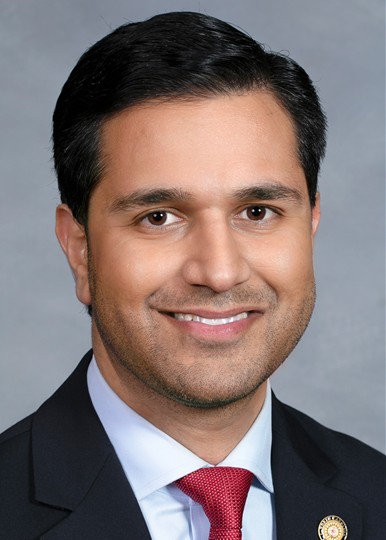
Sen. Mujtaba Mohammed
Sponsored bills
Maddy summarySB 604 defines a "school resource officer" (SRO) as a law enforcement officer assigned to schools for at least 20 hours weekly for safety, security, and related duties. It mandates that all SROs complete initial and ongoing training on mental health, students with disabilities, racial equity, and crisis intervention by 2026. The bill also requires school administrators or social workers to sign SRO-initiated complaints alleging student misconduct before they can be filed in juvenile court. This affects SROs, school staff, and the juvenile court process for school-related complaints, effective January 1, 2026.
Maddy summarySB 596 appropriates $169 million from the State Capital and Infrastructure Fund to North Carolina Central University for critical campus repairs. The funds are allocated as $100 million for HVAC, fire safety, and building code upgrades; $9 million for roof and structural repairs; and $60 million for replacing aging electrical, water, and steam infrastructure. These repairs directly address immediate safety risks and system failures affecting the university's campus operations and facilities. The bill becomes effective July 1, 2025, with funding designated for the 2025-2026 fiscal year.
Maddy summarySB 607, the North Carolina Equal Pay Act, prohibits employers from paying employees differently based on gender for work requiring similar skill, effort, and responsibility under comparable conditions. It defines "comparable work" broadly (excluding job titles alone) and allows pay differences only for factors like seniority, merit, geographic location, or job-related education/experience. The bill also bans employers from asking about salary history before making a job offer, protects employees who discuss pay or file complaints from retaliation, and requires employers to post notices about these rights. The law takes effect January 1, 2026, and would allow employees to seek back pay for violations.
Maddy summarySB 480 establishes North Carolina's first state-run paid family leave program, effective January 1, 2026. It provides eligible workers - such as employees meeting wage criteria or self-employed individuals who opt in - with up to 26 weeks of paid leave per year to care for a newborn, adoptive child, or family member with a serious health condition, or for military family leave needs. Benefits are capped at 12 weeks for most family-related reasons (like newborn care), 18 weeks for personal serious health conditions, and 26 weeks for military family leave. The program is funded through employee payroll contributions and administered by the Division of Employment Security, with specific eligibility requirements defined in the bill.
Maddy summarySB 571 (MOMnibus 3.0) establishes a North Carolina grant program to address racial disparities in maternal health outcomes, specifically targeting Black women. The bill requires the Department of Health and Human Services to award competitive grants (between $10,000 and $50,000) to community-based organizations serving Black women in areas with high maternal health disparities. Grants prioritize organizations led by Black women that provide evidence-based services, including culturally respectful care, mental health support, assistance with social determinants like housing and transportation, and doula support. The program mandates technical assistance for grantees and annual reports to the legislature on funding and outcomes. This bill directly affects Black women in North Carolina and community health organizations providing maternal care services.
Maddy summarySB 529, the Second Chance Success Act, eliminates the ability to extend probation solely due to failure to pay a $40 monthly supervision fee. It directly affects individuals on supervised probation in North Carolina who might have faced extended probation terms for nonpayment. The bill modifies probation rules to state that a probation term cannot be extended if nonpayment of the fee is the only reason, though the fee itself remains required (with court exemptions possible for good cause). Fees collected still go to the county clerk and then the state's General Fund, but probation officers can no longer use nonpayment as grounds for extending probation.
Maddy summarySB 603 appropriates $1.5 million from the state General Fund to the Town of Davidson for specific trail projects in Mecklenburg, Iredell, and Davidson counties. The bill allocates $1 million to construct portions of the Carolina Thread Trail connecting Davidson to existing trails in Iredell and Cabarrus Counties, and $500,000 for segments of the West Branch Nature Preserve Greenway within Davidson. These funds are designated for the 2025-2026 fiscal year to support trail construction and connectivity. The bill does not create new regulations but provides direct funding for physical infrastructure projects benefiting local communities and outdoor recreation access.
Maddy summarySB 585 creates a tuition and registration fee waiver for mental health clinicians and peer support specialists working in municipal or county emergency medical services (EMS), rescue, or lifesaving departments. It specifically applies to professionals embedded in 911 call centers to direct mental health resources or paired with first responders during emergency calls. The bill amends North Carolina's community college tuition waiver rules to add these departments as eligible entities, allowing their employees to take approved community college courses without tuition costs. This policy directly affects local government emergency response teams and their mental health staff, effective July 1, 2025. The waiver covers standard tuition and registration fees for relevant training programs.
Maddy summarySB 610 appropriates $5 million from the General Fund and $750,000 from the Highway Fund to fund repairs for Mecklenburg County's "orphan roads" (privately maintained roads used by the public), specifically requiring the North Carolina Department of Transportation to accept Grand Palisades Parkway into the state highway system after upgrades. The bill directly affects residents and schools using the road, including 20 schools with bus routes along it and its role as a potential emergency evacuation route for the Catawba Nuclear Station. Key provisions mandate the state to make necessary improvements to meet highway standards before taking over maintenance. The funding is allocated for the 2025-2026 fiscal year, with the bill effective July 1, 2025.