

Maddy summarySB 124 aims to make North Carolina state government hiring more accessible by reducing unnecessary barriers. It requires the State Human Resources Commission to review job requirements starting October 2025, removing mandatory four-year degree requirements where practical experience (like military service or trade school) is sufficient. The bill also modernizes the application process by allowing resume uploads to auto-fill forms and simplifies job postings to limit additional qualifications to five, ensuring applicants clearly see basic requirements. These changes apply to all state agencies hiring staff, directly affecting job seekers and hiring managers across North Carolina's government workforce.
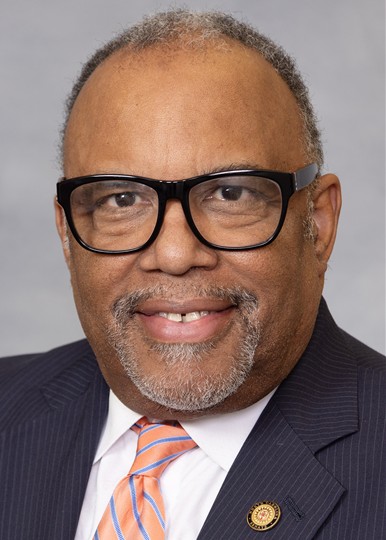
Sen. Paul Lowe
Sponsored bills
Maddy summarySB 402 allows North Carolina lottery winners who claim prizes of $50 million or more to request that their personal identifying information be treated as confidential for 90 days after claiming their prize. This applies to winners of the largest jackpots, such as Powerball or Mega Millions prizes, and does not affect how prizes are paid or distributed. The confidentiality only applies to the winner's identity, not to required disclosures for tax reporting (to North Carolina Department of Revenue, IRS, or state tax authorities), debt collection under state law, or court orders. The bill takes effect on July 1, 2025, and does not change existing rules for smaller prizes.
Maddy summarySenate Bill 110, titled "North Carolina Work and Save," establishes the North Carolina Small Business Retirement Savings Program. This program aims to help private-sector employees aged 18 and older in North Carolina save for retirement if their employer does not already offer a retirement plan. It enables participating employers to offer a voluntary payroll deduction Individual Retirement Account (IRA) arrangement for their employees. A new North Carolina Small Business Retirement Savings Board would be created to oversee the program and manage its funds through private-sector entities.
Maddy summarySB 89 requires all public schools and certain nonpublic schools in North Carolina to install automatic external defibrillators (AEDs) and provide training to staff on their use and on CPR. The State Board of Education will adopt rules for public schools, which include placing at least two AEDs per school, with one in an athletic facility, and implementing staff training. Local school boards, charter schools, and other public school entities must then develop policies in line with these state rules. The bill appropriates $4,000 per school to assist with the purchase and installation of AEDs and staff training.
Maddy summarySB 369 aims to ensure that certain telehealth providers can enroll as Medicaid providers in North Carolina. The bill specifies that individual health care providers, licensed by the state and offering services exclusively through telemedicine, do not need a physical presence in the state to be eligible for Medicaid enrollment. Additionally, medical provider groups that exclusively offer telemedicine services will not be required to have an in-state service address to enroll as Medicaid provider groups. This measure directly affects telehealth providers and Medicaid recipients by clarifying requirements for remote healthcare services.
Maddy summarySenate Resolution 372 is a procedural bill that addresses the confirmation of McKinley Wooten, Jr. as the Secretary of the Department of Revenue. It outlines that the Senate will consider whether to approve the Governor's appointment for this principal State department head position.
Maddy summaryThis Senate Resolution addresses the appointment of Lee Lilley as Secretary of the Department of Commerce. It directs the Senate to consider whether to confirm Lee Lilley for this role, as required by the state constitution for gubernatorial nominations.
Maddy summaryThis Senate Simple Resolution (SR 260) formally asks the North Carolina Senate to consider confirming Dr. Devdutta Sangvai for appointment as Secretary of the Department of Health and Human Services (DHHS). It follows state law requiring Senate confirmation for the Governor's appointment of a department head. The resolution triggers the Senate's formal review process for this specific nomination, which is pending under North Carolina's constitutional requirements. The bill itself does not change policy or create new rules - it solely addresses the procedural step of confirming a gubernatorial appointment.
Maddy summarySB 361, the "Protecting First Responders Act," increases criminal penalties for assaulting or exposing emergency medical technicians, firefighters, and other first responders to fentanyl or harmful substances. It criminalizes intentionally exposing these responders to fentanyl (a Class H felony) or causing serious injury through such exposure (Class G felony), and imposes a Class I felony for failing to warn responders about fentanyl at a scene. The bill appropriates $10.35 million in nonrecurring funds for the 2025-2026 fiscal year to provide bulletproof vests ($8.1 million) and bulletproof backpack plates ($2.25 million) to paramedics and EMTs through grants. These provisions apply to first responders registered with North Carolina’s Office of Emergency Medical Services, with funding effective July 1, 2025, and criminal provisions effective December 1, 2025.
Maddy summarySB 97 adds stomach cancer (gastric cancer) to the list of cancers presumed to be work-related for firefighters under North Carolina's Public Safety Employees' Death Benefits Act. This means firefighters who die from stomach cancer will automatically qualify for line-of-duty death benefits without needing to prove occupational connection. The bill appropriates $500,000 annually from 2025-2027 to cover these new benefits. It takes effect July 1, 2025, applying to qualifying deaths occurring on or after that date.