

Maddy summarySB 124 aims to make North Carolina state government hiring more accessible by reducing unnecessary barriers. It requires the State Human Resources Commission to review job requirements starting October 2025, removing mandatory four-year degree requirements where practical experience (like military service or trade school) is sufficient. The bill also modernizes the application process by allowing resume uploads to auto-fill forms and simplifies job postings to limit additional qualifications to five, ensuring applicants clearly see basic requirements. These changes apply to all state agencies hiring staff, directly affecting job seekers and hiring managers across North Carolina's government workforce.
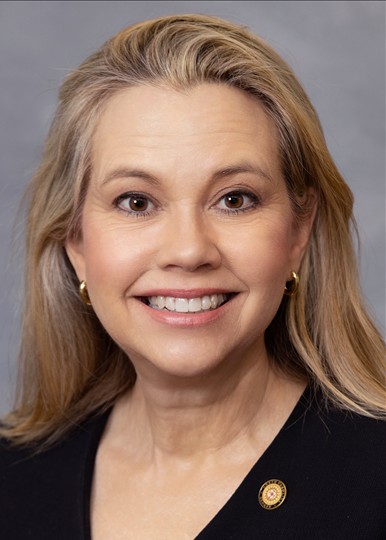
Sen. Amy Galey
Sponsored bills
Maddy summarySB 295 clarifies North Carolina's motor vehicle dealer laws to prevent unfair franchise terminations and protect dealers' transfer rights. It prohibits manufacturers from conditioning approval of dealership transfers, sales, or management changes on requirements like building new facilities, acquiring specific vehicle lines, or signing "right of first refusal" agreements. The bill also requires manufacturers to reimburse dealers' legal fees if they unreasonably deny a transfer and a court later overturns that decision. This directly affects car dealers seeking to sell their businesses or change ownership, and manufacturers who control dealership franchises.
Maddy summarySB 117 updates North Carolina's Uniform Commercial Code to govern transactions involving "controllable electronic records" (e.g., digital assets like blockchain-based tokens or programmable contracts). It defines key terms like "controllable electronic record" and establishes rules for transferring control - requiring a buyer to have exclusive power to benefit from and restrict access to the record. The bill protects "qualifying purchasers" (those who buy in good faith for value) from claims by others over the same digital asset, while clarifying that standard filings under Article 9 of the Commercial Code do not create notice of ownership claims. This directly affects businesses and individuals engaging in digital asset transactions, excluding existing categories like bank accounts or electronic money from these new rules.
Maddy summarySB 101 protects funds in North Carolina's 529 education savings accounts and ABLE accounts (for people with disabilities) from being seized by creditors. It ensures that money used for qualifying purposes - like education expenses for 529s or disability-related costs for ABLEs - cannot be claimed through liens, garnishments, or judgments. The bill repeals an existing law that previously allowed such claims and applies to actions filed after September 1, 2025. This directly affects account owners, beneficiaries, and contributors who use these funds for permitted purposes.
Maddy summarySB 344 ensures that North Carolina seniors aged 65+ who transfer funds into qualifying pooled special needs trusts (meeting federal standards) won't lose Medicaid or State-County Special Assistance eligibility. The bill requires the state health department to update eligibility rules so these transfers are treated as "fair market value" transactions - meaning the funds aren't counted against benefit eligibility if the trust uses the money to provide goods/services equal to the transfer value within the senior's life expectancy. It directly affects seniors using these trusts to manage assets while maintaining public benefits. The law amends state rules to align with federal guidelines (42 U.S.C. § 1396p(d)(4)(C)) and takes effect upon enactment.
Maddy summarySB 400 establishes local "Adult Protection Multidisciplinary Teams" in North Carolina counties to address abuse, neglect, and exploitation of disabled adults (18+ with incapacity) and older adults (65+). These teams, composed of social services staff, law enforcement, prosecutors, healthcare providers, mental health professionals, and community advocates, will review specific cases and coordinate multi-agency responses to prevent re-victimization. The bill mandates county-level teams (or multicounty collaborations) to share information, address systemic service gaps, and develop community education programs. It directly affects vulnerable adults receiving adult protective services by creating a structured system for cross-agency collaboration to enhance safety and well-being.
Maddy summarySB 771 proposes a constitutional amendment to allow North Carolina to provide state funds for restoring privately-owned business buildings damaged by federally declared natural disasters. Currently, the state constitution prohibits such payments under its "emoluments" clause, but this bill would create an exception specifically for disaster recovery. If approved by voters in March 2026, the amendment would permit the state to use funds for rebuilding private structures after events like hurricanes or floods officially labeled major disasters by the federal government. This change directly affects businesses that own property damaged in these events, removing a legal barrier to receiving state disaster relief.
Maddy summarySB 423 (Title Fraud Prevention) requires individuals to present government-issued photo ID, like a driver's license, before recording property deeds or similar documents at the register of deeds office. This applies to regular property buyers/sellers (not trusted submitters like title companies, lawyers, or banks), who must show ID in person or submit a redacted photocopy for electronic filings. The bill also creates a new court process for property owners to quickly remove fraudulent deeds from records after fraud is proven. It directly affects homeowners, real estate buyers, and sellers in North Carolina by adding an ID verification step to property transactions to prevent title fraud. The bill is currently pending in the Senate Judiciary Committee as of March 2025.
Maddy summarySB 639, the North Carolina Farm Act of 2025, updates agricultural water planning, addresses feral swine damage, and strengthens farm conservation protections. It requires the Department of Agriculture to revise the state’s agricultural water plan by 2026, including funding for water infrastructure, conservation practices, and flood mitigation. The bill creates a Feral Swine Working Group with industry and agency representatives to develop control strategies and report annually, while also mandating 100-foot vegetative buffers around protected farm tracts in new subdivisions. Local governments gain authority to deny development permits that would negatively impact agricultural production, directly affecting farmers, landowners, and municipal planning decisions.
Maddy summarySB 122 would establish North Carolina's adoption of the Uniform Community Property Disposition at Death Act, affecting married couples or legally recognized domestic partners in relationships where community property could be acquired under applicable law. The bill specifies that at death, half of the community property automatically belongs to the surviving partner (not subject to the deceased’s will), while the other half can be distributed per the deceased’s wishes. It clarifies that the surviving partner’s share is exempt from elective share claims, and defines key terms like "community-property spouse" and "partition" for property division. The bill does not apply to property already divided, reclassified, or held in certain trusts. (Note: The bill is currently in committee, with recent actions including withdrawal from the Judiciary Committee on March 6, 2025.)