

Maddy summarySB 155 establishes the Social Work Interstate Licensure Compact to allow licensed social workers in North Carolina to practice in other participating states without obtaining separate licenses. It directly affects licensed social workers, particularly those serving military families or providing telehealth services, by removing barriers to cross-state practice. The bill creates a system where a "home state" license permits practice in all member states (called "remote states") through mutual recognition, reducing duplicate licensing requirements. Key provisions include standardized disciplinary information sharing between states and ensuring social workers comply with the laws of the state where the client is located during service.
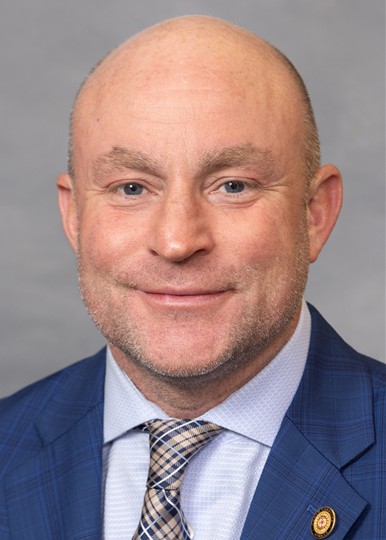
Sen. Danny Britt
Sponsored bills
Maddy summarySB 265, the "Protecting Our Community Act," regulates hemp-derived consumable products (like edibles or vapes with ≤0.3% delta-9 THC) and bans them on school grounds. It requires businesses to verify buyers' ages (no sales to under 21), mandates independent lab testing for THC levels, and defines terms like "distributor" and "final form product." The law directly affects hemp product manufacturers, sellers (including online retailers), and schools, which must prohibit these items on campus. Key provisions include mandatory child-resistant packaging at point-of-sale and restrictions on selling to minors, aiming to limit youth access while creating new regulatory requirements for the industry.
Maddy summarySB 259, the School Psychologist Omnibus, aims to improve the number and quality of school psychologists in North Carolina public schools. It provides $8.1 million for 2025-2026 to increase school psychologists' salaries by $650 monthly plus 12% for those with NCSP credentials, and allocates $5 million for a grant program offering signing bonuses (up to $5,000) to recruit psychologists, requiring a one-year commitment. Another $5 million funds an internship program with stipends for psychology students and supervisor bonuses, while $5 million supports a virtual training program at Appalachian State University. These provisions directly affect school psychologists, school districts, and psychology training programs across North Carolina.
Maddy summaryThis bill permits the sale, possession, and use of specific consumer fireworks (like sparklers, party poppers, and novelty items) in North Carolina, while maintaining restrictions on most pyrotechnics. It directly affects consumers and retailers by allowing limited fireworks that comply with strict weight limits (e.g., no more than 16 milligrams for party poppers) and requires compliance with new regulations under Part 2 of Chapter 58. The bill establishes an excise tax on consumer fireworks sales and amends existing laws to define permitted items, such as wire sparklers (under 100 grams) and sparklers emitting showers of sparks. It does not change prohibitions on most fireworks, including indoor displays or sales to minors under 18.
Maddy summarySB 240 establishes the NCSTARS Grant Program to fund community colleges partnering with public schools and local businesses to create work-based learning programs for students aged 16+ in apprenticeships or preapprenticeships. It provides matching grants of up to $500,000 per year per community college, requiring a 3:1 state-to-local funding match for program costs like student stipends, travel, and staff. The program prioritizes applications modeling the Surry-Yadkin Works FLEET program and mandates annual reports on participation and outcomes. Total funding of $4.75 million is allocated for the 2025-2026 fiscal year, supporting the program through 2028-2029.
Maddy summarySB 228 modifies North Carolina's property tax exclusion for disabled veterans, replacing a flat $45,000 exemption with a percentage-based system tied to the veteran's VA disability rating. It directly affects veterans with a 50% or higher service-connected disability rating (or surviving spouses if the veteran died from a service-connected condition), who own their primary residence. Under the bill, the tax exclusion equals the veteran's disability percentage multiplied by their home's appraised value (e.g., a 70% disabled veteran would get 70% of their home's value excluded). Eligibility requires VA certification of the disability rating as of January 1 prior to the tax year, and the change takes effect for taxes due in 2025.
Maddy summarySB 180 establishes seven single-member residency districts for the Anson County Board of Commissioners, requiring each commissioner to reside in the district they represent. The bill mandates that all county voters elect candidates for all seven seats, with candidates needing to live in the specific district they seek to represent. It adopts the existing 2020-2022 election districts until revised and repeals outdated provisions from prior laws. The new voting structure takes effect for the 2026 elections, directly affecting Anson County residents and commissioners.
Maddy summaryThis bill allows North Carolina local governments to borrow money to accelerate transportation projects already identified for funding under the State Transportation Improvement Program (STIP). Local governments can issue "grant anticipation notes" to cover project costs before receiving state funds, but notes must mature within 12 months after the project's scheduled completion year (no renewals allowed). Borrowing is capped at the full project cost, requires a special agreement with the DOT outlining project details and repayment plans, and must be repaid solely from state grant funds - without using local tax revenue or pledging the government's credit. The bill also ensures STIP program changes won't delay repayment of these notes.
Maddy summarySB 128, the Heroes Homestead Act, increases the property tax exemption for disabled veterans in North Carolina from $45,000 to $76,500 of a home's appraised value. This change directly affects qualifying disabled veterans who own and occupy their primary residence, providing greater tax relief on their homes. The bill amends North Carolina's property tax law to set the new exclusion amount, effective for taxes due on or after July 1, 2026. It does not apply to other property tax relief programs.
Maddy summarySB 109, the Veterans Appreciation Act, increases property tax relief for disabled veterans in North Carolina by expanding the homestead exclusion to cover the value increase from U.S. Department of Veterans Affairs (VA) housing grants. It directly affects disabled veterans who receive VA housing grants for service-connected disabilities, allowing them to exclude up to $45,000 of their home’s appraised value plus grant-funded improvements from property taxes. The bill adds a prequalification process, letting veterans apply in advance of purchasing a home to confirm eligibility, with county assessors required to notify applicants within 30 days. This change takes effect for property taxes on homes owned after July 1, 2025.