

Maddy summarySB 177 expands North Carolina's Medicaid Healthcare Access and Stabilization Program (HASP) to include qualifying freestanding psychiatric hospitals, allowing them to receive increased reimbursements for services. The bill creates a new assessment (a fee) on these hospitals, calculated as a percentage of their hospital costs, to fund the program. To implement this, the state must seek federal approval from CMS to include psychiatric hospitals in HASP. This change directly affects all Medicare-certified, state-licensed freestanding psychiatric hospitals in North Carolina, requiring them to pay the new assessment while gaining eligibility for enhanced Medicaid payments.

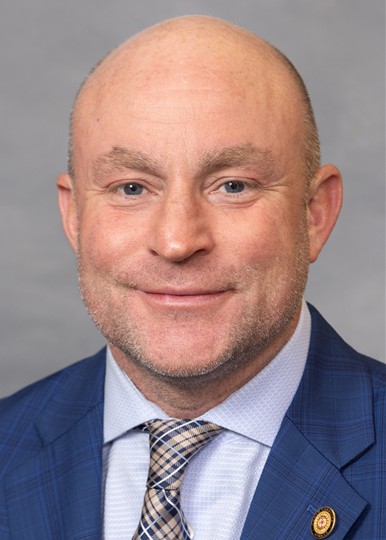
Sen. Danny Britt
Sponsored bills
Maddy summarySB 474, the DAVE Act, creates a new Division of Accountability, Value, and Efficiency within North Carolina's State Auditor's office. It requires all state agencies to report by October 2025 on how they spend public funds and list vacant positions held for six months or longer, including reasons for vacancies. The Division will assess whether agencies or specific positions remain necessary, using AI tools to analyze spending effectiveness, duplication, and budget use. By December 2025, the Division must recommend to the legislature which agencies or positions should be eliminated based on this review.
Maddy summarySenate Bill 648 modifies various provisions affecting North Carolina's courts and legal procedures. It adds High Point University School of Law to the list of institutions receiving state appellate division reports. The bill renames and clarifies the framework for "judicially managed accountability and recovery courts" under the Administrative Office of the Courts. It also requires clear disclosure when official court forms are modified by attorneys or parties. Furthermore, the bill repeals the requirement for public notice of name change applications at the courthouse and clarifies confidentiality for certain applicants, such as victims of domestic violence.
Maddy summarySB 355 waives tuition at North Carolina public colleges for survivors of correctional officers, probation officers, or firefighters who died in the line of duty or became permanently disabled. It specifically covers spouses of disabled officers and children (ages 17-24) of disabled officers, with eligibility requiring service-connected death/disability and verification from relevant agencies. The waiver applies to both credit and noncredit programs, limiting bachelor’s degree support to 54 months. This policy directly affects families of these public safety workers by reducing education costs.
Maddy summaryThis bill establishes a new chapter in North Carolina law to modernize and simplify the state's human resources system for employees in state agencies and universities. It creates a decentralized system under the Governor's direction where agency heads are responsible for managing their own personnel, while the Office of State Human Resources provides oversight. The legislation sets core principles for the workforce, including equal opportunity, fair compensation, and clear accountability, and it defines specific categories of employees such as career and temporary staff. Additionally, the bill appropriates funds to support these modernization efforts and clarifies the roles of various government bodies within the new framework.
Maddy summarySB 801 protects the personal information of North Carolina special operations personnel and their families by making their addresses, phone numbers, and school details confidential. The bill requires state agencies to keep this data private unless the individual requests disclosure and confirms they have taken steps to protect it through other means. It also expands the state's Address Confidentiality Program to include these individuals, allowing them to use a substitute address for receiving mail and legal documents. Additionally, the legislation creates a new civil liability law against doxing and allocates funds to implement these protections.
Maddy summarySB 227 prohibits North Carolina public schools from teaching or promoting 12 specific "divisive concepts" defined in the bill, such as claims that one race is inherently superior or that individuals bear responsibility for past actions of their race. The bill directly affects K-12 students, teachers, and school employees by banning instruction on these concepts and restricting professional development that includes them. Key provisions include requiring schools to avoid "discriminatory practices" and preventing staff from being compelled to affirm divisive concepts. The bill does not ban all diversity initiatives but targets specific teachings it deems contrary to "equality and rights of all persons." This is a proposed bill (not yet law) currently under review in the North Carolina Senate.
Maddy summarySB 153, the North Carolina Border Protection Act, requires state law enforcement and correctional facilities to cooperate with federal immigration authorities. It mandates that state employees determine the immigration status of people in custody, report non-citizens to ICE, and enter into 287(g) agreements with Immigration and Customs Enforcement (ICE) to allow designated officers to enforce immigration laws under ICE supervision. The bill also prohibits UNC constituent institutions from adopting sanctuary policies. These provisions directly affect state departments of Public Safety and Adult Correction, as well as UNC universities. The bill does not change existing federal immigration law but requires state agencies to align their practices with federal enforcement priorities.
Maddy summaryThis bill amends North Carolina's workplace violence prevention laws to include "mass picketing" as a form of unlawful conduct. It defines mass picketing as any picketing that obstructs entry to or exit from a workplace or public roads. The bill expands the definition of "unlawful conduct" to include hindering work or blocking access through mass picketing. This allows employers to seek civil no-contact orders against individuals engaging in these newly defined unlawful acts. The legislation explicitly states it does not apply to union activities or labor disputes protected by federal law.
Maddy summarySenate Bill 280, the "Private School Security Act," allows certain individuals to carry weapons on specific educational properties under defined conditions. It permits employees and volunteers of private schools to carry firearms or stun guns on school property if authorized by the school's board or director, provided they hold a concealed handgun permit and complete annual advanced gun safety training. Private schools must also adopt and annually distribute written standard operating procedures for weapon possession to parents. Additionally, the bill allows individuals with concealed handgun permits to carry their weapons in places of religious worship located on educational property while attending worship services or other religious functions.