

Maddy summarySB 758 (Water and Sewer Allocation Reforms) prohibits local governments in North Carolina from imposing unauthorized conditions on water or sewer service for new residential housing projects (single-family or multifamily). It bans requirements like extra fees, design restrictions, or arbitrary scoring systems for allocating service, and mandates quarterly public reports on infrastructure capacity. Local governments receiving public funds must publish capacity data, develop annual expansion plans, and prioritize areas facing imminent shortages. The bill directly affects developers seeking service and local governments managing water/sewer systems, ensuring service allocation is based on available capacity - not arbitrary rules. Violations can trigger court-ordered compliance or fines up to $5,000 per day.
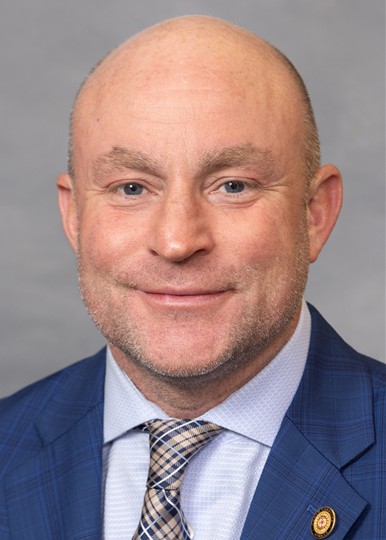
Sen. Danny Britt
Sponsored bills
Maddy summarySB 694 automatically restores driver's licenses in North Carolina after 36 months for individuals whose licenses were revoked solely due to unpaid fines for minor traffic offenses (e.g., speeding tickets), removing a major barrier to employment. This change applies to people who haven’t paid court costs or fines but haven’t committed serious offenses like driving while license revoked. The bill requires the state to notify affected individuals via mail and online about license restoration and appropriates funds for a text reminder system to help prevent missed court dates. Individuals will still owe unpaid fines but no longer face license suspension for nonpayment after the 36-month period.
Maddy summarySB 404 (the RIC FLAIR Act) appropriates $500,000 from the state General Fund to study the feasibility of creating a professional wrestling museum in North Carolina. The Department of Natural and Cultural Resources must complete this study by July 1, 2026, and report findings to the Joint Legislative Oversight Committee. This bill does not create the museum but authorizes a preliminary study, directly affecting state funding and the department responsible for the research.
Maddy summarySB 396 creates a new pathway for physicians, physician assistants, and anesthesiologist assistants to obtain a North Carolina medical license through "endorsement," allowing them to practice in the state if they hold an active license in another U.S. jurisdiction for at least five years (with two years of post-residency practice for physicians). Applicants must provide employer verification of a full-time job offer in North Carolina, proof of good standing with no recent disciplinary actions, and documentation of active practice (averaging 20+ hours weekly). The bill also establishes higher application fees for endorsement pathways (e.g., $825 for physicians vs. $400 for standard applications) and requires licensees to submit additional documentation within 120 days to keep their endorsement license active. This bill directly affects out-of-state medical professionals seeking to practice in North Carolina.
Maddy summarySB 441 revives and expands a program allowing retired teachers to return to work in high-need North Carolina schools without losing their retirement benefits. The bill requires school districts to certify these teachers to the retirement system annually and mandates monthly reports on their employment terms and pay. Retired educators rehired under this program retain their full retirement allowance, and school districts must cover employer health insurance premiums for them. This directly affects retired teachers returning to high-need schools, school districts hiring them, and the state retirement system’s benefit calculations. The program expires June 30, 2027, unless IRS status is jeopardized, triggering automatic repeal.
Maddy summarySB 426, the Student Borrowers' Bill of Rights, requires the North Carolina Commissioner of Banks to license and regulate student loan servicers operating in the state, directly affecting borrowers who took out loans for education at North Carolina institutions or for in-state school expenses. The bill mandates that all student loan servicers (excluding banks, credit unions, state entities, and certain educational institutions) obtain a license through the Nationwide Multistate Licensing System, ensuring fair treatment and clear accountability. It establishes a Student Loan Ombudsman position to handle borrower complaints and defines key terms like "servicer" and "overpayment" to clarify protections. The law aims to prevent unfair practices by standardizing servicer conduct and providing borrowers with a formal complaint pathway.
Maddy summarySB 376 increases funding for North Carolina's State Auditor's Office to enhance oversight of state government finances. The bill allocates $95,000 one-time for recruitment, $3 million for audit infrastructure, and $1 million for office space in 2025-2026, plus $6.7 million annually for 70 new staff, $500,000 for salary increases, and $5 million yearly for technology upgrades. These funds aim to expand audit capacity, improve fraud detection, and modernize systems for better accountability of taxpayer funds. The State Auditor must report on fund usage, including audit results and efficiency gains, by December 2025.
Maddy summaryThis bill requires all public school districts and state agencies to carry comprehensive insurance coverage (covering all types of damage beyond just fire) for public education and state properties, effective July 2025. Public education boards must join the State Public Education Property Insurance Fund unless they secure equivalent coverage and receive a waiver from the State Fire Marshal. It also creates tuition waivers for advanced fire/rescue training courses at the North Carolina Emergency Training Center, funded by state money. Additionally, the bill modernizes fire marshal operations, clarifies inspection authority, and updates insurance fund procedures.
Maddy summarySB 127 would change how Scotland County handles school funding by allowing the Scotland County Board of Education to *recommend* supplemental funding for schools instead of submitting a mandatory budget request. This change would directly affect Scotland County schools, the Board of Education, and the Board of Commissioners. The bill’s key mechanism replaces a mandatory budget process with a recommendation system, requiring the Board of Commissioners to evaluate the recommendation. The bill title ("Lower Taxes for Scotland County") is misleading, as it does not propose tax cuts but alters funding procedures. This bill was withdrawn from committee in March 2025 and never advanced further.
Maddy summarySB 322, the Utility Worker Protection Act, increases penalties for assaulting utility or communications workers who are visibly identifiable (e.g., wearing company-logo uniforms or hats) while performing their duties. It specifically targets assaults against workers providing electricity, natural gas, telecommunications, or internet services. The bill reclassifies such assaults as Class 1 misdemeanors, raising the punishment level for these offenses. This change applies to incidents occurring on or after December 1, 2025. The law does not affect prosecutions for offenses committed before that date.