

Maddy summarySB 498 appropriates $12 million from North Carolina's General Fund to the Town of Beaufort for specific upgrades and repairs to its boat docks. The bill directs this nonrecurring funding for the 2025-2026 fiscal year, targeting infrastructure improvements at the town's waterfront facilities. It becomes effective July 1, 2025, if enacted. The bill is currently pending in the legislative process (last action: withdrawn from committee on March 26, 2025) and has not yet become law.
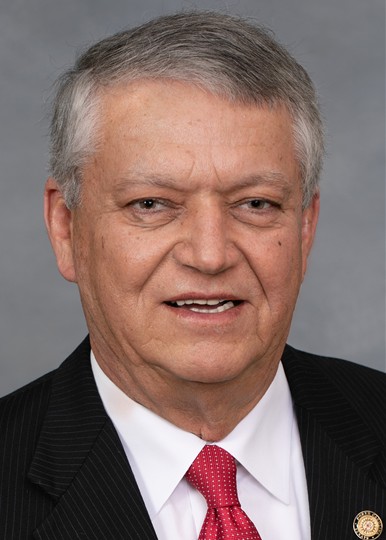
Sen. Norman Sanderson
Sponsored bills
Maddy summarySB 441 revives and expands a program allowing retired teachers to return to work in high-need North Carolina schools without losing their retirement benefits. The bill requires school districts to certify these teachers to the retirement system annually and mandates monthly reports on their employment terms and pay. Retired educators rehired under this program retain their full retirement allowance, and school districts must cover employer health insurance premiums for them. This directly affects retired teachers returning to high-need schools, school districts hiring them, and the state retirement system’s benefit calculations. The program expires June 30, 2027, unless IRS status is jeopardized, triggering automatic repeal.
Maddy summarySB 399 directs North Carolina's Department of Environmental Quality (DEQ) to study Jordan Lake's existing nutrient management strategies. The study requires DEQ to review water quality data, compare trends to current nutrient reduction efforts, examine natural nutrient conditions, and evaluate if current strategies improve water quality or require updated regulations. The DEQ must report findings to environmental commissions by January 31, 2027, with interim updates in 2026. This bill does not change current regulations but assesses whether existing approaches effectively protect Jordan Lake's water quality.
Maddy summarySB 411 changes how school bus camera footage is used in traffic enforcement and extends contracts for these cameras. It makes footage from automated school bus safety cameras "prima facie evidence" (meaning it automatically counts as proof) that a driver failed to stop for a bus displaying stop signals, directly affecting drivers who violate this rule. The bill also extends the maximum contract length for local school boards to partner with private vendors for these cameras from 3 to 5 years, with one possible 5-year renewal. These changes apply to offenses committed after December 1, 2025, and new contracts after July 1, 2025.
Maddy summarySB 365 creates a new Class F felony for entering someone's property without legal justification during a declared state of emergency in an affected county and damaging or taking another person's temporary housing. It specifically targets acts against temporary shelters like tents, mobile homes, or vehicles used as emergency housing, excluding permanent structures. The law imposes felony penalties for these actions and allows victims to seek triple damages plus legal costs. It applies only to counties within an emergency area during an active state of emergency, as defined by existing state law, and takes effect December 1, 2025.
Maddy summarySB 299, the Government Transparency Act of 2025, requires state agencies, local school boards, community colleges, and area authorities to maintain and publicly disclose general descriptions of employee disciplinary actions - including promotions, demotions, transfers, suspensions, separations, and dismissals - along with the dates and reasons. It specifically mandates that records include a "general description" of these actions (e.g., "failure to follow safety protocols" for a dismissal), but prohibits disclosure of protected health or disability information under HIPAA or the ADA. These descriptions become public only after any administrative appeal period ends or a final decision is made, ensuring privacy while increasing transparency. The bill directly affects all current and former state employees, applicants, and public education entities in North Carolina.
Maddy summaryThis North Carolina bill (SB 346) provides limited legal immunity for people who seek medical help during drug or alcohol overdoses. It protects individuals from minor charges (like possession of less than 1 gram of drugs or underage alcohol consumption) if they call 911 or assist others in calling for overdose emergencies, provided they act in good faith, provide their name, and weren’t seeking help during an active arrest. The immunity also extends to the overdose victim themselves and prevents probation/parole revocation for these covered offenses. The law applies to acts occurring on or after October 1, 2025, and does not affect evidence collection for other crimes.
Maddy summarySB 322, the Utility Worker Protection Act, increases penalties for assaulting utility or communications workers who are visibly identifiable (e.g., wearing company-logo uniforms or hats) while performing their duties. It specifically targets assaults against workers providing electricity, natural gas, telecommunications, or internet services. The bill reclassifies such assaults as Class 1 misdemeanors, raising the punishment level for these offenses. This change applies to incidents occurring on or after December 1, 2025. The law does not affect prosecutions for offenses committed before that date.
Maddy summarySB 300 (the NC REACH Act) would require all students graduating with a bachelor's degree from a University of North Carolina institution or an associate degree from a North Carolina community college to complete at least three credit hours of instruction in American history or government. The bill mandates that courses cover specific foundational documents - including the U.S. Constitution, Declaration of Independence, Emancipation Proclamation, Federalist Papers, Dr. Martin Luther King Jr.'s Letter from Birmingham Jail, Gettysburg Address, and the North Carolina State Constitution - and include a final exam worth at least 20% of the course grade. Students may be exempted through prior coursework (e.g., AP/IB exams, dual enrollment) that meets the same requirements. The bill explicitly states it will not increase total credit hour requirements for degrees and requires annual reporting on compliance by 2026. This is a proposed bill currently in committee review.
Maddy summarySB 312, the "Stars and Stripes Commitment Act," requires all North Carolina public schools (including charter, regional, and laboratory schools) to schedule daily recitation of the Pledge of Allegiance within one hour of the start of the school day, display U.S. and North Carolina flags in classrooms when available, and provide age-appropriate instruction about the flag and pledge. It also mandates that State Board of Education and local school governing body meetings begin with the Pledge of Allegiance. The bill explicitly states these requirements do not compel any student, staff, or attendee to stand, salute, or recite the Pledge. The law applies beginning with the 2025-2026 school year.