

Maddy summarySB 478 allows banks in North Carolina to deduct income tax on interest, fees, and penalties from loans secured by agricultural land, as defined by state law. This tax deduction applies to loans specifically backed by farmland, directly benefiting banks that provide such financing. The policy change takes effect for tax years beginning on or after January 1, 2025. The bill does not directly affect farmers or landowners but alters tax treatment for financial institutions offering agricultural loans.
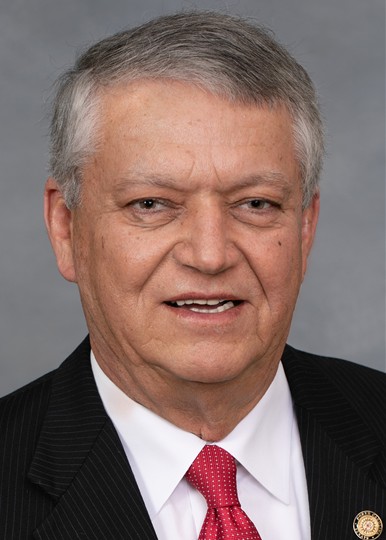
Sen. Norman Sanderson
Sponsored bills
Maddy summarySB 548 requires North Carolina law enforcement officers (LEOs) to report observed excessive force or improper activity within 72 hours to a superior officer, and prohibits retaliation against LEOs for making such reports. The bill explicitly states that officers cannot be terminated, disciplined, or retaliated against for reporting, though disciplinary action for unrelated misconduct prior to the report remains permitted. It also makes knowingly false reports a Class 2 misdemeanor and extends protection to officers disclosing any violation of law, rule, or regulation to supervisors or government agencies. The law takes effect December 1, 2025, applying to reports made on or after that date.
Maddy summarySB 537 defines the scope of practice for Advanced Practice Registered Nurses (APRNs) in North Carolina, specifically for nurse practitioners (NPs), certified nurse midwives (CNMs), certified registered nurse anesthetists (CRNAs), and clinical nurse specialists (CNSs). The bill provides statutory definitions for each role, detailing permitted activities like diagnosing conditions, prescribing medications, ordering diagnostic tests, and managing patient care within their specialized focus areas. By codifying these definitions in state law, the bill removes longstanding ambiguity about APRN practice that has persisted for decades, as noted by North Carolina courts and the executive branch. This change directly affects over 20,000 APRNs in the state by legally clarifying their scope of practice.
Maddy summarySB 504, the North Carolina Farmland and Military Protection Act, prohibits foreign governments designated as "adversarial" by the U.S. Department of State from purchasing, leasing, or holding interests in agricultural land or land within 75 miles of military installations in North Carolina. The bill defines agricultural land broadly (excluding small research leases under 250 acres) and specifically lists military sites like Fort Bragg, Camp Lejeune, and Seymour Johnson Air Force Base. Any violation would void the transfer, and the law takes effect on December 1, 2025. This directly affects adversarial foreign governments seeking to acquire such land, aiming to protect food production and military security.
Maddy summarySB 739 appropriates $6 million in nonrecurring state funds for Hyde County to purchase property specifically for oyster farming. The bill directs this grant to be managed by Hyde County in collaboration with the North Carolina Marine Industrial Park Authority. It becomes effective July 1, 2025, and solely provides funding for property acquisition - no policy changes or regulations are introduced. This is a straightforward funding measure targeting Hyde County's oyster farming sector.
Maddy summarySB 734 clarifies that specific man-made ditches - such as roadside ditches, culverts, and storm channels - are excluded from North Carolina's Coastal Area Management Act (CAMA). The bill defines "man-made ditches" in Section 1 and explicitly removes them from CAMA's coverage of estuarine waters, environmental concern areas, and public trust rights under Sections 2, 3, and 4. This means landowners and developers maintaining these ditches will no longer require CAMA permits for them. The bill focuses on clarifying existing law rather than creating new regulations. It directly affects activities involving minor drainage features in coastal zones.
Maddy summarySB 758 (Water and Sewer Allocation Reforms) prohibits local governments in North Carolina from imposing unauthorized conditions on water or sewer service for new residential housing projects (single-family or multifamily). It bans requirements like extra fees, design restrictions, or arbitrary scoring systems for allocating service, and mandates quarterly public reports on infrastructure capacity. Local governments receiving public funds must publish capacity data, develop annual expansion plans, and prioritize areas facing imminent shortages. The bill directly affects developers seeking service and local governments managing water/sewer systems, ensuring service allocation is based on available capacity - not arbitrary rules. Violations can trigger court-ordered compliance or fines up to $5,000 per day.
Maddy summarySB 748 requires North Carolina public elementary schools (grades K-5) to include critical thinking instruction in their curriculum, shifting focus from memorization to evaluating information. The bill amends state education statutes to mandate this change, affecting all K-5 public schools and their curriculum planning. It takes effect for the 2025-2026 school year. The law does not alter existing subjects but adds critical thinking as a required component of instruction.
Maddy summarySB 516, the Women's Safety and Protection Act, requires single biological sex use in restrooms, changing facilities, and sleeping quarters within covered facilities like public schools, prisons, domestic violence centers, and juvenile detention centers. It defines "biological sex" based on reproductive anatomy and mandates that facilities designated for one biological sex must be used exclusively by that sex, with exceptions for maintenance, medical emergencies, law enforcement, or natural disasters. The law applies to all state-funded facilities and includes specific rules for public schools regarding student sleeping arrangements during school activities. It explicitly states that facilities may not be used by individuals of a different biological sex unless covered by the listed exceptions.
Maddy summarySB 665 streamlines permitting for upland basins (marinas built on elevated land, not open water, that accommodate 10+ vessels) by requiring state agencies to approve applications within 60 days unless specific compliance issues are identified. Projects must meet strict water quality standards (including pre-development dissolved oxygen levels), limit wetland impacts to 5% of basin area, include 30-foot vegetated buffers, and provide bonds covering five years of maintenance costs. This law directly affects developers of these facilities by creating clear environmental requirements and faster approval timelines while aiming to protect coastal resources. The bill establishes measurable standards for development, avoiding vague environmental claims through specific, enforceable criteria.