

Maddy summarySB 707 modifies North Carolina retirement rules for law enforcement officers (LEOs) in the Teachers' and State Employees' Retirement System or Local Governmental Employees' Retirement System. It allows LEOs to retire with full, unreduced benefits after 25 years of creditable service, regardless of age (replacing previous age/service requirements). The bill specifies that LEOs retiring on or after January 1, 2026, will receive a benefit calculated as 1.82% of their average final salary multiplied by their years of service, without age-based reductions. This change directly affects current and future LEOs who meet the 25-year service threshold, providing them equal retirement benefits to non-LEO members who reach 30 years of service.
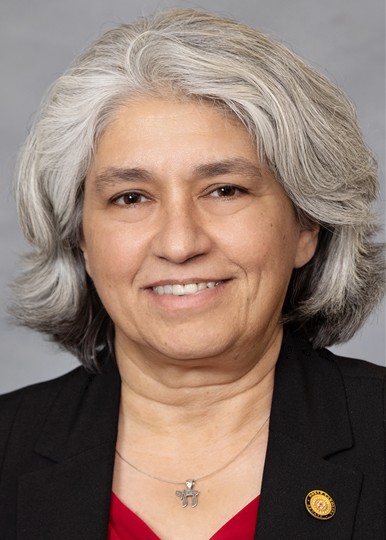
Sen. Lisa Grafstein
Sponsored bills
Maddy summarySB 708, the "Working Families Act," directly affects low- and middle-income North Carolina families by reducing child care costs, increasing tax credits, raising wages, and providing housing assistance. It cuts parent copayments for subsidized child care to 7% of gross income (down from 10%), reenacts a refundable child tax credit with income-based payments up to $250 per child, and raises the statewide minimum wage to $15 per hour starting September 1, 2025 - while allowing cities to set higher local rates. The bill also increases income limits for property tax relief and creates a homebuyers' program offering assistance to first-time public servant homebuyers (including teachers, firefighters, police, and EMTs). These changes aim to reduce living costs and support working families through concrete financial adjustments.
Maddy summarySB 753, the NC Highway Patrol Retention Act, provides funding for pay raises for all North Carolina State Highway Patrol officers starting July 1, 2025. It appropriates $40.48 million annually from the General Fund to implement new salary schedules based on years of experience (e.g., $56,000 for new officers, $105,000 for 8+ years) and rank (e.g., $120,750 for Sergeant, $224,612 for Colonel). The bill directly affects all sworn Highway Patrol members by establishing fixed pay scales for the 2025-2027 fiscal biennium. The changes aim to improve retention through structured compensation increases without altering existing law enforcement duties or responsibilities.
Maddy summarySB 736 creates a new Housing Innovation Office within North Carolina's Housing Finance Agency, funded by a permanent increase in the real estate transfer tax. The bill raises the tax rate on property sales over $500,000 from $1 per $500 to $1 per $400, directing the additional revenue ($5 million annually for 2025-2027) to this office. The office will use these funds for research, technical assistance, grants, and loans to support affordable housing construction, maintenance, and innovative building solutions. This directly affects homebuyers/sellers (through the tax increase) and aims to address the state's housing affordability crisis by expanding funding for housing projects.
Maddy summarySB 483, "The Children First Act," expands affordable child care access for North Carolina families by increasing financial assistance eligibility to 85% of the state median income and raising subsidy rates to match 2023 market costs. It allocates $50 million annually for subsidies and $15 million for grants to establish new child care facilities in rural or underserved areas, targeting "child care deserts." The bill also creates an employer child care credit and includes workforce licensing reforms to address staffing shortages. These provisions directly affect low-to-moderate-income families, child care providers, and employers seeking to support working parents.
Maddy summarySB 656 exempts natural hair care services, blow-dry styling, and makeup artistry from mandatory licensing under North Carolina's Cosmetic Art Board. It converts the existing mandatory natural hair care specialist license into a voluntary certificate and expands where these services can be offered. The bill specifically defines "natural hair care" as tension-based techniques (like twisting or wrapping hair) without chemical treatments, "blow-dry styling" as using mechanical devices without chemicals or haircutting, and "makeup artistry" as cosmetic application without other licensed services. These changes directly affect service providers and businesses offering these specific cosmetic services, reducing regulatory barriers.
Maddy summarySB 659, the "Investing in North Carolina Act," raises salaries for public school teachers and state employees for the 2025-2026 fiscal year. It establishes a new monthly salary schedule for teachers based on experience (ranging from $4,600 for 0 years to $6,370 for 29+ years), adds specific supplements for certified teachers, nurses, counselors, and specialists, and provides cost-of-living increases for retirees. The bill also expands the Wage$ program statewide and creates a tax credit for qualifying employers equal to 5% of wages paid or $10,000, whichever is lower. Directly affecting teachers, state employees, community college staff, UNC employees, retirees, and participating employers, it focuses on concrete pay adjustments through funding appropriations.
Maddy summarySB 611 allows drivers with non-REAL ID compliant licenses in North Carolina to renew their licenses remotely two times in a row. After two consecutive remote renewals, these licenses must be renewed in person. The bill applies only to licenses that do not meet federal REAL ID standards (required for certain federal purposes like air travel) and does not affect REAL ID-compliant licenses, which still require an in-person renewal after a remote one. The change takes effect January 1, 2026, for all renewals on or after that date.
Maddy summarySB 606 requires North Carolina state services to be accessible in 25 additional languages, including Spanish, Mandarin, Arabic, and Cherokee, by mandating translations for driver's license materials, tests, and traffic signs. It also mandates that public schools translate parent documents - such as enrollment forms, consent forms, and disciplinary notices - into those 25 languages. Additionally, the bill encourages schools to grant excused absences for religious observances and allocates $1 million to cover substitute teacher costs when educators take leave for such holidays. These provisions aim to improve access to essential services and education for non-English speaking residents while respecting cultural traditions.
Maddy summarySB 393 requires North Carolina public schools to include instruction on the costs of gambling - including sports betting - and gambling addiction in all required personal financial literacy courses. This policy change directly affects all K-12 students in the state, as it amends existing curriculum standards to add this specific topic. The bill mandates that schools cover these topics alongside other financial literacy elements like credit costs, mortgages, and credit scoring. The requirement will take effect for the 2025-2026 school year. This is a concrete addition to the curriculum, not a procedural change.