

Maddy summarySB 457 requires automatic voter registration for eligible North Carolina residents at driver's license offices, public agencies, community colleges, and UNC system institutions starting January 2026. Individuals applying for or renewing a driver's license, ID card, or college enrollment would be automatically registered to vote unless they explicitly decline during the process. The bill mandates clear disclosures about voter qualifications, penalties for false information, and an outreach campaign by the State Board of Elections. Registration applications submitted at these locations must meet standard deadlines (e.g., received by 5:00 PM, 25 days before an election) to be valid for upcoming votes.
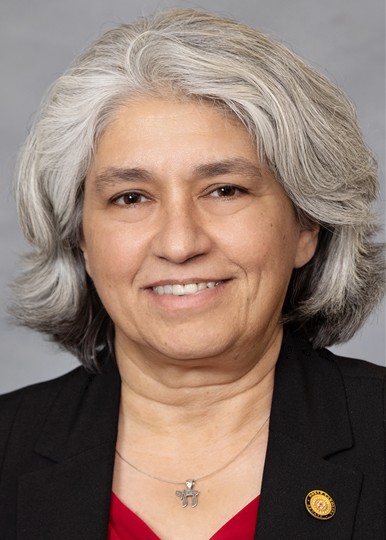
Sen. Lisa Grafstein
Sponsored bills
Maddy summarySB 386 establishes same-day voter registration on election day in North Carolina, allowing eligible individuals to register and vote immediately at their county's election office or early voting site. It also permits 16- and 17-year-olds to preregister to vote for upcoming elections they will qualify for upon turning 18. To register under this bill, voters must provide proof of residence (e.g., utility bill, bank statement) and photo ID, and submit a completed registration form. The bill modifies existing deadlines and primary election rules to align with these new registration provisions. This changes how voters can register and participate, focusing on expanding access while maintaining verification requirements.
Maddy summarySB 468 allows owners of electric vehicles (EVs) and plug-in hybrid vehicles in North Carolina to choose between a flat annual registration fee or a mileage-based fee instead of the current fixed charges. Specifically, EV owners would pay $180 annually under the existing system but could opt for a fee based on miles driven since their last registration; plug-in hybrid owners would similarly choose between $90 annually or a mileage-based fee. The bill requires the Division of Motor Vehicles to create rules for implementing the mileage fee, which would replace the flat fee option for eligible vehicles. This change applies to vehicles registered on or after October 1, 2025, if the bill becomes law.
Maddy summarySB 381 expands North Carolina's anti-discrimination protections to cover housing and employment. It adds sexual orientation, gender identity, military/veteran status, and genetic information to the list of protected characteristics in housing (e.g., rentals, sales, loans) and employment (for employers with 15+ staff). The bill prohibits specific discriminatory actions like refusing housing based on protected status, denying employment opportunities, or making biased land-use decisions. It directly affects residents, renters, job seekers, and businesses operating in these sectors across the state.
Maddy summarySB 366 increases Medicaid payment rates for personal care services to $7.50 per 15-minute increment and private duty nursing to $16.25 per 15-minute increment. It directly affects healthcare providers who deliver these services to Medicaid beneficiaries through programs like personal care services and private duty nursing. The bill allocates $119.2 million annually in state funds (with matching federal funds) to cover the rate increases for the 2025-2027 fiscal biennium. The changes take effect July 1, 2025.
Maddy summarySB 358, the "Hate Crimes Prevention Act," expands North Carolina's hate crime laws by increasing penalties for offenses motivated by the victim's actual or perceived race, ethnicity, religion, nationality, gender identity, sexual orientation, disability, or gender expression. It upgrades certain misdemeanors to higher classifications (like Class H felonies) and adds civil remedies for victims, including compensation for emotional distress and attorney fees. The bill also mandates the State Bureau of Investigation to create a hate crimes database, requires law enforcement officers to receive specialized training on identifying and reporting hate crimes, and directs prosecutors to develop hate crime prosecution training. These changes directly affect victims of hate crimes, law enforcement agencies, and prosecutors by strengthening legal responses and data collection.
Maddy summarySB 384 requires North Carolina's Commission for Public Health to establish safe limits for specific toxic chemicals in drinking water by October 2025. It targets chemicals like PFAS, PFOA, PFOS, hexavalent chromium, and 1,4-Dioxane - known or suspected carcinogens - mandating limits based on scientific evidence and ensuring they do not exceed federal EPA standards. The law also requires annual reviews of new research to update these limits as needed. This directly affects all North Carolina residents who rely on public water systems, with special consideration for children, infants, and pregnant people.
Maddy summarySB 360 requires every public school in North Carolina (including traditional, charter, regional, and laboratory schools) to have at least one full-time, permanent school nurse starting in the 2025-2026 school year. The bill appropriates $95 million in recurring state funds to the Department of Public Instruction to cover the cost of adding these nurse positions, ensuring funding supplements existing resources without replacing them. This policy directly affects all K-12 public schools across the state by mandating nurse staffing levels and providing dedicated funding to meet that requirement. The law becomes effective July 1, 2025, with implementation beginning for the 2025-2026 school year.
Maddy summarySB 362 appropriates $1 million annually from 2025-2027 to strengthen North Carolina's Long-Term Care Ombudsman Program. It funds $855,000-$893,250 yearly for nine new regional ombudsman positions targeting areas with the greatest need, plus $145,000-$106,750 for operational costs like equipment and transportation. The bill also mandates a study by the Department of Health and Human Services to recommend statutory changes improving the ombudsman program and its volunteer Community Advisory Committees. These changes directly support long-term care residents and their advocates by increasing staffing and program capacity, effective July 1, 2025.
Maddy summarySB 382 prohibits licensed mental health professionals from providing conversion therapy to minors or adults with disabilities. The bill bans attempts to change a person’s sexual orientation, gender identity, or gender expression. It directly affects vulnerable individuals, including minors and adults with disabilities, who might otherwise be subjected to these practices. The law aligns with medical consensus from major health organizations stating such therapies are ineffective and harmful. Licensed practitioners would be barred from offering these services under this legislation.