

Maddy summaryHB 772, titled the North Carolina Student Lifeline Act, requires public schools and community colleges in North Carolina to provide students with the Suicide and Crisis Lifeline phone number. It mandates that institutions display the phrase "To reach the Suicide and Crisis Lifeline, call 988 or text HOME to 741741." in several locations. These locations include new student identification cards issued to students in grades six through 12, the school website, and the home screen of any electronic device issued to students. The information must also appear on school agendas or calendars, documents used during suicide awareness activities, and registration documents. Additionally, schools are required to annually verify the accuracy of the Lifeline contact information.
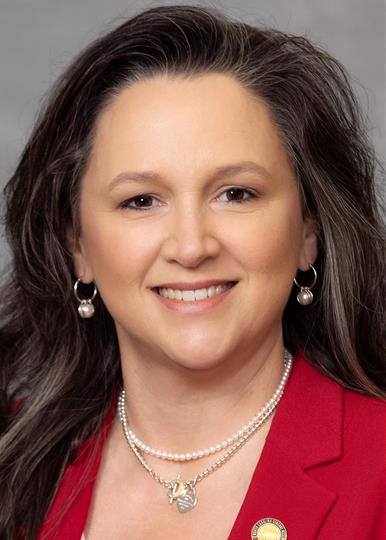
Rep. Heather Rhyne
Sponsored bills
Maddy summaryHouse Bill 618, the "Ivermectin Access Act," directs the State Health Director to issue a statewide standing order that allows licensed pharmacists to dispense ivermectin for human use. Under this order, pharmacists would be authorized to provide ivermectin without requiring a written prescription or consultation from a healthcare professional. The bill also grants immunity from civil or criminal liability to the State Health Director for issuing the order and to any pharmacist who dispenses ivermectin in accordance with it. The State Health Director is required to issue this statewide standing order by October 1, 2025.
Maddy summaryHB 97 adds stomach cancer (gastric cancer) to the list of occupationally related cancers that qualify firefighters for "killed in the line of duty" benefits under North Carolina's Public Safety Employees' Death Benefits Act. This means firefighters who die from stomach cancer directly linked to their firefighting duties will automatically be eligible for death benefits, easing the process for families seeking compensation. The bill appropriates $500,000 annually from 2025-2027 to cover these benefits. It takes effect July 1, 2025, applying to qualifying deaths occurring on or after that date.
Maddy summaryHouse Bill 773 proposes changes to how North Carolina public schools (K-12) are graded on their performance. The bill modifies the calculation of school achievement scores by altering the specific student proficiency measures used across different grade levels and shifts from a composite weighting to giving equal weight to each achievement element. It also revises the calculation of school growth scores, specifying which achievement measures contribute to growth for each grade band and adding metrics for students in the lowest 25% for English Language Arts and mathematics. These adjustments directly impact how the State Board of Education assigns overall performance scores and grades to schools.
Maddy summaryHouse Bill 875 directs the Department of Public Instruction (DPI) to establish a comprehensive system of mathematics support for students in kindergarten through eighth grade. This system requires DPI to provide approved lists of high-quality supplemental math systems for screening and progress monitoring, as well as instructional materials for intervention and core curriculum. These materials must utilize structured problem-based learning, explicit instruction, and provide responsive feedback to students. The bill also mandates DPI to offer approved professional development programs for K-8 teachers to implement these new instructional approaches effectively. Parents will be notified of any identified mathematical deficiencies, including characteristics of dyscalculia, and receive information on interventions and home strategies.
Maddy summaryHB 92, titled the "NC Digital Assets Investments Act," authorizes the North Carolina State Treasurer to invest various state funds in qualifying digital assets. This includes funds from the General Fund, Highway Fund, and numerous retirement and special funds. The bill specifies that eligible digital assets must be exchange-traded products with an average market capitalization of at least $750 billion over the preceding 12 months. Additionally, investments in digital assets cannot exceed 10% of a fund's balance, and the State Treasurer must use a defined "secure custody solution" if managing these assets internally.
Maddy summaryHouse Bill 146 amends North Carolina's driver's license renewal process. It allows active duty members of the U.S. Armed Forces, or reserve components serving on active duty and stationed outside North Carolina, to renew their driver's licenses remotely multiple times in a row. Currently, a remote renewal requires the previous renewal to have been done in person, but this bill removes that restriction for eligible military personnel. This change aims to make it easier for these individuals to maintain their licenses while serving away from the state. The act becomes effective October 1, 2025, applying to licenses renewed on or after that date.
Maddy summaryHB 163 regulates Pharmacy Benefits Managers (PBMs) to ensure fair practices for pharmacies and insured individuals. The bill prohibits PBMs from charging insurers more for a prescription drug than they pay the pharmacy (spread pricing) and requires patient out-of-pocket costs to be based on the net price after any PBM concessions. It establishes minimum reimbursement standards for pharmacies, preventing PBMs from paying less than the national average drug acquisition cost plus a dispensing fee. Additionally, it clarifies that PBMs cannot restrict accredited pharmacies from dispensing specialty drugs and strengthens audit protections for pharmacies.
Maddy summaryHB 152 aims to regulate how health benefit plans in North Carolina cover Transcranial Magnetic Stimulation (TMS) services. If an insurer chooses to cover TMS, the bill requires them to cover all procedures performed by properly licensed healthcare providers, regardless of their medical specialty, as long as TMS is within their scope of practice. It prohibits insurers from penalizing providers solely based on their specialty when submitting TMS claims. However, the bill maintains that insurers retain discretion over whether to cover TMS, for which conditions, and at what reimbursement rates.
Maddy summaryHB 806, titled "Public School Operational Relief," proposes changes to North Carolina's public school regulations concerning class sizes and teacher licensure. The bill removes state-mandated class size requirements for kindergarten through third grade, making them recommendations, and eliminates penalties for exceeding these former maximums. It also introduces a new provision requiring that at least 50% of teachers in a public school hold a teaching license. Unlicensed teachers hired under this provision would need to complete preservice training in areas such as educating children with disabilities and managing student behavior. These changes would apply to public schools and local school administrative units beginning with the 2025-2026 school year.