

Maddy summaryHB 574 establishes a Workforce Development Pilot Project in North Carolina. This bill provides funds to the Office of State Budget and Management to be allocated to the North Carolina Workforce Development Coalition (NCWDC). The NCWDC will then provide grants to eligible North Carolina-based employers, with 20 to 1,500 employees, to support employer-sponsored training programs. These grants aim to increase job creation, reduce employee turnover, improve wages, and upgrade worker skills, especially in industries with identified training gaps. Employers can receive up to 50% of eligible training costs or $2,000 per trainee, with a maximum of $40,000 annually per employer.
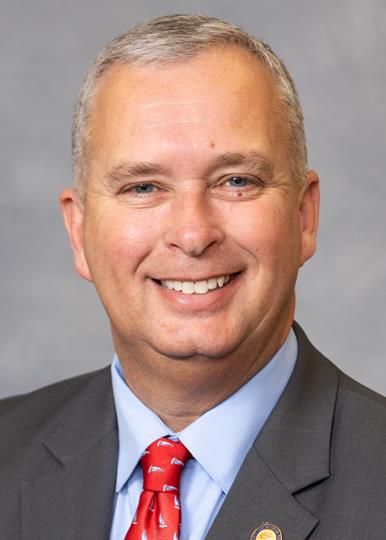
Rep. Todd Carver
Sponsored bills
Maddy summaryHB 573 proposes to eliminate the standardized testing requirement for individuals applying for a teacher license in North Carolina. The bill repeals existing laws that mandate these examinations and prohibits the State Board of Education from adopting any future rules or policies requiring them. This change directly affects all applicants seeking a teacher license, including those pursuing a limited license.
Maddy summaryHB 69, the Military and Veterans Educational Promise Act, provides two key benefits for military-affiliated individuals and veterans at North Carolina's University of North Carolina (UNC) schools. First, it requires UNC institutions to allow eligible military members (including reservists) and their spouses to defer admission for up to five years (for active duty) or two years (for reserve service) upon enrollment notice. Second, it establishes in-state tuition rates for honorably discharged veterans who served at least 90 days in the military, graduated from a North Carolina high school after 2004, had a North Carolina duty station, or received a Purple Heart. The bill applies to all UNC institutions beginning in the 2025-2026 academic year.
Maddy summaryHB 211, "The Kelsey Smith Act," authorizes wireless telecommunications carriers to provide a device's location information to law enforcement under specific emergency circumstances. This includes situations where a 911 call was made or there is reasonable suspicion of an emergency involving risk of death or serious physical harm. Wireless carriers are required to submit their emergency contact information to the State Bureau of Investigation, which will maintain a database for public safety answering points. The bill protects carriers from legal action if they provide this information in good faith.
Maddy summaryHouse Bill 272, known as "The Sergeant Mickey Hutchens Act," allows certain law enforcement, probation/parole, and correctional officers in North Carolina to purchase additional retirement service credit. Officers who hold an advanced law enforcement or corrections certificate and have at least five years of membership service can buy up to four years of creditable service. This purchase applies to members of the Teachers' and State Employees' Retirement System or the Local Governmental Employees' Retirement System. To do so, they must pay a lump sum covering the full cost of the increased retirement system liability and an administrative fee, with the option for their employer to contribute to this cost.
Maddy summaryThis bill revives and expands a program that allows eligible retired educators to return to work in high-need schools. It defines "high-need retired teachers" as beneficiaries of the Teachers' and State Employees' Retirement System who meet specific retirement and service criteria, and are reemployed by local boards of education. A key provision ensures that earnings from this reemployment do not count against post-retirement earnings limits, allowing these teachers to receive both their full retirement allowance and a salary. The Department of Public Instruction is tasked with certifying these teachers, and local boards must report their employment status to the Retirement System.
Maddy summaryHB 149 creates a pilot program allowing eligible North Carolina school districts (those with at least 5,000 students and tax authority) to submit a Financial and Hiring Flexibility Plan (FHFP) to the State Board of Education. The plan permits districts to use state funds more flexibly and hire up to 50% unlicensed teachers (who must complete specific training in disability education, behavior management, and safety) while meeting defined academic goals by 2030-2031, such as 100% student career planning and 90% teacher retention. The State Board reviews plans annually and can terminate them if districts fail to meet goals, violate fiscal rules, or have low-performing schools. This program aims to give districts operational flexibility to improve student outcomes, subject to state oversight and performance metrics.
Maddy summaryHB 800 directs North Carolina's Department of Health and Human Services to study the effectiveness of state child care programs like NC Pre-K and Smart Start, including funding allocation and quality rating systems, with findings due by April 2026. It also allocates $10 million for a pilot program that automatically enrolls preschool-age children (8 weeks-5 years) of full-time licensed child care teachers in state subsidy programs, provided teachers commit to completing early childhood education coursework within 18 months. The pilot targets counties with the highest historical child care capacity loss, requires centers to accept standard subsidy rates without extra fees, and mandates quarterly participation reports starting in 2026. This directly affects licensed child care teachers and their preschool children, aiming to improve child care access and workforce retention.
Maddy summaryHB 785 requires North Carolina's Department of Public Instruction to study how local school districts can better use existing education funding by combining or transferring budget categories (like classroom materials or staff costs). The study will identify where more flexibility could help schools meet student and staff needs, with a report due to lawmakers by April 2026. The state will provide $50,000 in one-time funding for this research during the 2025-2026 fiscal year. This bill does not change current funding rules but sets up a review process to potentially recommend future adjustments.
Maddy summaryHB 780 appropriates $2 million to expand the All Pro Dad program in North Carolina through Family First, Inc., funding school-based chapters, father-child engagement events, and parenting resources. It also creates the "Responsible Fatherhood NC" program under the Department of Health and Human Services, requiring a nonprofit manager to run a statewide media campaign, provide father-focused resources, and promote existing fatherhood initiatives. The bill directs grants to community organizations addressing fathers' needs - such as employment, child support, and parenting skills - with priority given to areas facing high unemployment, incarceration, or single-parent households. The program directly supports North Carolina fathers and their children, aiming to improve family well-being through increased paternal involvement.