

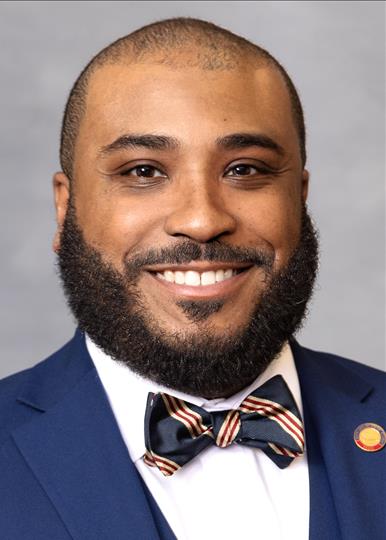
Photo of Terry Brown
D North Carolina House · District 92 On the 2026 ballot

Rep. Terry Brown

Compare
Total votes
1,795
all sessions
Attendance
97%
58 missed
Higher than 78% of chamber peers
With party
95%
of cast votes
Near the chamber average
Bipartisan score
3%
crosses aisle rarely
Near the chamber average
Sponsored
669
bills & resolutions
Higher than 76% of chamber peers
Committees
7
assignments
669 bills and resolutions

Sponsored bills

Total
669
Primary
74
Co-sponsor
595
This page
669
matching current filters
Primary HB 708
In committee · North Carolina House · Lead sponsor
Increase Robotics Opportunities and Build Our Talents (IROBOT) - Increasing Robotics Opportunities.

Maddy summaryHB 708 establishes a $2.5 million annual grant program to fund after-school robotics education for North Carolina high school students. It provides grants to public schools or community organizations partnering with approved robotics organizations (like nonprofits or universities) to cover robotics kits, coach stipends, competition fees, and program coordination. The bill also requires schools to grant excused absences for students participating in robotics competitions, aligning with existing policies for academic events. This directly supports high school students in STEM fields through structured, competitive robotics programs while mandating annual reporting on grant usage and student outcomes.

In committee Apr 3, 2025 0 co-sponsors
Co-sponsor HB 685
In committee · North Carolina House · Co-sponsor
Rural NC Reinvestment Act.

Maddy summaryHB 685, the Rural NC Reinvestment Act, allocates $605 million in nonrecurring state funds for rural North Carolina communities during the 2025-2026 fiscal year. It provides grants for water/sewer infrastructure ($200M), law enforcement/fire equipment ($10M), economic development land ($20M), rural school construction ($200M), broadband expansion ($50M), early childhood education ($100M), and physician placement ($5M). Local governments, schools, emergency services, and healthcare providers in rural areas directly receive these funds, with allocations prioritized based on need, efficiency, and community impact. The bill becomes effective July 1, 2025, focusing on tangible infrastructure and service improvements without creating new regulations.

In committee Apr 3, 2025 1 co-sponsor
Co-sponsor HB 677
In committee · North Carolina House · Co-sponsor
Open Movie Captioning in Movie Theaters.

Maddy summaryHB 677 requires North Carolina movie theaters with more than 10 weekly showings to provide open captioning (on-screen text for dialogue and sounds) for at least one-fourth of showings for movies with four or more showings per week. Theaters must advertise captioned showings in the same way as other showings, keep compliance records for three years, and face $100-$500 penalties per violation for noncompliance. This applies to theaters showing movies with four or more weekly showings, excluding films produced without captioning. The law takes effect October 1, 2025, and focuses on ensuring accessible viewing during peak attendance hours where possible.

In committee Apr 3, 2025 1 co-sponsor
Primary HB 709
In committee · North Carolina House · Lead sponsor
K-3 Literacy and Improvement Act.

Maddy summaryHB 709 establishes a pilot program to fund additional teacher assistants in North Carolina public schools for kindergarten through third grade. It provides $14.8 million annually (2025-2027) to cover the cost of teacher assistants based on specific ratios: one assistant per K-2 class and one per three third-grade classes. The program will select 16 schools (eight districts, one district school and one charter school per district) to participate, with funds distributed based on average class size and salary costs. The bill aims to directly support early-grade classrooms by increasing adult-to-student ratios, effective July 1, 2025.

In committee Apr 3, 2025 0 co-sponsors
Co-sponsor HB 684
In committee · North Carolina House · Co-sponsor
Environmental Justice in North Carolina.

Maddy summaryHB 684 establishes North Carolina's first formal environmental justice framework to address disproportionate health and environmental risks faced by BIPOC, low-income, and marginalized communities. The bill defines key terms like "communities of color" (40%+ nonwhite residents or 10% higher than county/state) and "disproportionate impact" to guide state agencies. It requires all state agencies to identify and reduce environmental health disparities by considering environmental justice in decision-making, ensuring equitable distribution of benefits like clean air, green spaces, and renewable energy. The law aims to create consistent standards for addressing pollution burdens and health inequities across North Carolina.

In committee Apr 3, 2025 1 co-sponsor
Primary HB 735
In committee · North Carolina House · Lead sponsor
Modernize Strategic Transportation Investments Transit Funding.

Maddy summaryHB 735 amends North Carolina's transportation funding rules to clarify state support for rail projects. It sets a 10% cap on state funds for commuter and light rail projects - limiting spending to either 10% of a regional funding allocation or 10% of the project's estimated cost. The bill also creates a new eligibility category for public transit services spanning four or more counties and serving over three municipalities. Additionally, it specifies that the state will not cover costs exceeding these funding limits, requiring project agreements to include these restrictions. The changes apply directly to regional transit authorities and developers seeking state funding for rail infrastructure.

In committee Apr 3, 2025 0 co-sponsors
Primary HB 710
In committee · North Carolina House · Lead sponsor
Mental Health Crisis Unit Pilot for Local School Administrative Units.

Maddy summaryHB 710 establishes a three-year pilot program to fund mental health crisis units in North Carolina public schools. It allocates $2 million total (up to $250,000 annually per district) to select up to eight school districts starting in 2025-2026, prioritizing those with high student mental health needs or trauma history. Each participating district must staff units with at least a school nurse, social worker, and licensed counselor to provide crisis intervention during school hours and rotate across schools. The program requires annual reports on participating districts and student mental health impacts, ending June 30, 2028.

In committee Apr 3, 2025 0 co-sponsors
Co-sponsor HB 141
Passed · North Carolina House · Co-sponsor
The Joe John Remembrance Act.

Maddy summaryHB 141, the Joe John Remembrance Act, removes an additional fee for special license plates designated for fire department and rescue squad members in North Carolina. The bill amends state law to formally eliminate the "additional fee" listed for these plates (which was already set to $0 in the current fee schedule), meaning eligible firefighters and rescue personnel will pay only the standard registration fee when obtaining or renewing these special plates. This change applies to plates issued or renewed on or after July 1, 2025. The bill does not create new benefits but codifies an existing fee structure for these specific special plates.

Passed Apr 3, 2025 1 co-sponsor
Co-sponsor HB 642
In committee · North Carolina House · Co-sponsor
Scotland County Wastewater Improvements/Funds.

Maddy summaryHB 642 appropriates $35 million from the state General Fund for Scotland County's wastewater treatment plant improvements during the 2025-2026 fiscal year. The funds are designated for specific upgrades to the county's wastewater infrastructure, directly benefiting Scotland County residents and local water management systems. The bill establishes a one-time, nonrecurring appropriation with no new regulatory requirements. It becomes effective July 1, 2025, after passing its first reading in the House.

In committee Apr 2, 2025 1 co-sponsor
Co-sponsor HB 630
In committee · North Carolina House · Co-sponsor
Restore Local Education Agency Sales Tax Benefit.

Maddy summaryHB 630 restores a sales tax refund program for North Carolina's public school districts. It allows local school administrative units to receive annual refunds for sales tax paid on direct purchases of tangible property and services (like supplies or equipment), excluding items such as electricity, telecom, or food. The refund amount is capped at $13.3 million per year for all districts combined. The bill takes effect July 1, 2025, and adjusts state funding to reflect the restored refund program.

In committee Apr 2, 2025 1 co-sponsor
Showing 131 to 140 of 669 bills
Previous 1 … 13 14 15 … 67 Next