

Maddy summaryHB 814 (PIRE) promotes the use of advanced conductors (lower-resistance wires) and grid-enhancing technologies to improve electricity transmission efficiency and reliability. It directly affects public utilities, electric membership corporations, and municipal power agencies by waiving standard permitting requirements for specific upgrades that increase capacity, reduce congestion, or enhance grid resilience using these technologies. The bill requires applicants to detail the costs and benefits of such upgrades in their applications and mandates environmental reviews for new projects. This policy change streamlines infrastructure modernization without new construction, focusing on optimizing existing transmission systems.
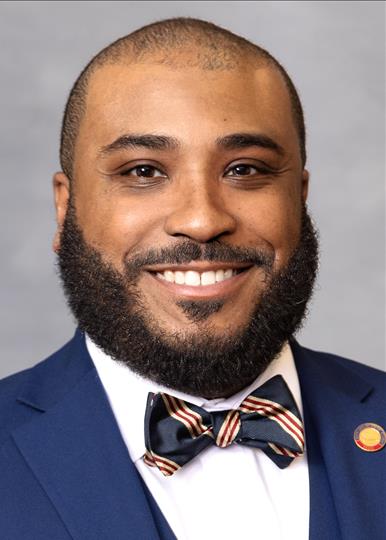
Rep. Terry Brown
Sponsored bills
Maddy summaryHB 788 ("Fix Our Democracy") proposes amending the North Carolina Constitution to establish a nonpartisan redistricting process for state legislative and U.S. House districts. It would require a constitutional amendment (voting required in 2026) to remove the General Assembly's role in drawing districts, mandating that districts be contiguous, avoid dividing counties where possible, and remain unchanged until the next census. The bill also includes related provisions like online voter registration, automatic registration, banning voter roll purging, and campaign finance transparency changes. This constitutional change would directly affect how electoral districts are created for state legislators and U.S. representatives in North Carolina.
Maddy summaryHB 787 establishes a matching program for North Carolina residents contributing to the Parental Savings Trust Fund (a 529 program) and creates a tax deduction for such contributions. It provides a 2:1 state match (up to $1,500 per student annually) for eligible contributors - North Carolina residents with household income under 250% of the federal poverty level who open accounts for children aged 14 or younger. The bill also allows a state tax deduction of up to $2,000 per individual ($4,000 for joint filers) for contributions to the fund, with rules to adjust income if funds are withdrawn for non-education purposes. These changes aim to boost college savings for lower-income families, with the matching program starting July 1, 2025, and the tax deduction effective January 1, 2026.
Maddy summaryHB 786, the "Working Families Act," reduces child care costs for low-income families by lowering parent copayments from 10% to 7% of income (effective 2025), reinstates a refundable state child tax credit with income-based payments (effective 2025), and phases up North Carolina’s minimum wage to $15/hour by 2030 with annual inflation adjustments. It also increases income limits for property tax relief, creates a homebuyers’ assistance program for public servants (like firefighters and EMTs) as first-time buyers, and establishes a paid family leave insurance program funded through an employer grant program. The bill directly affects working families, hourly workers, public-sector employees, and households using subsidized child care or property tax relief. Key mechanisms include phased wage increases, income-tiered tax credits, and targeted housing support, all designed to reduce financial strain on low-to-moderate-income households.
Maddy summaryHB 760 requires tattoo artists in North Carolina to complete annual bloodborne pathogen training compliant with OSHA standards (29 C.F.R. § 1910.1030) to obtain or renew their state tattooing permits. This applies directly to all tattoo artists seeking permits from the Department of Health and Human Services, excluding licensed physicians and their supervised staff who perform tattooing as part of medical practice. The bill mandates that permit applications (both new and renewal) must include proof of this training, which the Department will verify before issuing or renewing permits. The requirement becomes effective October 1, 2025, for all permit applications received on or after that date.
Maddy summaryHB 766 appropriates $1.87 million to fund expanded Teen Mental Health First Aid (tMHFA) training for North Carolina high school students in grades 9-12 (ages 14-18). The bill directly affects students by providing evidence-based training to help them recognize, understand, and respond to peers' mental health and substance use challenges. Key provisions include funding for the Department of Health and Human Services to scale up tMHFA programs statewide, building on a pilot that trained 1,519 teens and showed a 50% increase in teens' willingness to seek adult support. The training focuses on connecting peers to trusted adults during crises, addressing high rates of unmet mental health needs among teens (64% don’t seek help, per the bill’s rationale).
Maddy summaryHB 679 appropriates $5.4 million in one-time state funds to the Town of Spring Lake for specific public projects. The funding directs $200,000 for restoring the Historic Spring Lake Civic Center, $100,000 to the Spring Lake Fire Department, $5 million for general infrastructure, and $100,000 to support the Manchester Fire Department or other rural fire departments serving the Spring Lake area. The bill becomes effective July 1, 2025, and directly affects Spring Lake town operations and the designated fire departments through these targeted grants.
Maddy summaryHB 711 phases out North Carolina's corporate income tax for C Corporations over time, reducing the rate from 2.25% in 2025 to 0% after 2029. The bill directly affects C Corporations operating in North Carolina, which would pay progressively lower taxes until the tax is eliminated entirely. Key provisions include specific tax rates for taxable years beginning in 2025 (2.25%), 2026 (2%), 2028 (1%), and 0% after 2029. The bill is effective for tax years starting January 1, 2026, and does not change tax treatment for S Corporations.
Maddy summaryHB 725, the "MOMnibus 3.0," establishes a state grant program to address preventable maternal health disparities affecting Black birthing people in North Carolina. The bill directs the Department of Health and Human Services to award competitive grants ($10,000-$50,000 per recipient) to community-based organizations focused on improving maternal health outcomes for Black women. Key provisions require grantees to address social barriers (like housing, transportation, and nutrition), provide culturally respectful care training for health workers, and offer services including mental health support, doula care, and evidence-based education. The program specifically prioritizes Black-led organizations serving communities with high maternal health disparities, aiming to reduce preventable deaths and complications through targeted community support.
Maddy summaryHB 673 provides $656,000 annually from the state General Fund to cover transportation costs for neonatal patients in the UNC Health Care System when insurance denies coverage for ambulance services or mileage. It directly affects newborns requiring critical transport between UNC hospitals and their families, ensuring timely care without financial barriers from insurance denials. The bill requires the UNC Board of Governors to submit annual reports tracking funds used, number of transports covered, and effectiveness. This is a funding mechanism to fill coverage gaps, not a change to insurance rules, and takes effect July 1, 2025.