

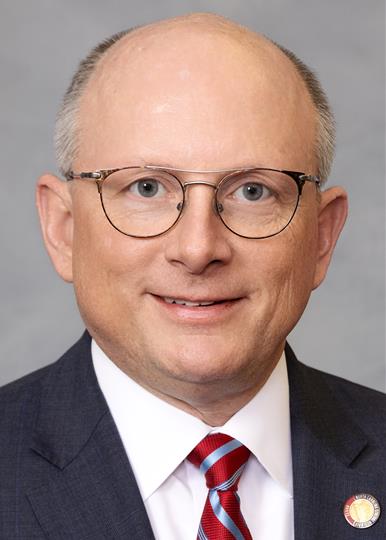
Photo of Tim Reeder
R North Carolina House · District 9 On the 2026 ballot

Rep. Tim Reeder

Compare
Total votes
1,281
all sessions
Attendance
97%
42 missed
Near the chamber average
With party
99%
of cast votes
Near the chamber average
Bipartisan score
1%
crosses aisle rarely
Near the chamber average
Sponsored
188
bills & resolutions
Near the chamber average
Committees
9
assignments
188 bills and resolutions

Sponsored bills

Total
188
Primary
48
Co-sponsor
140
This page
188
matching current filters
Co-sponsor HB 611
In committee · North Carolina House · Co-sponsor
Increase Assistant Principals in Public Schools.

Maddy summaryHB 611 requires North Carolina public schools to increase full-time assistant principal positions based on student enrollment, directly affecting all local school districts. It mandates funding to achieve specific student-to-assistant-principal ratios: 1:90 students in the 2025-2026 school year ($23.56 million) and 1:80 students starting in 2026-2027 ($57.57 million), with funds supplementing but not replacing existing budgets. The bill, effective July 2025, directs the Department of Public Instruction to allocate these funds through the school building administration allotment. This policy change aims to support school operations and develop future principals by expanding administrative staffing.

In committee Apr 1, 2025 1 co-sponsor
Co-sponsor HB 588
In committee · North Carolina House · Co-sponsor
School Psychologist Omnibus.

Maddy summaryHB 588 aims to improve the number and quality of school psychologists in North Carolina through multiple funding initiatives. It provides a $650 monthly salary boost and a 12% supplement for certified school psychologists (totaling $8.1 million), establishes a $5 million grant program to fund signing bonuses (up to $5,000) for recruiting new psychologists with a one-year commitment requirement, and creates a $5 million internship program offering stipends at starting salaries. Additionally, it allocates $5 million for a virtual training program at Appalachian State University and $1.6 million to expand school psychology programs at five UNC institutions to double graduate output. The bill also includes an interstate licensure compact to facilitate practice across state lines, with all programs requiring annual reporting to the legislature.

In committee Apr 1, 2025 1 co-sponsor
Primary HB 571
In committee · North Carolina House · Lead sponsor
Posttraumatic Stress Disorder Treatment for Police Officers/Funds.

Maddy summaryHB 571 appropriates $500,000 from the state General Fund to the Department of Public Safety for a grant program treating police officers diagnosed with PTSD. It directly affects North Carolina police officers who have received a clinical PTSD diagnosis. The key provision establishes a state-funded grant program to cover treatment costs, with funds allocated for the 2025-2026 fiscal year. The program becomes effective July 1, 2025, and focuses solely on providing financial support for treatment, not on expanding eligibility or altering diagnosis standards.

In committee Apr 1, 2025 0 co-sponsors
Co-sponsor HR 563
Passed · North Carolina House · Co-sponsor
House Permanent Rules.

Maddy summaryHR 563 adopts the permanent rules for the North Carolina House of Representatives during the 2025 Regular Session. These rules establish procedural guidelines including session hours (e.g., no Friday sessions in January and February, adjournment by 10:00 PM on Mondays and 9:00 PM on other days), quorum requirements, and the order of business for legislative proceedings.

Passed Apr 1, 2025 1 co-sponsor
Co-sponsor HB 566
In committee · North Carolina House · Co-sponsor
Principal Fellows Changes.

Maddy summaryHB 566 establishes a competitive grant program to support North Carolina's Principal Fellows Program, directly affecting school leader preparation programs and future principals. It provides forgivable scholarship loans to participants in these programs (repaid only if they don’t work in North Carolina schools) and grants to eligible entities to develop innovative principal training methods. The bill sets specific grant terms, including 2-6 year durations for loan programs and 1-year terms for innovation grants, with funding capped at $250,000 per recipient annually. Recipients must report on key metrics like program completers’ placement rates in high-need schools and their performance evaluations. The program also allocates funds for administrative costs and program monitoring, requiring public sharing of non-identifiable materials to promote best practices.

In committee Mar 31, 2025 1 co-sponsor
Co-sponsor HB 523
In committee · North Carolina House · Co-sponsor
School Social Workers/Master's Pay.

Maddy summaryHB 523 allows certified school social workers in North Carolina public schools to qualify for education-based salary supplements if they hold a master's degree (or higher), regardless of whether a master's degree is required for their state license. This directly affects school social workers who meet the degree requirement but previously might have been ineligible due to licensure rules. The bill amends state law to include them in the eligibility group for these supplements, which were previously limited to certain roles like school nurses or personnel where a master's degree was licensure-required. The law appropriates $500,000 for the 2025-2026 school year to fund this change and takes effect July 1, 2025.

In committee Mar 27, 2025 1 co-sponsor
Co-sponsor HB 542
In committee · North Carolina House · Co-sponsor
Child Care Mental and Behavioral Services/Funds.

Maddy summaryHB 542 appropriates $7.5 million annually from the ARPA Temporary Savings Fund for the 2025-2027 fiscal biennium to expand mental and behavioral health services for children, families, and staff in North Carolina child care facilities and out-of-school programs. The funds, managed by the North Carolina Partnership for Children (NCPC), must supplement existing services and cannot replace current funding, with unused funds remaining available until fully spent. NCPC must distribute the funds to local partnerships and submit annual progress reports detailing services provided, participants served, and recommendations for future initiatives. The bill also establishes a special fund to hold unexpended funds, allowing NCPC to retain up to $5 million in cash annually for future use.

In committee Mar 27, 2025 1 co-sponsor
Co-sponsor HB 330
Passed · North Carolina House · Co-sponsor
Controlled Substances Act - Updates.

Maddy summaryHB 330 updates North Carolina's Controlled Substances Act by adding specific synthetic drugs and chemical structures to Schedule I, making them illegal without exception. It directly affects law enforcement, healthcare providers, and individuals using these substances, as it automatically controls new variants of fentanyl derivatives (like 4-fluorofentanyl), nitazenes, synthetic cannabinoids (including indole carboxamides), and other novel psychoactive substances based on their chemical structure - not just named compounds. Key mechanisms include defining "structurally derived" compounds (e.g., fentanyl modifications) and listing specific examples to close loopholes where manufacturers alter molecules slightly to evade existing laws. This policy change aims to address emerging drug threats by expanding the legal definition of controlled substances.

Passed Mar 26, 2025 1 co-sponsor
Co-sponsor HB 490
In committee · North Carolina House · Co-sponsor
Propel NC Funding and Tuition Surcharge.

Maddy summaryHB 490 revises North Carolina's community college funding model to prioritize enrollment in workforce-focused programs. It requires the State Board of Community Colleges to allocate base funding plus additional funds based on full-time student enrollment in curriculum, workforce training, and Basic Skills courses, with weighted funding for high-demand fields. The bill also creates an "Enrollment Increase Reserve" to fund colleges with enrollment growth exceeding 5% in targeted programs and permits community colleges to add up to a 10% tuition surcharge for eligible courses, with funds restricted to instructional costs. These changes directly affect community colleges and students in workforce education, effective July 1, 2025.

In committee Mar 25, 2025 1 co-sponsor
Co-sponsor HB 47
Signed into law · North Carolina House · Co-sponsor
Disaster Recovery Act of 2025 - Part I.

Maddy summaryHB 47, the Disaster Recovery Act of 2025 - Part I, allocates $524 million from the Helene Fund to support recovery efforts in North Carolina counties impacted by Hurricane Helene. The bill directs funds to specific programs including home reconstruction ($120 million), agricultural crop loss assistance ($200 million), road and bridge repairs ($100 million), small business infrastructure grants ($55 million), debris removal ($20 million), fire department equipment ($10 million), and tourism promotion ($4 million). These resources directly assist residents, farmers, local governments, and businesses in designated hurricane-affected counties by addressing immediate rebuilding needs and supporting economic recovery. The bill requires programs to align with federal disaster recovery guidelines to maximize potential federal reimbursement, with reporting requirements for certain initiatives.

Signed into law Mar 20, 2025 1 co-sponsor
Showing 91 to 100 of 188 bills
Previous 1 … 9 10 11 … 19 Next