

Maddy summaryHB 268 authorizes the University of North Carolina system to finance specific capital projects at UNC Chapel Hill and UNC Wilmington using alternative funding sources like gifts, grants, and revenue bonds - instead of state general funds. It specifically covers major projects including Chapel Hill's electrical system upgrade and Fetzer Hall addition, plus Wilmington's parking deck and student housing. The bill allows the university board to issue special obligation bonds up to 5% over the project costs to cover expenses, with potential adjustments approved by the state budget director. This directly affects the two universities by enabling them to fund these infrastructure improvements through non-state appropriations.

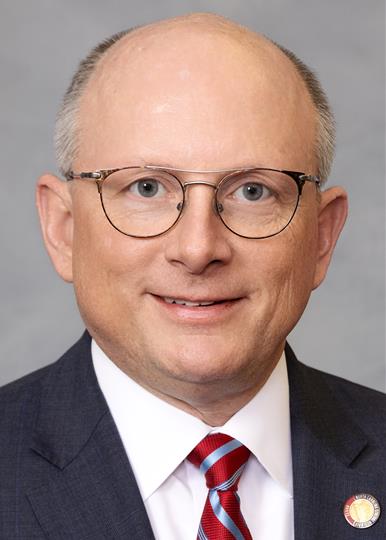
Rep. Tim Reeder
Sponsored bills
Maddy summaryHB 328 bans delta-8, delta-9, and other hemp-derived consumables (including CBD products and vapor devices) on all North Carolina public school grounds, buildings, and school-sponsored events. It requires schools to adopt written policies prohibiting these products, including posting signs, notifying students/parents, and enforcing the ban, with definitions explicitly covering "delta-8," "delta-9," and vaping products. The policy applies to all students, staff, and visitors, though it allows hemp/tobacco use in supervised instructional or research settings without ingestion. The bill takes effect for the 2025-2026 school year and aligns with existing tobacco product restrictions.
Maddy summaryHB 437 establishes "Drug-Free Homeless Service Zones" within 300 feet of facilities that provide homeless services (like shelters or transitional housing) using public funds. It increases penalties for drug offenses committed in these zones: individuals 21+ face Class E felony charges, while facility operators allowing such offenses face Class 1 misdemeanor charges. Facilities must display visible signs identifying the zone, and the law applies to offenses committed on or after December 1, 2025. The bill directly affects homeless service providers, their operators, and individuals committing drug offenses in designated zones.
Maddy summaryHB 133, the NC Farmland and Military Protection Act, bans U.S.-designated adversarial foreign governments from buying, leasing, or holding interests in agricultural land or land within 75 miles of major military installations like Fort Bragg and Camp Lejeune. It directly affects foreign governments identified by the U.S. State Department as adversaries under arms regulations, preventing them from acquiring land critical to food production or near military sites. The law excludes agricultural research leases under 250 acres and makes any violating land transfer legally void. This focuses on restricting foreign control of strategic land without altering existing domestic land transactions.
Maddy summaryThis bill requires the North Carolina Department of Health and Human Services, the Department of Information Technology, and the Administrative Office of the Courts to study the state's involuntary commitment process. The agencies must identify gaps in the current system and submit a report with recommendations by February 1, 2027. Key areas for improvement include ensuring judges receive timely clinical data, training legal officials on community-based treatment options, and updating electronic forms to capture consistent data. The legislation also aims to increase data sharing between health and court systems to support more effective legal and clinical outcomes.
Maddy summaryHB 1040 updates the financial and operational rules for the Pitt County-City of Greenville Airport Authority by clarifying how the county and city fund airport operations and expansions. The bill allows the two governments to share costs for running the airport and building new facilities, using money from airport fees, land sales, or voter-approved taxes and bonds. It also confirms the authority's power to manage the property, enforce safety zoning rules, and issue debt for improvements if voters agree. This legislation primarily affects the local county and city officials who oversee the airport's budget and development plans.
Maddy summaryThis bill honors the life and memory of Louis Milford Pate Jr., a former North Carolina state legislator and retired Air Force navigator. It formally recognizes his military service, public service career, and community contributions while extending sympathy to his family following his death. The resolution directs the Secretary of State to send a certified copy of the document to Pate's family as a final tribute.
Maddy summaryThis bill creates a voluntary program allowing businesses in North Carolina to contribute to portable benefit accounts for their independent contractors. The plan enables hiring parties to fund benefits such as health insurance, retirement, and disability through a third-party administrator, which helps contractors maintain coverage when moving between jobs. To encourage participation, the legislation allows businesses to deduct contributions as business expenses and permits contractors to exclude those amounts from their taxable income. Additionally, the bill includes a $100,000 appropriation to fund public education about the program, which will take effect on July 1, 2026.
Maddy summaryHB 349 updates North Carolina's requirements for healthcare powers of attorney (POA) and advance health care directives (like living wills). It clarifies witness and notary rules to prevent conflicts of interest (e.g., prohibiting facility staff from witnessing), standardizes forms for easier use, and allows electronic filing of directives with the Secretary of State’s registry. The bill directly affects residents planning ahead for medical decisions, ensuring their chosen agents or instructions are legally recognized. Key changes include revised witness eligibility criteria, simplified form language, and a new online filing option to improve accessibility. The bill does not alter medical care standards but streamlines the legal process for end-of-life planning.
Maddy summaryThis House Resolution honors the life and memory of James Michael "Mike" Clampitt, a former member of the North Carolina House of Representatives from District 119. The bill formally recognizes his extensive background in public service, which included decades as a firefighter and deputy sheriff in North Carolina before his election to the state legislature. It expresses the House's appreciation for his legislative work and extends condolences to his family, with a copy of the resolution sent to them.