

Maddy summaryHJR 157 is a procedural resolution inviting Governor Josh Stein to address a joint session of the North Carolina General Assembly on March 12, 2025. It directs a committee of five House members and five Senate members to extend the invitation and specifies that the governor's cabinet, Council of State members, and state judges may attend. This resolution does not create new policy or affect any laws; it solely schedules a ceremonial address. The invitation is effective upon ratification, as noted in the resolution's text.
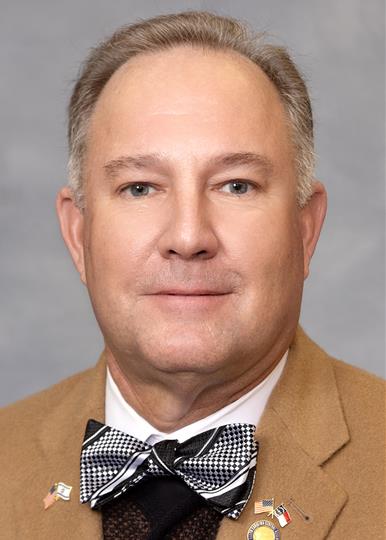
Rep. Jeff McNeely
Sponsored bills
Maddy summaryHB 130 establishes a $475 million program to provide financial assistance to North Carolina farmers who suffered crop losses from natural disasters in 2024. It directly affects farmers in counties designated by the USDA as disaster areas, requiring verified losses of eligible agricultural commodities (like crops, livestock, or specialty plants) planted but not harvested by January 1, 2024. The program uses county and state yield/price averages to calculate payments, mandates submission of USDA Form 578 or equivalent documentation within 30 days, and allocates funds from state reserves (Stabilization, IT, and Economic Development) to cover verified losses. Farmers must provide documentation for verification, and the Department of Agriculture may audit claims to ensure proper use of funds, with refunds required for inaccurate information.
Maddy summaryThis bill requires Lincoln County Schools and Iredell-Statesville Schools to implement a mandatory 14-day winter break with no instructional days or teacher workdays scheduled. It amends school calendar rules to mandate this break starting in December, while allowing districts to make up weather-related closures during this period if needed. The law applies specifically to these two school systems beginning with the 2025-2026 school year and does not affect other North Carolina schools. It focuses solely on adjusting winter break requirements and opening/closing dates for these districts.
Maddy summaryHB 164 requires parental or guardian consent before releasing autopsy records for children under 18. It makes all autopsy-related materials - including photos, videos, and reports - confidential, except when disclosure is needed for public health, research, legal compliance, or to address safety concerns. If parents withhold consent, a court may override this through a special proceeding after reviewing factors like public interest and privacy intrusion. The bill also allows public access to autopsy recordings (with supervision) unless parents request confidentiality under this law. It applies to all child deaths under 18 in North Carolina, affecting medical examiners, families, and entities seeking autopsy records.
Maddy summaryHB 31 would amend North Carolina's State Human Resources Act to make every statewide general election day a paid holiday for state employees. This change would add election days to the current list of paid holidays (which includes Martin Luther King Jr.'s Birthday and Veterans Day), while maintaining the limit of 13 paid holidays per year. The bill directly affects state workers, ensuring they receive paid time off on election days without reducing the total number of paid holidays. It does not change election dates or voting procedures, only the employment benefits for state employees on those days. The legislation is currently pending in committee review.
Maddy summaryHB 154 requires NCInnovation, a state entity, to return all state funds and assets it acquired using state money to the North Carolina State Controller. The State Controller must then transfer these funds into the General Fund, where they remain unappropriated until the General Assembly votes to use them for specific purposes. This bill dissolves the financial relationship between the state and NCInnovation by repealing related statutes, effective 60 days after enactment. It directly affects NCInnovation’s financial obligations and the state’s treasury, with no new spending authorized by the transfer.
Maddy summaryHB 145 appropriates $50 million in one-time state funds to the University of North Carolina at Chapel Hill (UNC-CH) for the development of a diabetes research institute. This bill directly affects UNC-CH as the recipient of the funds and will support diabetes research activities at the university. The funds are designated for the 2025-2026 fiscal year and become effective July 1, 2025. The legislation is a straightforward funding allocation with no policy changes beyond the specified financial commitment.
Maddy summaryHB 72 prohibits North Carolina's Attorney General from participating in any court case (as a party, amicus, or otherwise) that argues a presidential executive order should be invalidated. The law directly affects the Attorney General's office, restricting their ability to challenge federal executive actions in state or federal courts. Key provisions state the Attorney General cannot advance arguments leading to the invalidation of any presidential executive order, applying to all pending or future litigation. This is a procedural limitation on state legal actions, not a change to federal executive power. The bill becomes effective upon enactment for cases filed after that date.
Maddy summaryHB 112 raises the maximum allowable speed limit on North Carolina's interstate highways and controlled-access roads from 70 mph to 75 mph, as determined by the Department of Transportation after engineering studies. This directly affects drivers traveling on these roads, as the new 75 mph limit replaces the previous 70 mph cap where the DOT deems it safe. The bill also updates related penalties: speeding over 85 mph on roads with a 75 mph limit becomes a Class 3 misdemeanor, and license suspension rules for excessive speeding (e.g., over 85 mph on 75 mph zones) are adjusted accordingly. The changes apply only to offenses occurring on or after December 1, 2025, and do not affect cases before that date.
Maddy summaryHB 99 exempts certified reflexologists from oversight by North Carolina's Board of Massage and Bodywork Therapy. It directly affects nationally certified reflexologists (holding current ARCB certification) and their supervised students, who must obtain certification within 12 months. The bill adds a specific exemption to state licensing law, allowing these practitioners to perform reflexology - a manual technique using pressure on feet/hands - to stimulate neural pathways - without state board regulation. The law takes effect October 1, 2025.