

Maddy summaryHB 296 establishes a $89.5 million program to provide financial assistance to North Carolina corn farmers who suffered crop losses due to 2024 disasters like drought and hurricanes in USDA-designated disaster counties. Farmers must verify losses using USDA forms or equivalent documentation within 45 days, with payments calculated using county yield averages and state price data. Funds can only be used for agricultural recovery expenses like replanting or equipment repair, and recipients must provide proof of eligible spending. The program builds on existing state disaster funds and requires strict documentation to prevent misuse, with potential audits and repayment for inaccurate claims.
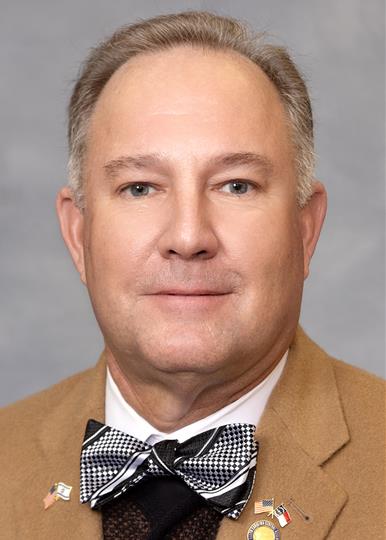
Rep. Jeff McNeely
Sponsored bills
Maddy summaryHB 304 allows Iredell-Statesville Schools to create a specialized Trades High School for grades 10-12 focused on Career and Technical Education (CTE). The school would operate under exemptions from specific state education statutes (Part 1 and Part 1D of Article 8 in Chapter 115C) and must follow teacher requirements: at least 50% licensed staff, college degrees for core subject teachers, and mandatory training for non-licensed instructors in disability support and classroom management. Students earning a Trades Diploma must complete 22 credits, with the school submitting diploma criteria to the State Board of Education before the 2025-2026 school year. This bill directly affects Iredell-Statesville students, staff, and the district’s curriculum structure.
Maddy summaryHB 224 renames the "North Carolina Gaming Education Revenue Fund" to the "Indian Gaming Education Revenue Fund" and allocates specific recurring and one-time funds for tribal communities in North Carolina. The bill directs $2 million annually to the North Carolina State Commission of Indian Affairs for operations, $5.25 million annually to seven non-gaming tribes (including the Coharie, Lumbee, and Haliwa-Saponi) for cultural, educational, and economic development, and $400,000 annually to four Urban Indian Organizations for similar purposes. It also provides $100,000 yearly to support the State Advisory Council on Indian Education and $1.1 million nonrecurring funds for specific tribal school projects like the Haliwa-Saponi Tribal School. The bill becomes effective July 1, 2025, with all funds to be used for designated community development purposes.
Maddy summaryHB 142 requires North Carolina state agencies to adopt zero-based budgeting for the 2031-2033 fiscal biennium, starting with a phased implementation beginning July 1, 2027. This means agencies must justify every funding request from scratch each budget cycle - starting with a $0 baseline - rather than carrying over previous appropriations. Agencies must submit detailed justifications for each budget item, including explanations of their functions, performance data, and goals. The bill directly affects all state agencies in the executive branch, requiring them to re-evaluate all programs and costs annually. The full zero-based budget will apply to the entire state budget starting in 2031-2033.
Maddy summaryHB 82 establishes a 9-member Study Commission to examine whether North Carolina's five largest school districts face negative outcomes due to their size. The commission, appointed by legislative leaders and local education boards, will study size-related issues in these districts and develop recommendations for potential remedies. It must report its findings and suggestions to the 2026 General Assembly by December 31, 2026. The bill creates a study body with no immediate policy changes; it solely directs an analysis of school district size impacts.
Maddy summaryHB 222 appropriates $217 million from the State Emergency Response Fund to North Carolina's Office of Recovery and Resiliency (NCORR) for homeowner recovery projects related to Hurricanes Matthew and Florence. The bill requires NCORR to submit detailed monthly reports on fund usage, including expenditures and project progress, and mandates weekly financial reports to the State Auditor for oversight. It also establishes a public online dashboard tracking funds versus actual spending and includes a clawback provision to return unused funds to the Savings Reserve after projects conclude. The law revises NCORR's responsibilities, ending its role in future storm recovery programs.
Maddy summaryHB 103 exempts members of North Carolina-recognized tribes from needing hunting, trapping, or fishing licenses when hunting or fishing on tribal land (requiring ID verification) or off tribal land (requiring ID plus compliance with reporting, hunter education, and federal stamp rules). It directly affects tribal members recognized under Chapter 71A of North Carolina law, both on tribal property and in state waters/lands outside tribal areas. The bill amends licensing rules to remove fee requirements while maintaining other regulatory obligations like wildlife reporting and federal stamp purchases. It becomes effective October 1, 2025.
Maddy summaryHB 48 raises North Carolina's maximum weekly unemployment benefit from $350 to $400 for claimants filing on or after March 2, 2025, directly affecting unemployed workers. It also creates a 2025 tax credit for employers, allowing them to offset unemployment insurance taxes paid on 2024 fourth-quarter wages against their 2025 tax liability. The credit applies only to contributions remitted by January 31, 2025, and must be claimed via a specific report. The bill ratifies a governor's temporary disaster-related unemployment expansion but focuses on permanent changes to benefit levels and employer tax treatment.
Maddy summaryHB 229 adjusts North Carolina's Medicaid reimbursement rates for ambulatory surgical centers (ASCs), requiring payments to be at least 95% of the current Medicare Ambulatory Surgical Centers fee schedule. This change directly affects ASCs by increasing their Medicaid payments, with the state appropriating $10.476 million annually from the General Fund to cover the cost and match $19.135 million in federal funds each year for the 2025-2027 fiscal biennium. The bill mandates these rate adjustments to take effect on July 1, 2025, ensuring ASCs receive consistent reimbursement aligned with Medicare rates. The legislation focuses solely on establishing the new payment structure and funding mechanism, without altering eligibility or services.
Maddy summaryThis bill proposes constitutional amendments to require each North Carolina senator to represent two counties (instead of one) and to fix the state at exactly 100 counties. It also updates rules for incorporating new cities or towns, preventing new municipalities within specific distances of existing cities based on their population size (e.g., within 1 mile of a city with 5,000+ residents). The changes would require voter approval in the November 2026 election. If approved, the new rules would take effect after certification by the State Board of Elections.